
Rosalind Franklin rover's instrument can detect chiral molecules, not ancient life traces
This digest was compiled by AI from multiple sources — links to the originals are below.
Scientists confirmed that the Rosalind Franklin rover's instrument can detect subtle differences in stable molecules that could preserve evidence of past life for billions of years. The team also found that organic molecules in the Murchison meteorite appear contaminated by fossil fuel pollution during atmospheric entry. The finding raises questions about distinguishing extraterrestrial signals from terrestrial contamination.
Instrument Capability
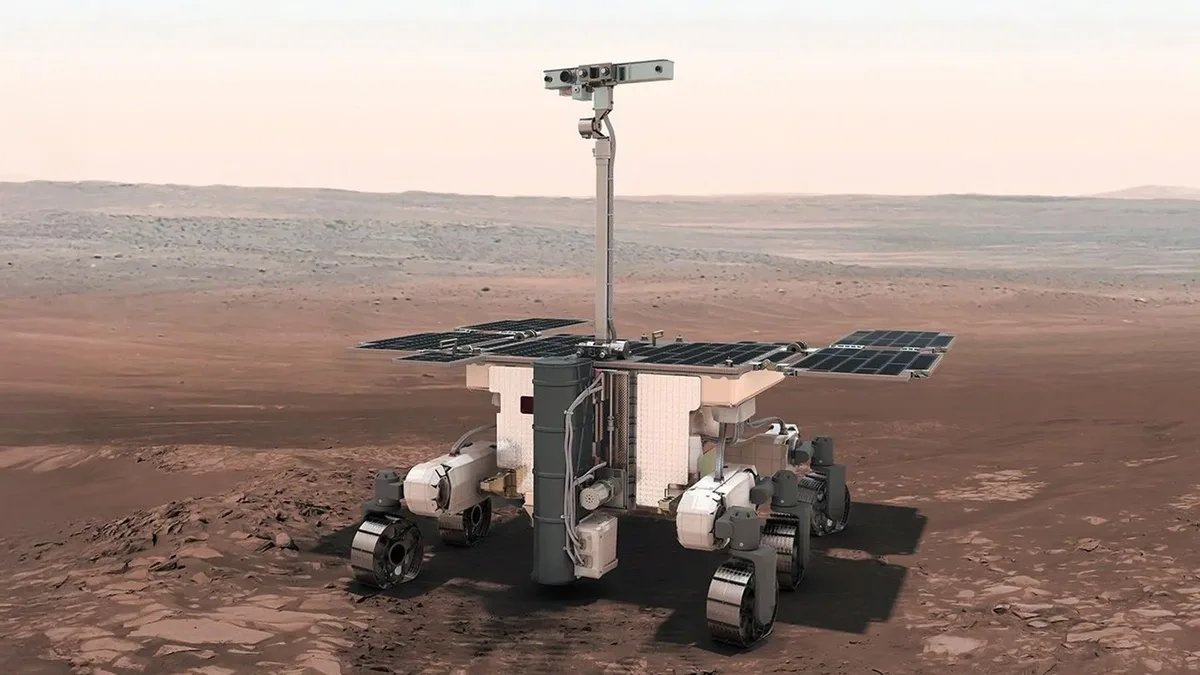
The Rosalind Franklin rover, set to launch in 2028, carries an instrument capable of detecting chiral molecules—left- and right-handed versions of organic compounds. Scientists from the University of Oxford and the European Space Agency confirmed in a study published in Nature Communications that the instrument can identify these subtle differences in samples. This capability is crucial for identifying potential biosignatures on Mars.
Murchison Meteorite Contamination
The team analyzed samples from the Murchison meteorite, which fell in Australia in 1969 and contains organic compounds. They found that some molecules showed signs of contamination from fossil fuel pollution on Earth, likely acquired during atmospheric entry or after landing. The contamination complicates efforts to distinguish extraterrestrial organic matter from terrestrial sources.
Implications for Mars Mission
The findings highlight the need for rigorous contamination control in Mars sample analysis. The Rosalind Franklin rover will drill up to 2 meters below the Martian surface to avoid surface contamination. However, the meteorite results suggest that even deep samples could be affected if Earth-based contamination occurs during sample return.
PanCam Instrument Details
The Rosalind Franklin rover carries the PanCam (Panoramic Camera) system, built by a team led by UCL-MSSL. PanCam includes three cameras: two Wide Angle Cameras (WACs) for stereoscopic imaging and one high-resolution camera. It is one of nine instruments on the rover and serves as a key context instrument for the mission.
2 sources
Time · lag behind first