
WHO declares Ebola outbreak in Uganda over after 42 days
This digest was compiled by AI from multiple sources — links to the originals are below.
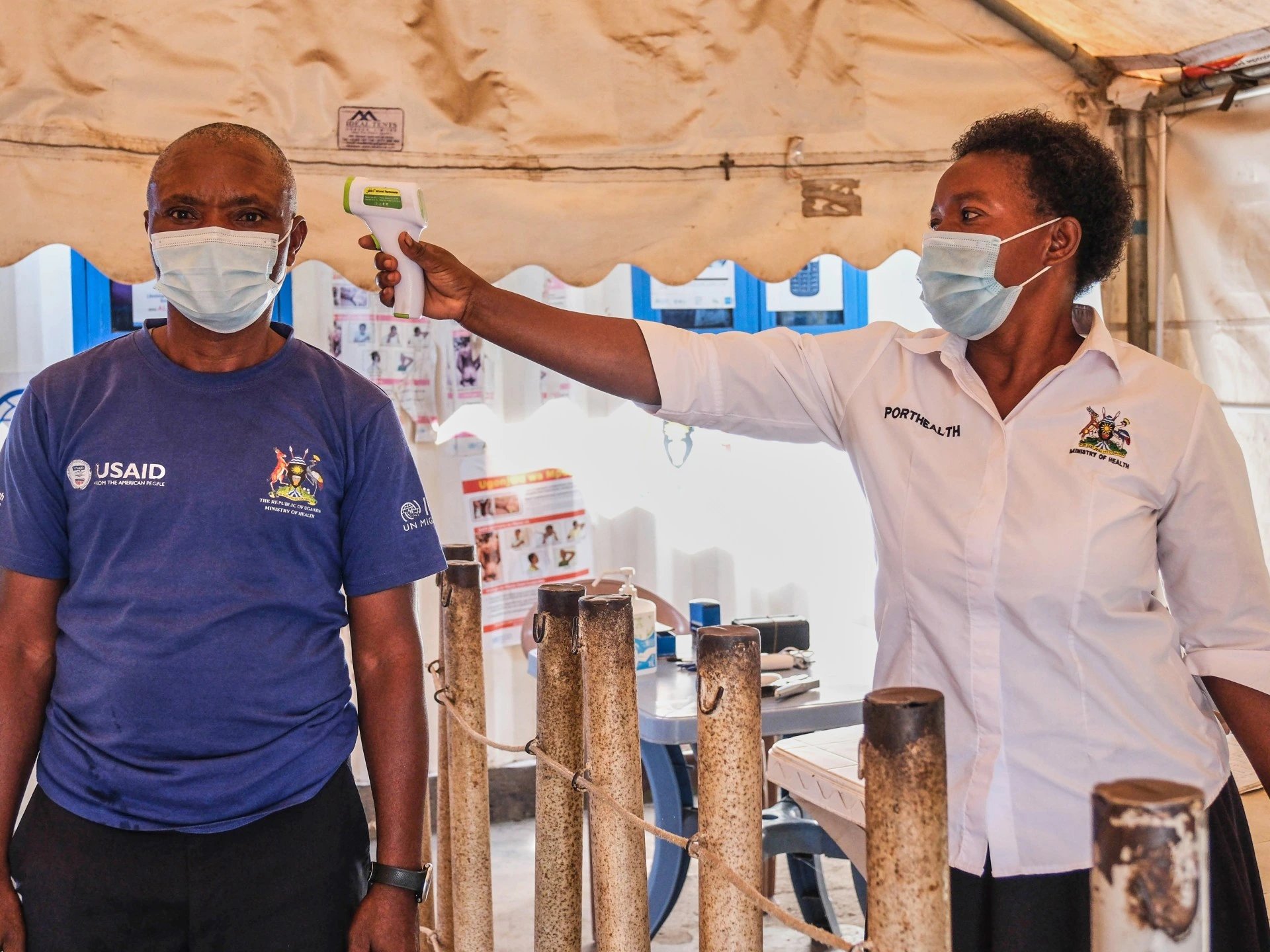
The World Health Organization declared Uganda Ebola-free on Tuesday after the country passed the mandatory 42-day monitoring period without new cases. Uganda's Health Ministry had already declared the outbreak over on July 28, but WHO confirmation followed the standard guideline process. The declaration comes as confirmed Ebola cases in neighboring DR Congo reached 5,656.
Key Facts
- Uganda reported 20 Ebola infections in total, with the last confirmed case recorded on June 21.
- Two people died from the virus during the outbreak, and the last patient was discharged from Mulago National Referral Isolation Centre on July 16.
- Confirmed Ebola cases in the Democratic Republic of the Congo reached 5,656 as of August 25, an increase of 72 from the previous day.
- Ituri province in northeastern DRC remains the epicentre, with more than 4,700 people infected.
- Uganda shares a border of more than 877 km (500 miles) with the northeastern part of the DRC.
WHO Declaration
The World Health Organization made the announcement at a joint news conference on Tuesday with Uganda's Ministry of Health. The declaration came roughly a month after Uganda had declared the local outbreak over based on its own analysis of the virus's spread. Diana Atwine, permanent secretary for Uganda's Health Ministry, told national broadcaster NTV that Uganda had assessed the risk and chain of transmission and knew it was free from Ebola, but WHO had to wait because of the process and guidelines. Atwine called on countries that had imposed travel restrictions on Uganda during the outbreak to lift them, saying Ugandans should be free to travel to any country unless there are other reasons.
DRC Outbreak
Confirmed cases in the Democratic Republic of the Congo reached 5,656 as of August 25, an increase of 72 from a report released one day prior. A total of 2,715 deaths have been recorded, according to the latest government data cited by the European Centre for Disease Prevention and Control. Ituri province, in the northeast of the country, remains the epicentre of the outbreak, with more than 4,700 people infected. Uganda shares a border with the northeast part of the DRC, stretching more than 877 km (500 miles).
Cross-Border Response
Kasonde Mwinga, the WHO's representative for Uganda, said in Wednesday's news conference that the country was supporting treatment and laboratory capacity at two sites across the border, in Aru and Kasenyi, both part of Ituri province. Mwinga added that the model for cross-border collaboration could be expanded regionally. Uganda has announced it would open two additional Ebola treatment centres in the DRC, bringing the total to four. On Monday, Ugandan and Congolese officials met in Kampala to review a bilateral memorandum of understanding on cross-border health security.
2 sources
Time · lag behind first