
China's Chang'e-7 lunar south pole mission delayed, new launch date not set
This digest was compiled by AI from multiple sources — links to the originals are below.
China's Chang'e-7 lunar south pole mission missed its 2026 launch window and will not fly this year, Chinese authorities said on Aug. 23. No technical cause or replacement launch date was announced. The mission, which includes an orbiter, lander, rover and a hopping probe, is designed to search for water ice in permanently shadowed craters near Shackleton crater.
Key Facts
- Chinese authorities said on Aug. 23, 2026, that Chang'e-7 did not meet launch conditions and could not fly in its planned window this year.
- No technical cause or replacement launch date was announced.
- Chang'e-7 comprises an orbiter, lander, rover and a mini-flying probe, or hopper, intended for the Moon's south-polar region near Shackleton crater.
- The hopper is designed to enter permanently shadowed terrain and analyse soil for water and other volatile compounds.
- A mission overview in National Science Review lists 18 scientific payloads distributed across the five platforms, including the Queqiao-2 relay satellite launched in March 2024.
Mission Architecture
Chang'e-7 belongs to the fourth phase of China's lunar exploration programme, following missions that demonstrated orbiting, landing, roving and sample return. Its communication relay is Queqiao-2, launched in March 2024. The main probe adds the orbiter, lander, rover and mini-flying vehicle. A mission overview in National Science Review lists 18 scientific payloads distributed across those five platforms. The orbiter is meant to survey surface composition, topography, temperatures, magnetic and plasma conditions, and the distribution of hydrogen and other elements.
Shackleton Crater Target
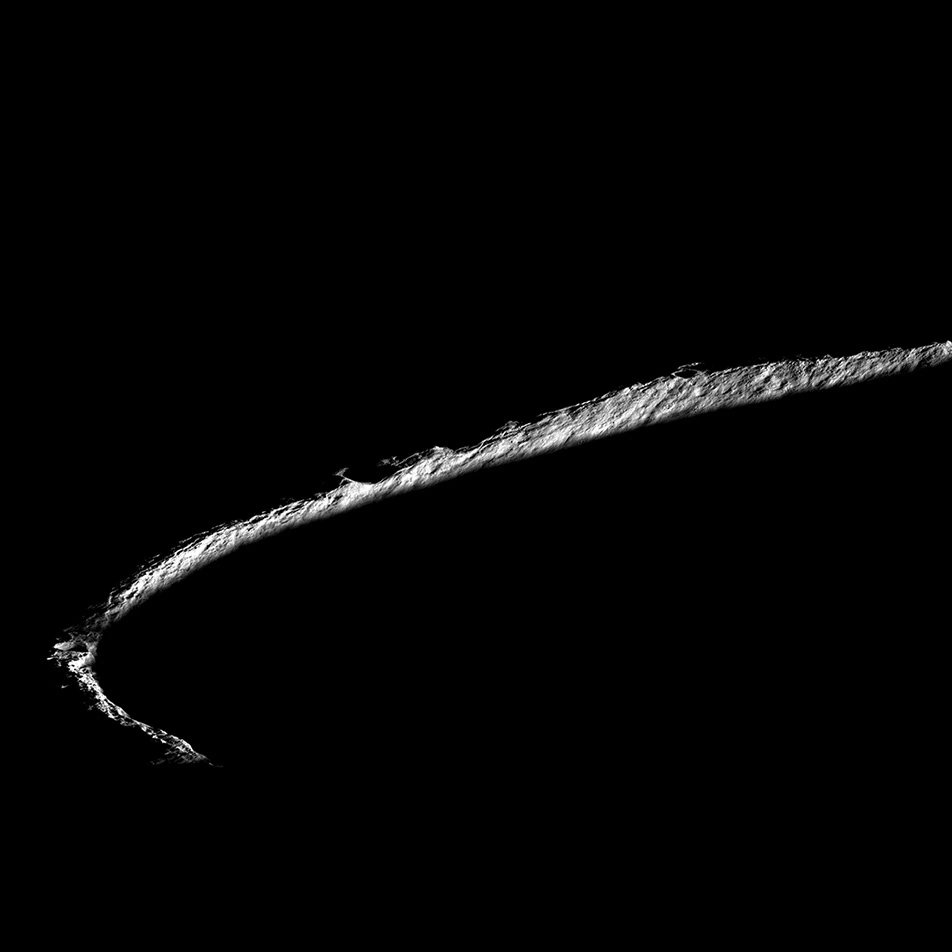
Shackleton crater is roughly 21 kilometres across and lies almost exactly at the lunar south pole. The Moon's rotational axis is tilted by only about 1.5 degrees, compared with Earth's 23.4 degrees. The Sun therefore stays close to the lunar polar horizon rather than climbing high through the sky. The hopper would leave illuminated terrain, enter permanent shadow and analyse a soil sample for water and other volatile compounds. Chinese mission papers increasingly place the work around Shackleton crater.
1 source
Time · lag behind first