
Long March 6C launches seven satellites from Taiyuan
This digest was compiled by AI from multiple sources — links to the originals are below.
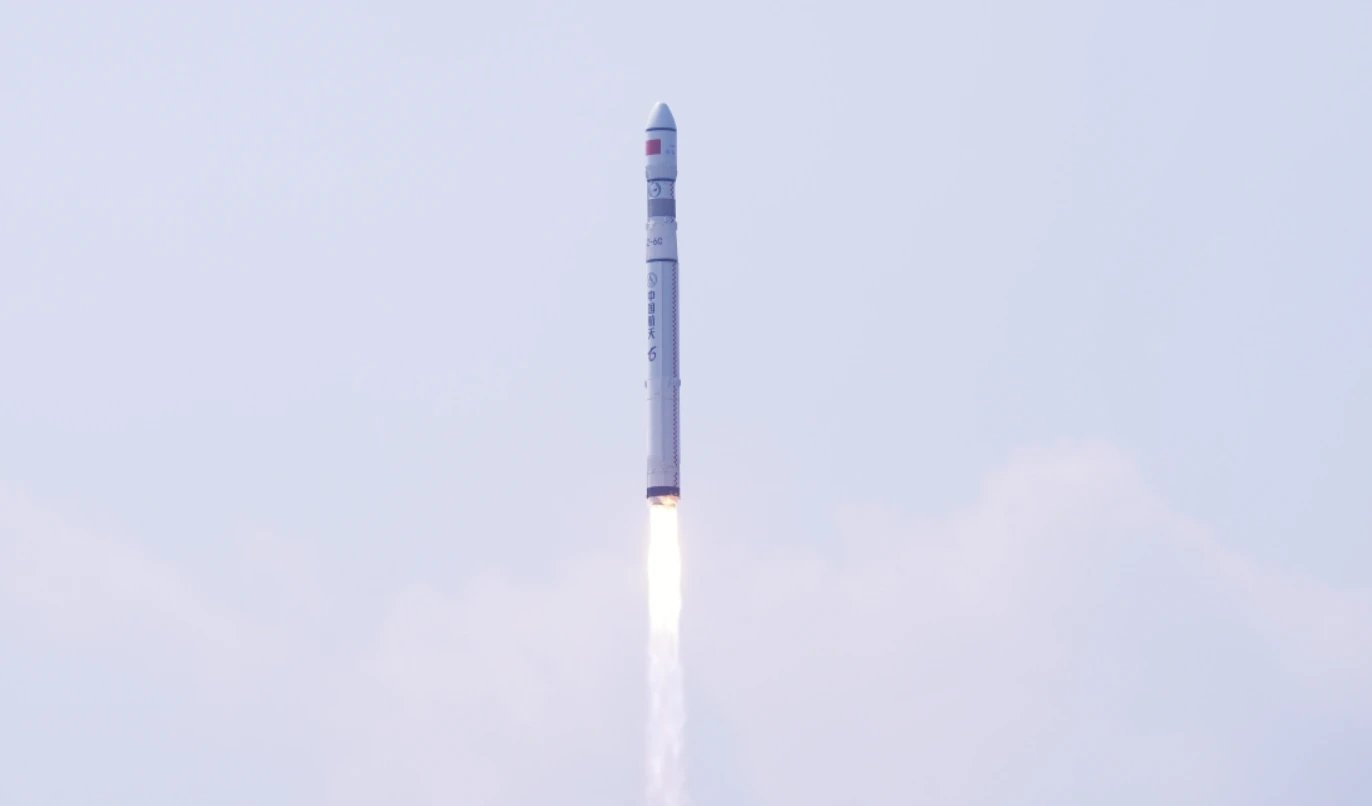
A Long March 6C rocket launched seven satellites from Taiyuan Satellite Launch Center at 11:21 p.m. Eastern on Aug. 24. The mission marked the vehicle's second flight, following its May 2024 debut. The launch was brokered by China Great Wall Industry Corporation.
Key Facts
- The Long March 6C lifted off at 11:21 p.m. Eastern on Aug. 24 from Taiyuan Satellite Launch Center.
- The mission carried seven satellites, including Thailand's GISTDA Cube Sat 1 built by GalaxySpace.
- Two X-band SAR satellites, Zhongke-14 and Zhongke-15, were aboard for CAS Satellite Technology.
- The Long March 5 rocket for the Chang'e-7 lunar mission has been rolled back to the assembly building at Wenchang.
- The Chang'e-7 mission is expected to be delayed into 2027.
Launch Details
The Long March 6C rocket lifted off at 11:21 p.m. Eastern on Aug. 24 from Taiyuan Satellite Launch Center. The launch marked the vehicle's second flight, following its May 2024 debut. The commercial launch was brokered by China Great Wall Industry Corporation, the international arm of state-owned China Aerospace Science and Technology Corporation. CASC subsidiary Shanghai Academy of Spaceflight Technology provided the two-stage, kerosene-fueled rocket.
Payloads
Among the payloads was GISTDA Cube Sat 1, also known as Lingzhi-9 Thailand CubeSat, built by GalaxySpace for Thailand's Geo-Informatics and Space Technology Development Agency. Chinese state media described it as GalaxySpace's first complete satellite-and-ground-system export to a Southeast Asian customer, delivered with technical training for Thai engineers and university partners. The 3U cubesat is intended to collect imagery for land-use, agriculture and ecology applications. Two X-band SAR satellites made by CAS Satellite Technology, also known as AIRSAT, were also aboard: Zhongke-14 and Zhongke-15. Beibu Gulf-2 weighs about 360 kilograms and carries onboard 'space cloud' computing payloads meant to network with sister satellites for autonomous in-orbit processing.
Chang'e-7 Delay
At Wenchang, the Long March 5 rocket expected to launch the Chang'e-7 lunar south pole landing mission has been rolled back to the vertical assembly building. The mission is expected to be delayed into 2027, and potentially to a similar window this time next year.
1 source
Time · lag behind first