
China-Kyrgyzstan-Uzbekistan Railway Advances as 26 Tunnels Begin Construction
This digest was compiled by AI from multiple sources — links to the originals are below.
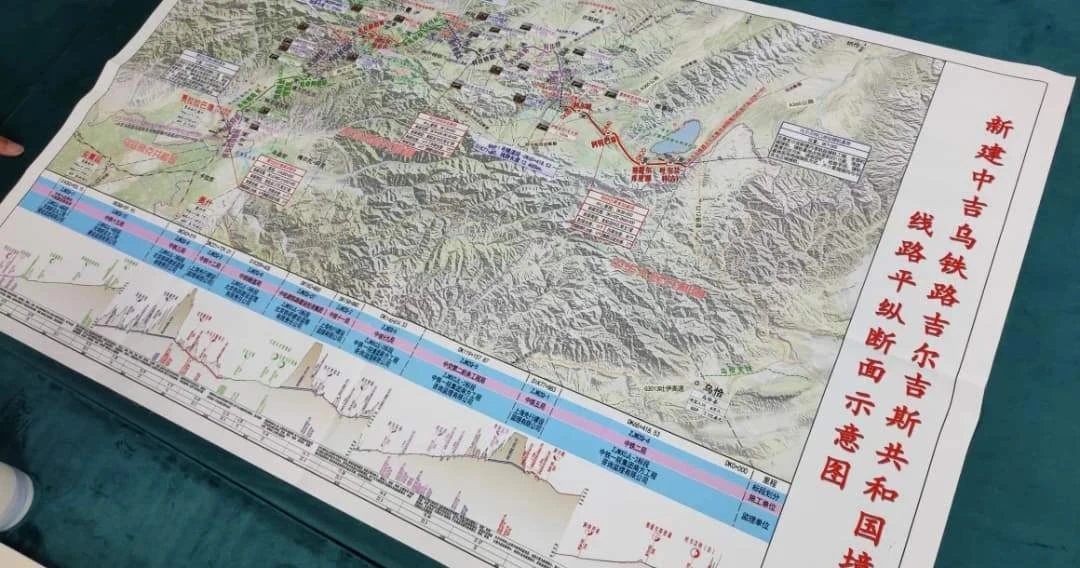
Construction of the China-Kyrgyzstan-Uzbekistan railway is advancing across Kyrgyzstan's 304.84 km section, with work underway on 26 of 29 tunnels and 40 of 50 bridges. Temporary roads and power supply facilities are fully completed and operational. The project, part of China's Belt and Road Initiative, faces extreme terrain including high mountains, low temperatures, and seismic risks.
Key Facts
- The Kyrgyz section of the railway spans 304.84 km with a design speed of 120 km/h.
- Construction has begun on 26 of 29 new tunnels, 40 of 50 bridges, and 83 of 107 road layers.
- The route starts in Kashgar, China, crosses the Torugart pass into Kyrgyzstan, and ends in Andijan, Uzbekistan.
- Temporary roads and power supply facilities on the Kyrgyz section are fully completed and operational.
- The joint venture China-Kyrgyzstan-Uzbekistan Railway Company LLC is responsible for investment, financing, construction, and operation of the Kyrgyz section.
Project Scope and Route
The railway is a key cooperation project under China's Belt and Road Initiative, supported by the heads of state of China, Kyrgyzstan, and Uzbekistan. The route begins in Kashgar in China's Xinjiang Uygur Autonomous Region, enters Kyrgyzstan through the Torugart pass, and continues west from Jalal-Abad to Andijan in eastern Uzbekistan. The Kyrgyz section, measuring 304.84 km, will include 20 stations such as Torugart border station, Makmal passing station, and Jalal-Abad border station. The line crosses major mountain ranges including Moldo-Too, Hailebeit, and Fergana, and numerous rivers such as Arpa, Jaman-Davan, and Kichi-Alty.
Construction Progress
Temporary roads and power supply facilities on the Kyrgyz section are fully completed and operational. Construction has started on 26 of 29 new tunnels, 40 of 50 bridges, and 83 of 107 road layers. The design speed for trains is 120 km/h, according to a specialist from China Railway International LLC.
Engineering Challenges
The construction area features severe natural and climatic conditions, including high mountains, low temperatures, strong winds, and complex meteorological patterns. The route also faces high seismic activity, hazardous geological processes, and complex engineering-geological risks. Limited transport access, shortage of construction resources, and long winter periods further complicate the project, making it an exceptionally difficult engineering undertaking.
8 sources
Time · lag behind first