
Rohingya Repatriation Fails Without Political Solution, Activist Says
This digest was compiled by AI from multiple sources — links to the originals are below.
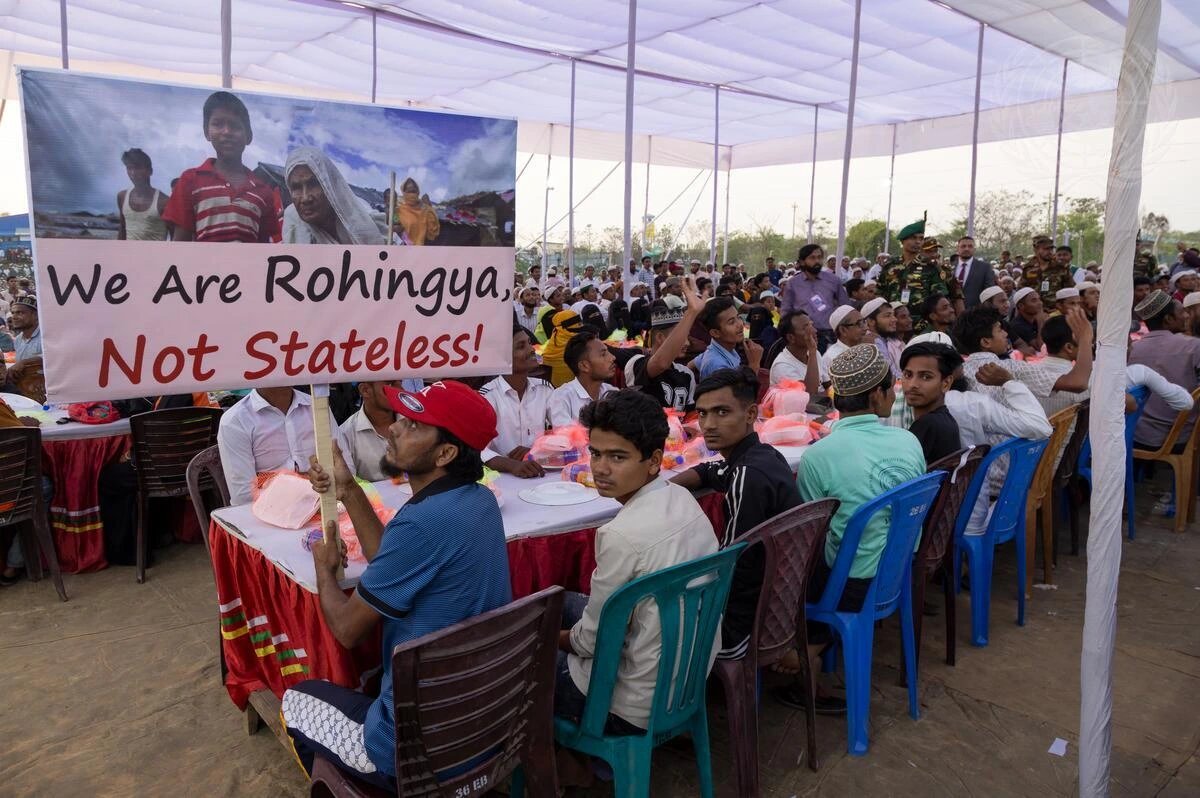
A Rohingya activist argues that nine years after the 2017 genocide, the safe return of over 1.3 million refugees from Cox's Bazar remains impossible without a political solution in Myanmar. The author contends that humanitarian aid alone cannot break the cycle of expulsion and repatriation that has repeated since 1978. The piece links Rohingya rights to the broader struggle against military rule following the 2021 coup.
Key Facts
- August 25, 2026 marks nine years since nearly 1 million Rohingya fled genocide and crimes against humanity committed by Myanmar's military.
- Over 1.3 million Rohingya refugees now live in Cox's Bazar, Bangladesh, described as the world's most dangerous and crowded refugee camp.
- Approximately 200,000 Rohingya fled to Bangladesh in 1978, and roughly 250,000 fled in 1991-1992, with most repatriated in the following years.
- The author states that each repatriation occurred without citizenship, rights, justice, or political voice, making the next expulsion inevitable.
- The 1982 citizenship law that stripped Rohingya of citizenship is the same system that shot protesters in 2021 and bombs villages across Myanmar today.
Cycle of Expulsion
The author, a Rohingya refugee, writes that 2017 was not the first time Rohingya were forced to flee to Bangladesh. In 1978, approximately 200,000 Rohingya fled to Bangladesh before being sent back to Myanmar. In 1991-1992, roughly 250,000 fled, and most were repatriated in the following years. Each time, Rohingya were sent back without citizenship, rights, or justice, and without a voice in decisions affecting their lives. The author argues that because the conditions that forced expulsion had not changed, the next expulsion was only a matter of time.
Humanitarian Aid Limits
U.N. agencies, Western governments, and donor countries frequently view the Rohingya crisis as simply humanitarian, but the author contends it is political. Humanitarian organizations ensure refugees in the camps have food and basic necessities, but they can only keep people alive temporarily. Donors speak of Rohingya self-reliance even as they cut the aid refugees survive on. Self-reliance is impossible for a people forbidden to work, move, educate their children, or govern themselves. The author writes that asking the politically excluded to stand on their own is like asking a bound person to swim.
Political Solution
A political solution can only be found within Myanmar, for Rohingya belong to Myanmar, and Myanmar belongs to the Rohingya, too. As long as the military controls Myanmar and the political crisis is unresolved, a sustainable solution for the Rohingya is impossible. The system that stripped Rohingya citizenship in 1982 is the same system that shot protesters in 2021 and bombs villages across Myanmar today. One institution decides who belongs, who speaks, and who lives. Since the military coup in 2021, communities across Myanmar have felt the same suffering Rohingya have experienced for decades.
1 source
Time · lag behind first