
Thailand's junta outreach strains ASEAN consensus on Myanmar
This digest was compiled by AI from multiple sources — links to the originals are below.
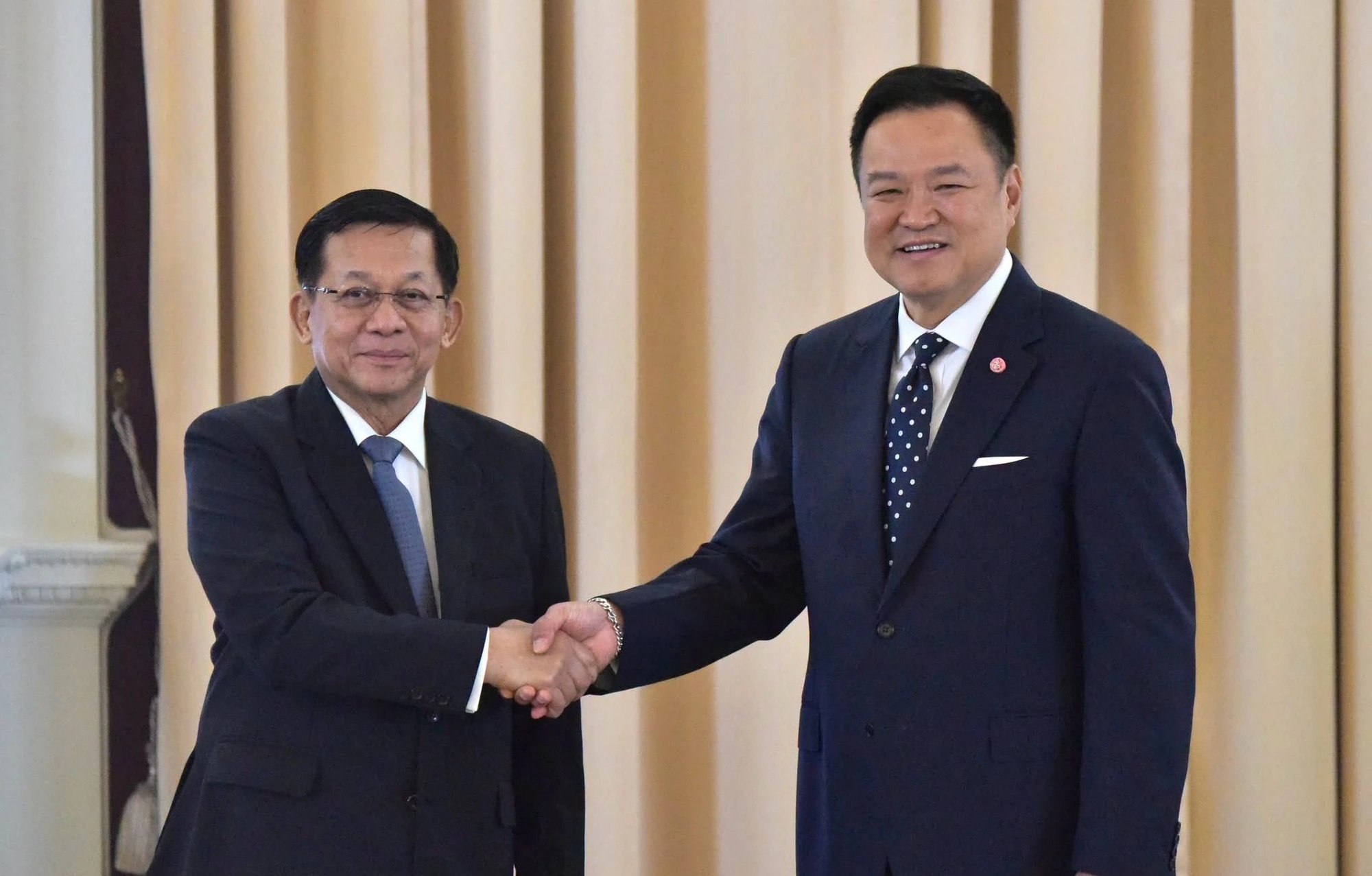
Thailand's Aug. 6 red-carpet welcome for Myanmar junta leader Min Aung Hlaing diverges from ASEAN's Five-Point Consensus approach, according to regional analysts. The visit yielded three memoranda of understanding in labor, water, and space cooperation and drew protests from Thai civil society and a Thai MP. Bangkok defends the calibrated reengagement as a path to concessions, while ASEAN has excluded Myanmar from summits since late 2021.
Key Facts
- Thai Foreign Minister Sihasak Phuangketkeow said Myanmar would take further positive steps and allow ASEAN representatives to meet with detained leader Daw Aung San Suu Kyi.
- Professor Thitinan Pongsudhirak from Chulalongkorn University said Thailand's invitation lends legitimacy to the junta leader without requiring implementation of ASEAN's Five-Point Consensus.
- During the Aug. 6 visit, Myanmar's junta leader invited Thai business leaders to invest in the war-torn country.
- A Thai MP shouted calls for peace and humanity during Min Aung Hlaing's appearance in parliament.
- Thai Prime Minister Anutin cited detained leader Aung San Suu Kyi's meeting with an ICRC representative as evidence the situation is moving in the right direction.
Thailand's ASEAN Divergence
Thailand hosted Myanmar military-appointed leader Min Aung Hlaing in Bangkok on August 6, a visit that included three memoranda of understanding in labor, water, and space cooperation. ASEAN has excluded Myanmar from its summits since late 2021, while Thailand is pursuing what it calls calibrated reengagement with the junta. Professor Thitinan Pongsudhirak of Chulalongkorn University argued that Thailand's invitation lends legitimacy to the junta leader without requiring any effort to implement ASEAN's Five-Point Consensus. The invitation also complicates positions for the Philippines, the current ASEAN chair, and Singapore, which will take the chair in 2027.
Domestic Opposition
Thai civil society groups and activist networks opposed the two-day visit by Min Aung Hlaing. A Thai MP protested inside parliament during the junta leader's appearance, shouting calls for peace and humanity. For the junta leader, the trip served as a major diplomatic win amid the relative isolation he has faced since the 2021 military coup. Thailand also absorbs migrant inflows and cross-border crime from Myanmar's civil war.
Thailand's Stated Rationale
Prime Minister Anutin Charnvirakul cited detained leader Daw Aung San Suu Kyi's recent meeting with an ICRC representative as evidence the situation is moving in the right direction. Thai Foreign Minister Sihasak Phuangketkeow said Myanmar would undertake further positive steps and allow ASEAN representatives to meet with Aung San Suu Kyi. Thailand frames its softer approach as more effective than ASEAN's, reflecting growing impatience with the situation in Myanmar. ASEAN has excluded Myanmar from summits since late 2021, while Thailand continues bilateral engagement with the junta.
1 source
Time · lag behind first