
University of Florida students unearth intact 400-year-old Potano pot
This digest was compiled by AI from multiple sources — links to the originals are below.
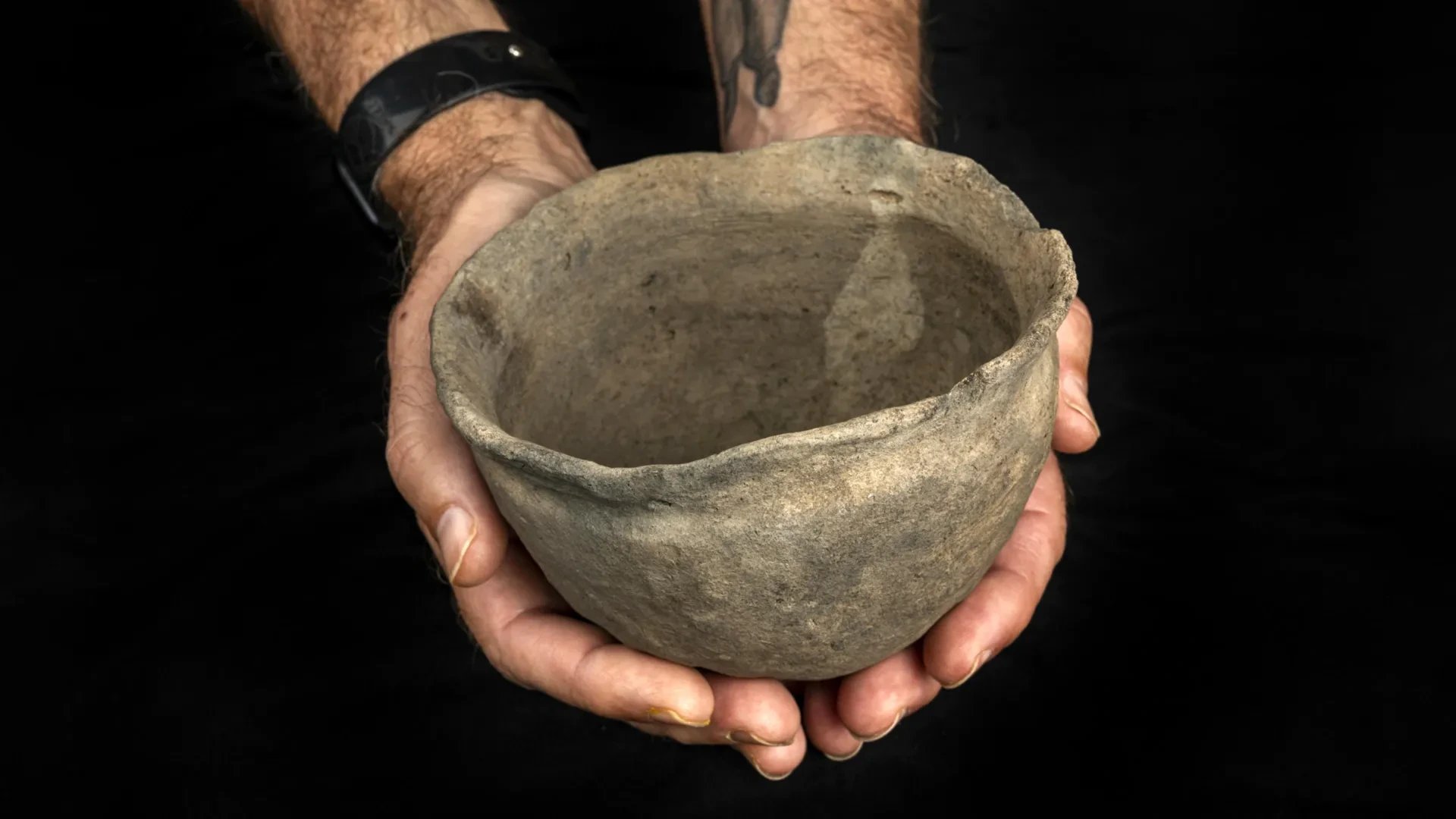
University of Florida students excavated an intact 400-year-old clay pot at Mission San Francisco de Potano in Gainesville. The vessel, likely made by the Indigenous Potano-Timucua tribe, is the first unbroken pottery found at the site. Its purpose and why it was buried remain unknown.
Key Facts
- The pot is roughly 400 years old and was found completely intact by University of Florida students earlier this year.
- Gifford Waters, collections manager for historical archaeology at the Florida Museum of Natural History, said this was the first unbroken pottery vessel excavated from a terrestrial site in his career.
- Mission San Francisco de Potano was established in 1606 and abandoned in 1706.
- More than 7,000 artifacts have been recovered from the site since 2006, most of them fragments of Native American pottery.
The Discovery
Students in a field course taught by Gifford Waters and Charles Cobb excavated the pot at Mission San Francisco de Potano, a site in northwest Gainesville. The vessel is small enough to fit in a palm, with a simple rim, a smooth dull gray surface, and no decoration. Waters noted that complete artifacts are rare on terrestrial sites because soil pressure, farming, and construction often crack buried pottery. The pot's original purpose and the number of people who may have used it are unknown.
Mission San Francisco de Potano
The Potano were part of the Timucua people of North Florida and relocated to the area in 1585 after Spanish forces forced them from their earlier home. Spain sent a friar to the Potano village in 1606 to establish the mission, one of more than 100 Catholic missions founded in Florida during the following century. The mission was abandoned in 1706, and physical traces of the settlement disappeared until artifacts began to turn up in the 1950s. At its height, the village likely contained several hundred Potano residents, while the mission itself was home to just one European, the friar.
Artifacts and Daily Life
More than 7,000 artifacts have been recovered from the site since 2006, most of them fragments of Native American pottery. The population balance between Potano residents and the single European friar helps explain the predominance of Native American pottery among the finds. Students practice basic archaeological fieldwork techniques each Friday during the spring semester at the site.
1 source
Time · lag behind first