Scientists trace 1-km ancient cliffs that shaped North America
This digest was compiled by AI from multiple sources — links to the originals are below.
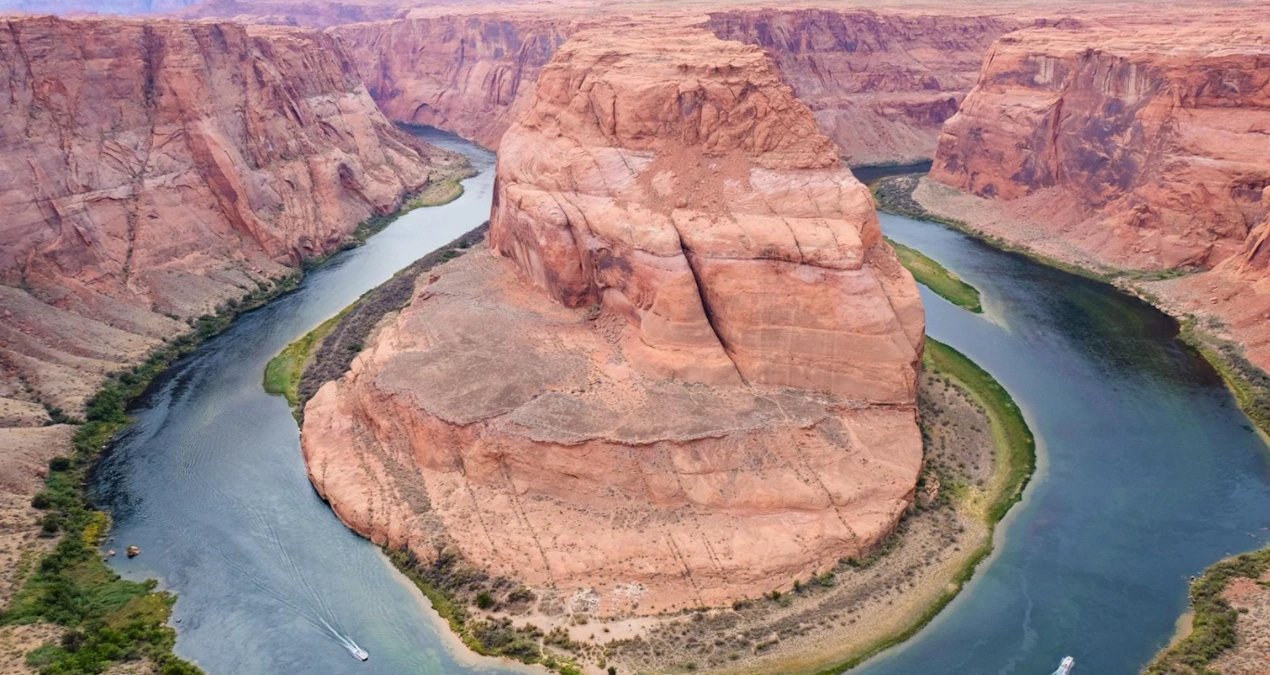
Geologists have identified traces of a vast ancient cliff system, up to 1 kilometer high and thousands of kilometers long, that existed hundreds of millions of years before the Grand Canyon formed. The system, named the Great Unconformity of Laurentia, formed 800–750 million years ago during the breakup of the supercontinent Rodinia. The discovery offers a new explanation for the Grand Canyon's missing rock layers.
Key Facts
- The ancient cliff system, named the Great Unconformity of Laurentia, formed 800–750 million years ago during the breakup of Rodinia.
- The cliffs reached about 1 kilometer in height and extended for thousands of kilometers across what is now the United States.
- The study was published in the journal Geology and led by Thomas Gernon of the University of Southampton.
- Erosion near the cliffs may have removed up to 8 kilometers of rock, exposing some of North America's oldest crystalline formations.
- The proposed system spans parts of Arizona, Utah, Idaho, Wyoming, Colorado, Texas, Oklahoma, Arkansas, Missouri, and Illinois.
The Ancient Cliff System
The study, published in Geology, reconstructs a continental-scale escarpment that formed as Rodinia split apart. Thomas Gernon and colleagues combined plate tectonic reconstructions with landscape evolution models to trace the system. The cliffs retreated inland over tens of millions of years, driving exceptional erosion across the region. Modeling suggests areas near the escarpment lost up to 8 kilometers of rock, exposing deep crustal basement rocks.
The Great Unconformity
The Grand Canyon preserves about 2 billion years of Earth history, yet more than half of that record is missing. The missing interval spans over a billion years of geological time, a puzzle known as the Great Unconformity. The newly identified rift-flank escarpment created steep terrain and intense erosion that could explain the gap. The process also influenced pre-Cambrian river systems, sediment transport, and flooding of continental interiors.
1 source
Scientists trace 1-km ancient cliffs that shaped North America