
Russia to produce floating sentry posts to counter Ukrainian drones
This digest was compiled by AI from multiple sources — links to the originals are below.
Russia will begin production of floating firing points to guard St. Petersburg from Ukrainian marine and aerial drones, Leningrad regional governor Aleksandr Drozdenko said on August 18. Samples are expected to be identified by October for purchase to protect the Leningrad Region's borders. The announcement follows the display of a prototype armed raft in Vyborg in late July.
Key Facts
- Leningrad regional governor Aleksandr Drozdenko announced on August 18 that Russia will begin production of floating firing points to protect St. Petersburg from Ukrainian drones.
- Samples of the PLOT-40 floating sentry post are expected to be identified by October for purchase to protect the Leningrad Region's borders.
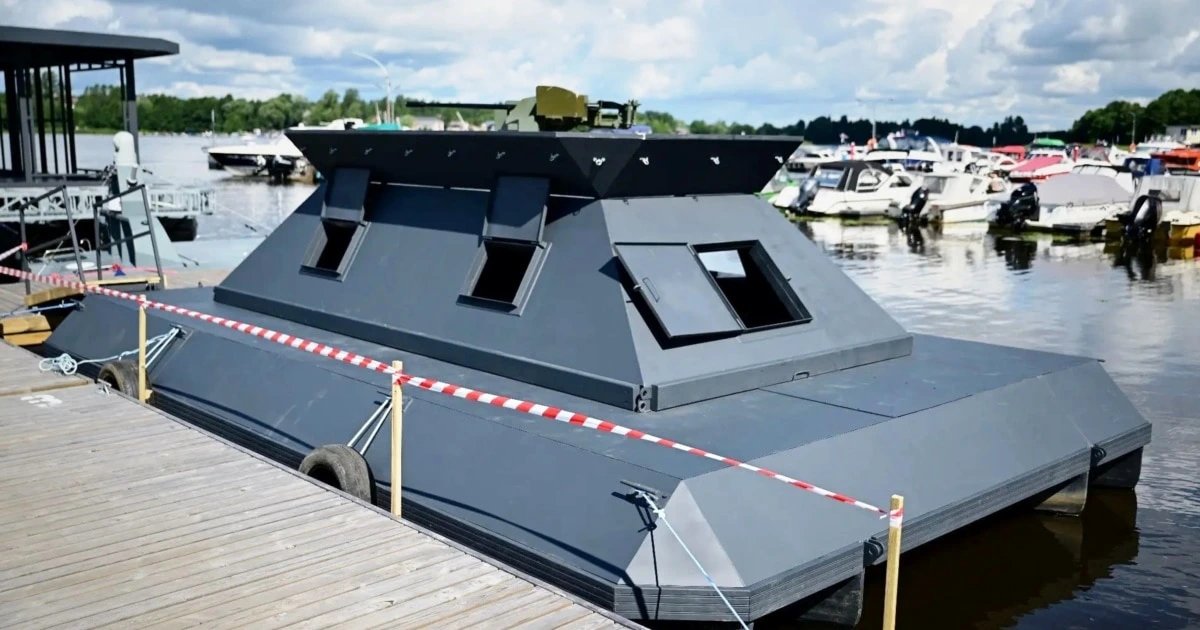
- A prototype of the armed raft was displayed at a port in Vyborg in late July, equipped with a remotely controlled autocannon or machine gun and electro-optical sensors.
- RAND senior engineer Scott Savitz said the effectiveness of the rafts would depend on how quickly and accurately they can identify and strike incoming drones, and on the platforms' own vulnerabilities to attack.
The PLOT-40 Design
The PLOT-40 floating sentry post is designed to protect naval bases, port infrastructure, and fuel and energy facilities from unmanned boats and aerial vehicles, according to Governor Drozdenko. The prototype raft photographed near Vyborg has five small hatches around its upper hull that could be used as firing ports for soldiers and a larger entry hatch for personnel. A small deck around the hull would enable soldiers to fire shoulder-launched missiles provided conditions are calm. Hatches seen on the prototype version do not appear to be heavily armored.
Expert Assessment
Scott Savitz, a senior engineer at RAND, told RFE/RL that the effectiveness of the rafts would depend on several factors, including how quickly and accurately they can identify and strike incoming drones. Savitz pointed out that remotely controlled vessels do not necessarily reduce the number of military personnel required for operation. If the PLOT-40 craft is unmanned, the only advantage would be reduced risk to individual soldiers, Savitz said. Savitz added that an unmanned platform can require just as many people, and sometimes more, than a manned one, due to the requirements of control, maintenance, and resupply.
1 source
Time · lag behind first