
China’s LandSpace recovers ZQ-3 booster after December crash, second to CALT
This digest was compiled by AI from multiple sources — links to the originals are below.
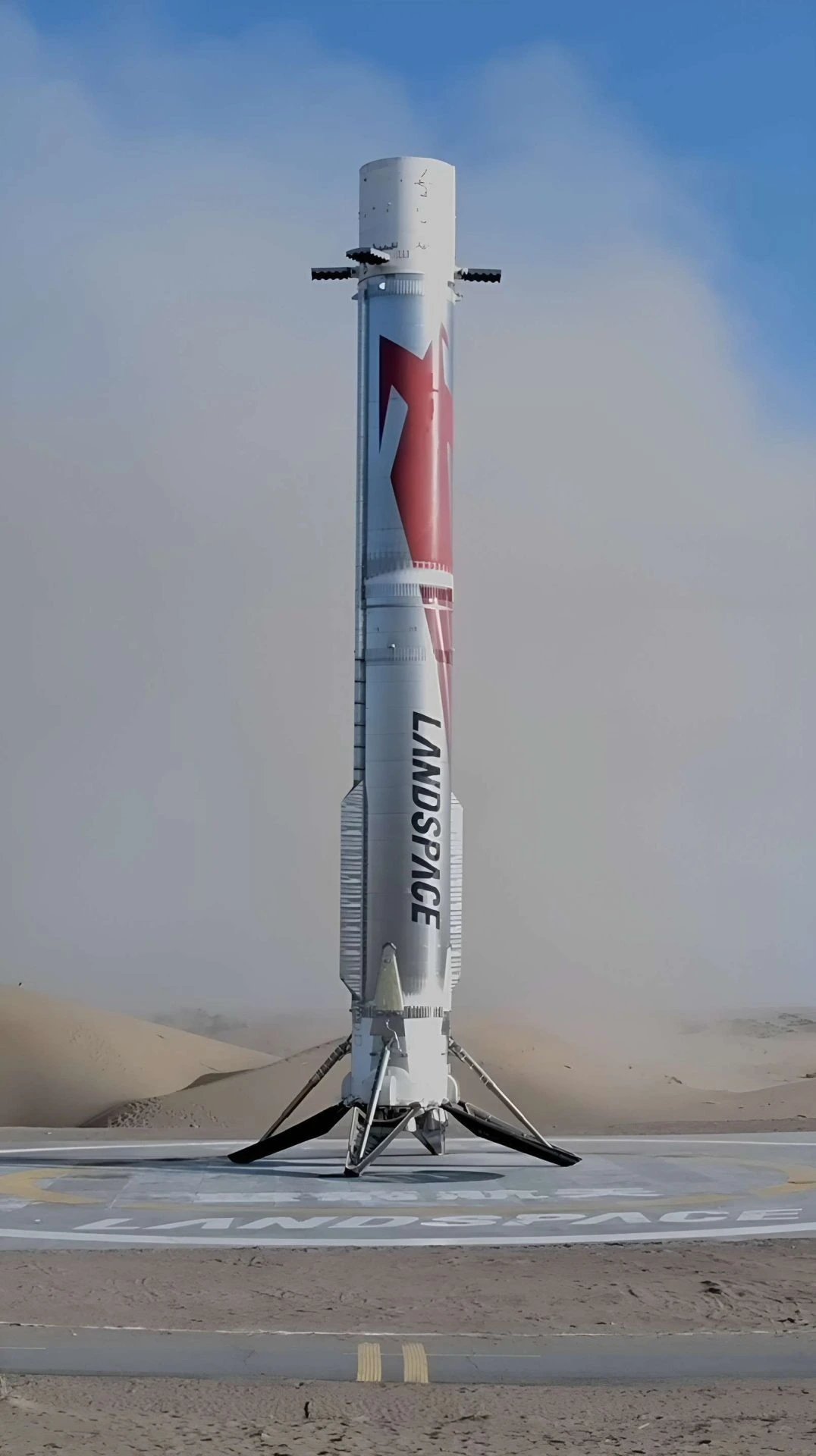
China’s LandSpace recovered the first-stage booster of its Zhuque-3 (ZQ-3) rocket on August 18, 2026. The success makes LandSpace the second Chinese entity to achieve booster recovery, after the state-backed China Academy of Launch Vehicle Technology (CALT) and its CZ-10B rocket.
Key Facts
- The ZQ-3 booster is designed for up to 20 reuse cycles and lands on extendable legs.
- In reusable mode, the ZQ-3 carries a 12,500 kg payload to orbit; expendable mode lifts 21,300 kg.
- The ZQ-3's maiden flight in December 2025 ended in a crash.
- China has reserved more than 200,000 orbital slots with the International Telecommunication Union, with some estimates at 244,000.
- The ZQ-3 and CZ-10B payloads are comparable to SpaceX Falcon 9's 18.3 metric tons, but below Starship's 100–150 tons.
Booster Recovery
LandSpace successfully recovered the first stage of its Zhuque-3 rocket after the December 2025 maiden flight ended in a crash. The company became the second Chinese entity to achieve booster recovery, following the state-backed China Academy of Launch Vehicle Technology and its CZ-10B rocket. The successful landing makes China the only nation with both public and private reusable rockets. The booster lands on extendable legs and is designed for up to 20 reuse cycles.
ZQ-3 Design
The ZQ-3 is a medium-lift, two-stage methalox launch vehicle with a stainless steel hull. Its first stage is powered by nine TQ-12A/B engines, and its second stage uses a single TQ-15A/B vacuum engine. In return-to-launch-site mode, the ZQ-3 carries 12,500 kg; in fully expendable mode, it lifts 21,300 kg. The ZQ-3 and CZ-10B have payload capacities comparable to SpaceX Falcon 9's 18.3 metric tons, but below Starship's 100–150 tons.
Orbital Ambitions
China has reserved more than 200,000 orbital slots with the International Telecommunication Union. Some estimates put the total number of reserved slots at 244,000. The ZQ-3 booster recovery is part of China's push to fill those largely vacant orbital slots.
2 sources
Time · lag behind first