
Tenge firming and KASE drop reflect geopolitical inflation risk as Brent tops $91
This digest was compiled by AI from multiple sources — links to the originals are below.
Kazakhstan's Association of Financiers said geopolitical tensions around the Strait of Hormuz amplify inflationary pressure across Kazakh and global markets. Brent crude trades above $91 per barrel, while the tenge strengthens to 460.34 per dollar and the KASE index falls 0.6% to 7,997.7 points. The U.S. 30-year Treasury yield touched 5.34%, its highest since 2007, before easing to 5.27%.
Key Facts
- Brent crude traded at $91.53 per barrel and West Texas Intermediate at $85.47, rising for a fourth day as tanker traffic through the Strait of Hormuz slowed.
- The U.S. 30-year Treasury yield touched 5.34%, its highest since 2007, while the 10-year yield reached 4.75%, the highest since January 2025.
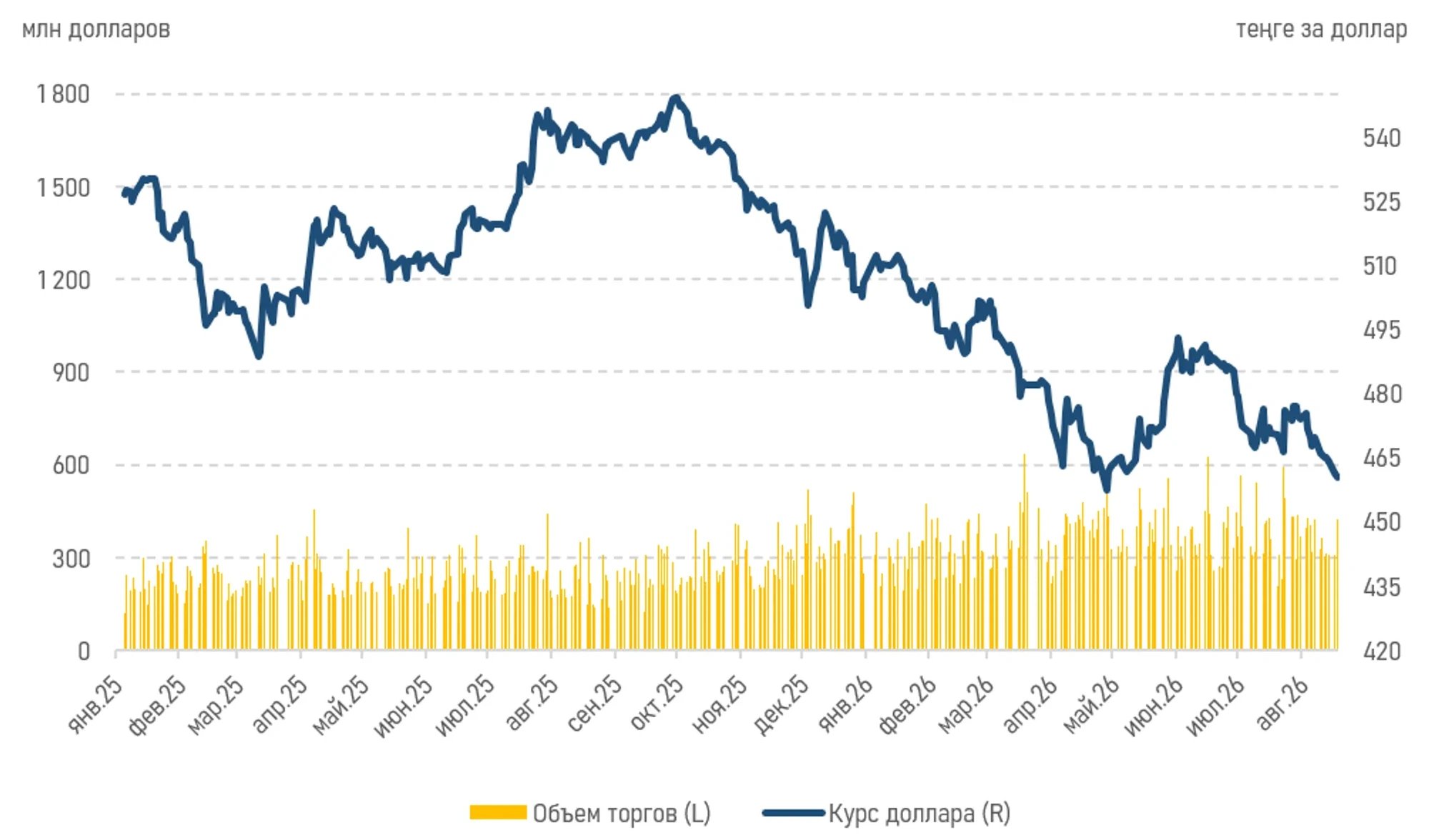
- The USDKZT pair fell 0.93 tenge to 460.34 per dollar, a seventh consecutive decline, on trading volume of $423.4 million.
- The KASE index closed down 0.6% at 7,997.7 points, with turnover falling 2.1 times to 845.6 million tenge.
- The National Bank of Kazakhstan met demand of 994.5 billion tenge at its deposit auction at 16.75% and its open position fell to about 8.7 trillion tenge.
Geopolitical Pressure
Iran fired two ballistic missiles toward the Strait of Hormuz, activating air defense systems in the UAE. Brent crude traded at $91.53 per barrel and West Texas Intermediate at $85.47, rising for a fourth day as tanker-tracking data showed traffic through the Strait of Hormuz slowing further. The United Kingdom Maritime Trade Operations reported a cargo ship was struck by an unknown projectile during an outbound transit of the Strait of Hormuz on Tuesday. The U.S. 30-year Treasury yield touched 5.34%, its highest since 2007, while the 10-year yield hit 4.75%, the highest since January 2025, and the S&P 500 declined for a third consecutive session. KCM Trade Global chief market analyst Tim Waterer said the rise in long-term yields reflects ongoing inflation concerns, fiscal pressures, high oil prices, and heavy government bond issuance.
Currency and Money Markets
Total money market turnover rose to 589.1 billion tenge, up 46.0 billion from the previous session. TONIA increased to 15.95% from 15.83%, while SWAP-1D fell to 12.10% from 12.27% amid a decline in the liquidity surplus. The USDKZT pair fell 0.93 tenge to 460.34 per dollar, a seventh consecutive decline, with trading volume at $423.4 million. AFK analysts attributed the tenge's firming to excess foreign-exchange supply, National Bank operations, exporter sales before the August 25 tax deadline, and oil above $90 per barrel. Demand at the National Bank's deposit auction rose to 994.5 billion tenge, fully satisfied at 16.75%, while the open position fell to about 8.7 trillion tenge.
Equity and Corporate Markets
The KASE index fell 0.6% to 7,997.7 points, with turnover at 845.6 million tenge, down 2.1 times from the previous session. Halyk Bank shares dropped 3.7% and Kaspi lost 2.5%, pressuring the index, while Air Astana gained 2.4% on continued GDR buybacks and a broker price-target increase. Halyk Bank reported first-half 2026 interest income of 1.4 trillion tenge, up 12.2% year-on-year, while net profit fell 15.3% to 447.6 billion tenge. Air Astana said it bought back 26,800 GDRs for $161,500. The Ministry of Finance issued bonds worth 220 billion tenge with maturities from 3 to 12 years and yields of 14.00–18.10%.
7 sources
Time · lag behind first