
Black hole shreds massive star AT2024wpp, releasing 400 billion times Sun's energy
This digest was compiled by AI from multiple sources — links to the originals are below.
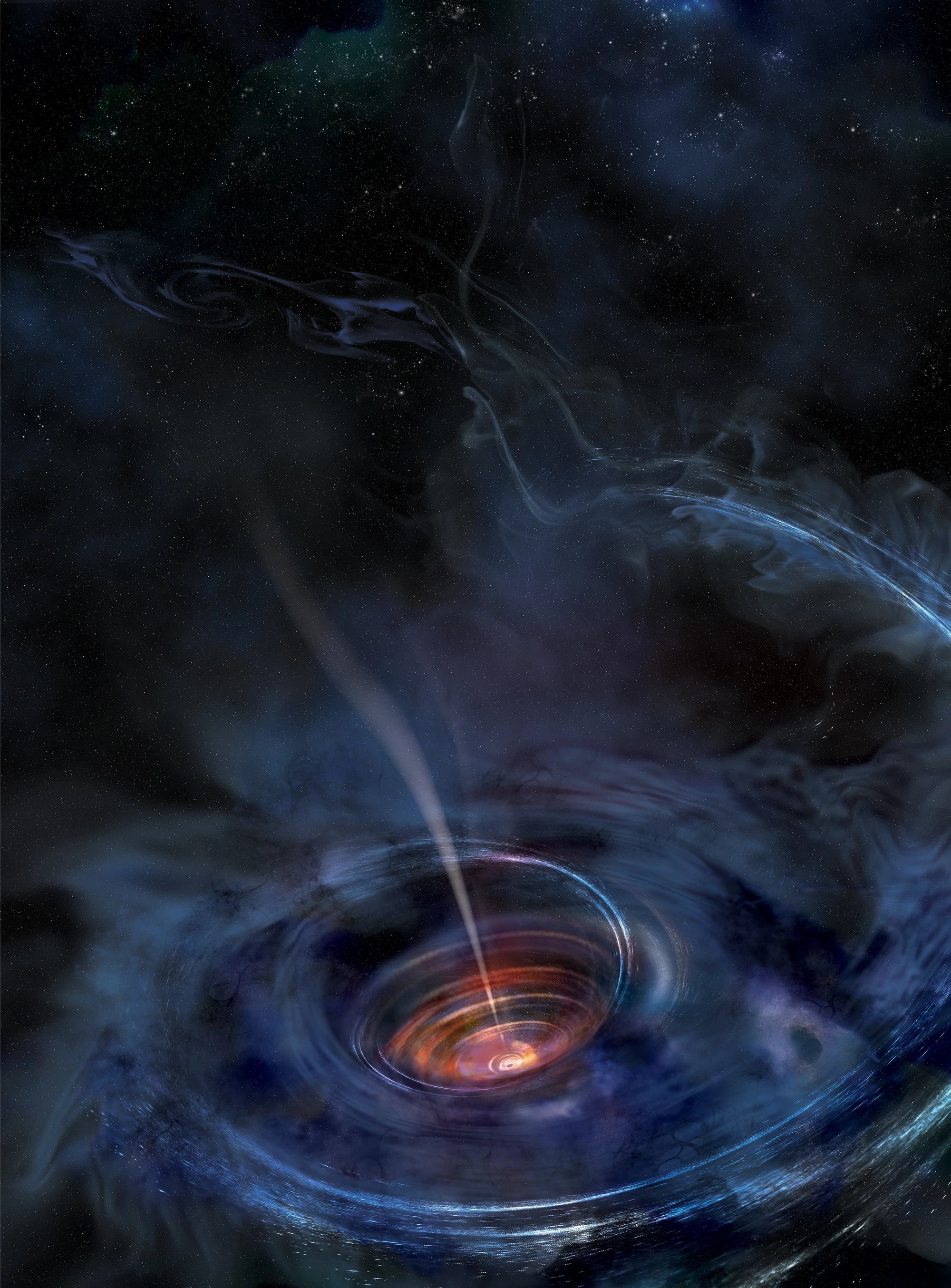
Astronomers observed a black hole tearing apart massive star AT2024wpp, nicknamed the Whippet, in a tidal disruption event. The outburst released roughly 400 billion times the energy of Earth's Sun, surpassing known supernovae, and the findings were presented at the American Astronomical Society conference in Phoenix.
Key Facts
- Anna Ho of Cornell University identified the event, formally designated AT2024wpp and nicknamed the Whippet, using the Zwicky Transient Facility at Palomar Observatory in California.
- Dan Perley of Liverpool John Moores University is the lead author of the paper in the Monthly Notices of the Royal Astronomical Society.
- Within one day, the Liverpool Telescope in the Canary Islands and NASA's Swift satellite showed the object was extremely blue and emitting X-rays, matching a Luminous Fast Blue Optical Transient.
- Distance measurements by R. Michael Rich at UCLA and Yu Jing Qin at Caltech showed the transient was releasing far more energy than an ordinary supernova.
- Perley said the event was many times more energetic than any similar event and more than any known explosion powered by the collapse of a star.
The Outburst and Energy Release
Astronomers around the world observed a black hole tearing apart a massive star in an extreme encounter. During a brief period, the energy release reached roughly 400 billion times the output of Earth's Sun, surpassing even the most powerful supernovae known to astronomers. The event was presented at the American Astronomical Society conference in Phoenix, Arizona. Researchers compared the destruction to preparing a snack for lunch.
Detection and Classification
Anna Ho, an assistant professor of astronomy at Cornell University, identified the event soon after its light arrived at Earth. She detected the object, formally designated AT2024wpp and nicknamed the Whippet, using the Zwicky Transient Facility at Palomar Observatory in California. Researchers quickly suspected the phenomenon could be a Luminous Fast Blue Optical Transient, or LFBOT, a rare type of visible cosmic event linked to the destruction of stars. Within one day, observations from the Liverpool Telescope in the Canary Islands and NASA's Swift satellite showed the object was extremely blue and producing X-rays. Distance measurements supplied by R. Michael Rich at UCLA and Yu Jing Qin at Caltech showed the transient was releasing far more energy than an ordinary supernova.
1 source
Time · lag behind first