Convair B-36 was largest piston-engined combat aircraft; jet retrofit did not outlast B-52
This digest was compiled by AI from multiple sources — links to the originals are below.
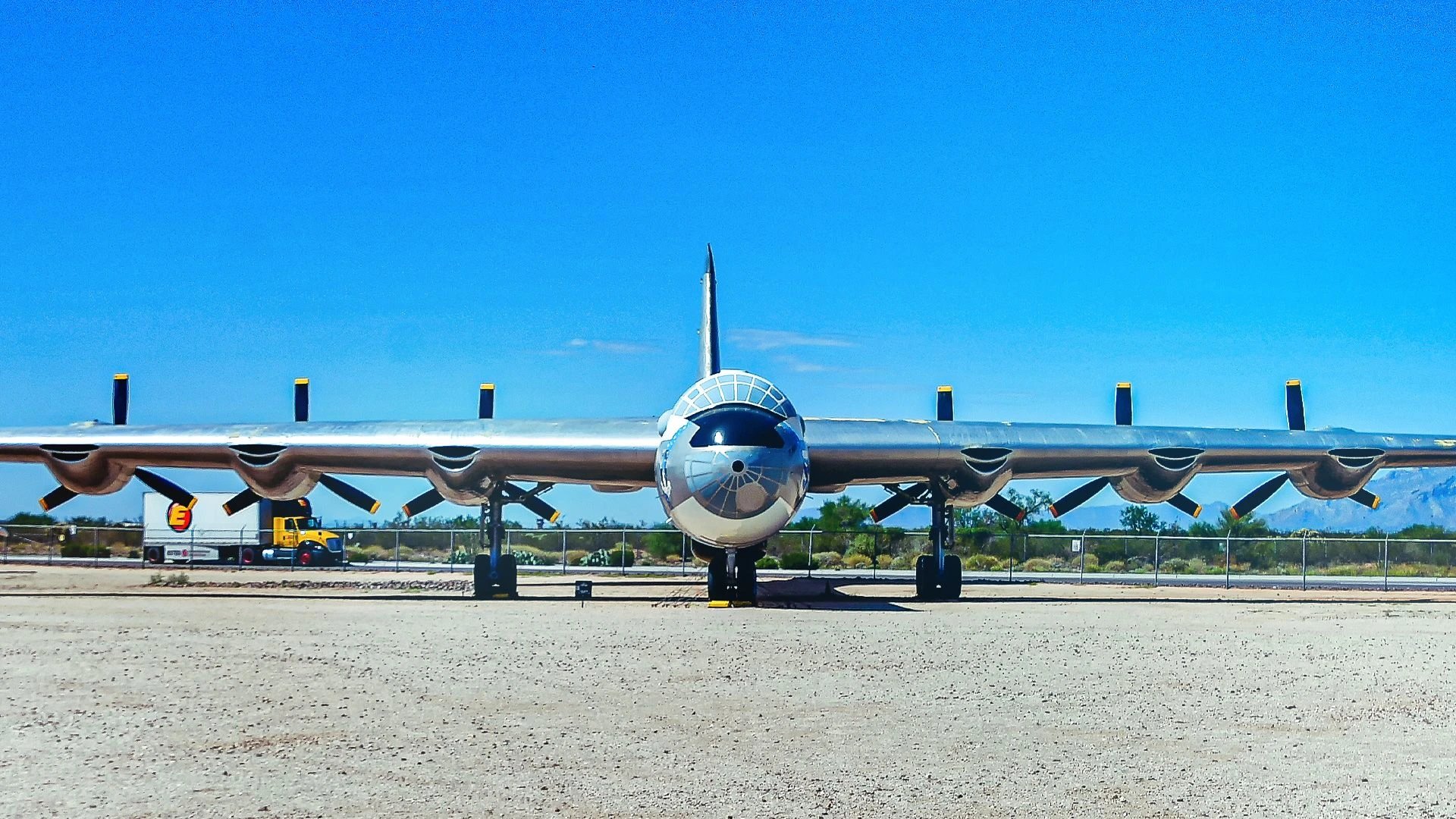
The Convair B-36 Peacemaker, the largest piston-engined combat aircraft ever operated, entered service in 1948 as the first US bomber purpose-built for nuclear deterrence. Later variants added four General Electric J47 turbojets to six Pratt & Whitney R-4360 Wasp Major piston engines, improving take-off and dash performance. The type retired after all-jet bombers such as the B-52 Stratofortress took over the nuclear mission.
Key Facts
- The US Air Force procured 384 B-36s, and each could carry up to 86,000 lb (39,000 kg) of bombs.
- Later variants added four General Electric J47 turbojets to six Pratt & Whitney R-4360 Wasp Major piston engines to improve take-off, climb, and dash capability.
- The B-36 made its maiden flight in August 1946, and Strategic Air Command received its first operational B-36 in June 1948.
- Some B-36s served as photographic reconnaissance aircraft and launched or retrieved specially modified RF-84F/K reconnaissance planes.
- None remain airworthy today, but four complete aircraft have been preserved in museums.
Design and Powerplants
The B-36 entered service in 1948, three years after World War II ended, following delays that allowed engineers to adapt the design for heavy nuclear weapons. Its most distinctive feature was the unusual pusher configuration of six Pratt & Whitney R-4360 Wasp Major piston engines. Later variants added four General Electric J47 turbojets to improve take-off performance, climb rate, and high-speed dash capability. The first operational hydrogen bombs introduced in the early 1950s typically weighed about 30,000–42,000 lb (14,000–19,000 kg), while early nuclear bombs weighed around 8,800 to 11,000 lb (4,000 to 5,000 kg). The US Air Force Museum states that Consolidated Vultee designed the B-36 during World War II in response to the Army Air Forces' requirement for a strategic bomber with intercontinental range.
Nuclear Role and Retirement
The B-36 entered service as the United States shifted toward delivering nuclear weapons across intercontinental distances without relying on overseas bases. The US Air Force Museum notes some B-36s were adapted for photographic reconnaissance and to launch and retrieve modified RF-84F/K reconnaissance planes. The US Air Force procured 384 B-36s, and the type became the largest piston-engined combat aircraft ever placed into operational service. The bomber remained operationally relevant until all-jet bombers, particularly the B-52 Stratofortress, assumed the primary nuclear deterrence role. None remain airworthy today, but four complete aircraft have been preserved in museums.
1 source
Convair B-36 was largest piston-engined combat aircraft; jet retrofit did not outlast B-52