
SwRI study finds evidence of recent liquid nitrogen flow on Pluto
This digest was compiled by AI from multiple sources — links to the originals are below.
A study led by Southwest Research Institute provides the first evidence that liquid nitrogen recently flowed onto the surface of Pluto’s Sputnik Planitia glacier. The findings, published in the Planetary Science Journal, suggest subsurface liquid nitrogen rises through cracks, temporarily darkening linear features. New Horizons images show patterns similar to wetting on Earth’s ice sheets.
Sputnik Planitia’s Young Surface
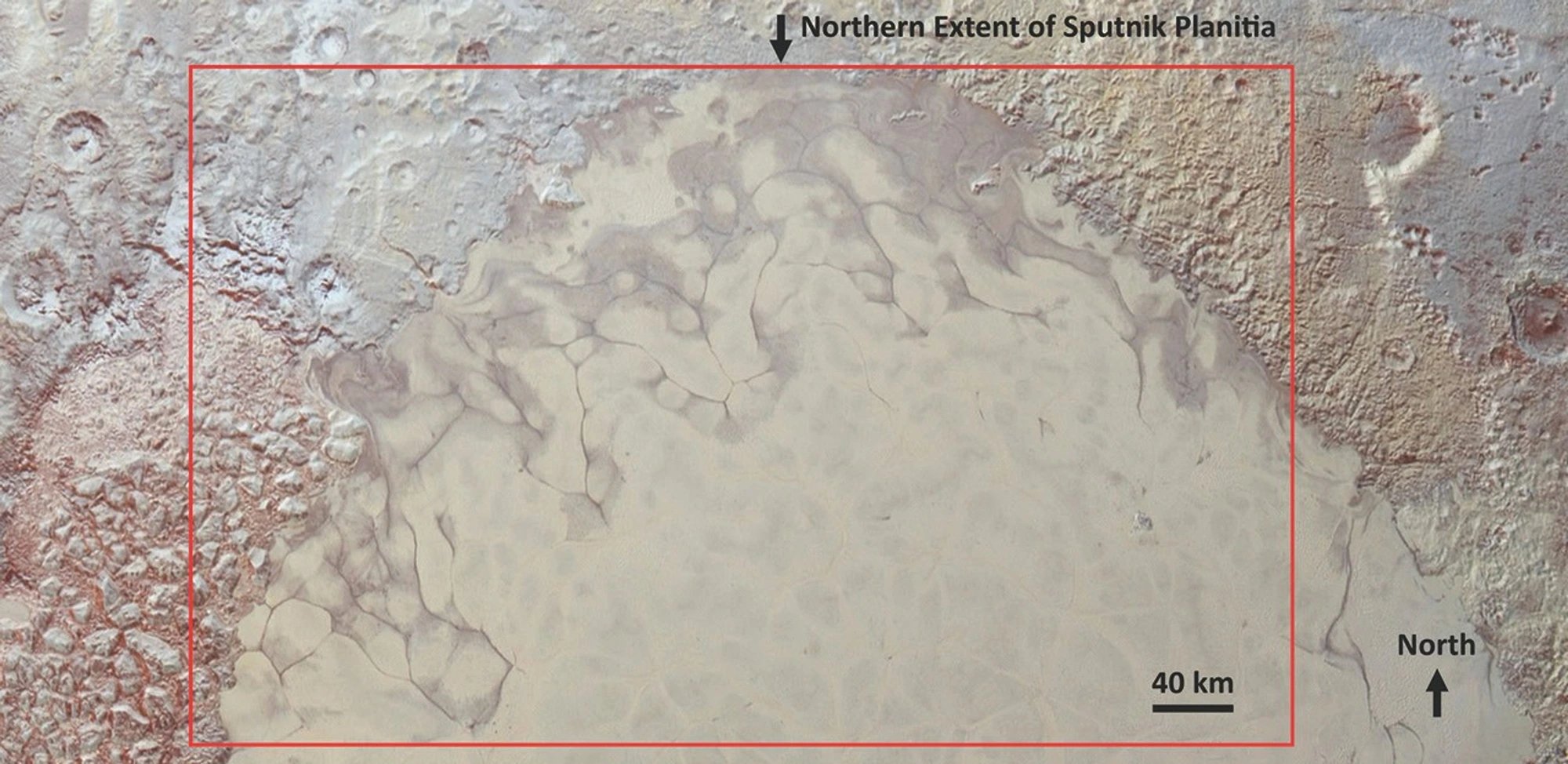
Sputnik Planitia is a nitrogen glacier larger than Texas and Oklahoma combined, with a surface estimated to be less than 1 million years old. Images from NASA’s New Horizons spacecraft revealed city-sized convection cells bordered by dark, linear features. SwRI’s team found these dark markings occasionally appear and fade, suggesting they are periodically wetted by liquid. Lead author Alan Stern called the finding surprising, noting it suggests a new kind of time-variable feature on Pluto.
Wetting Comparison with Earth
The dark patterns on Sputnik Planitia resemble wetting features observed on Earth’s ice sheets, such as Greenland, where liquid water darkens snow and ice. Using Landsat 9 imagery, researchers matched the morphology of Pluto’s darkened lines. Co-author Kelsi Singer said Pluto’s unique conditions provide a natural laboratory for understanding how materials behave in extreme environments. The liquid is likely nitrogen, as Pluto’s atmosphere and temperature rule out rain, pointing to subsurface emergence through cracks.
1 source
Time · lag behind first