
Scientists identify Chicxulub asteroid as rare CO chondrite with low sulfur
This digest was compiled by AI from multiple sources — links to the originals are below.
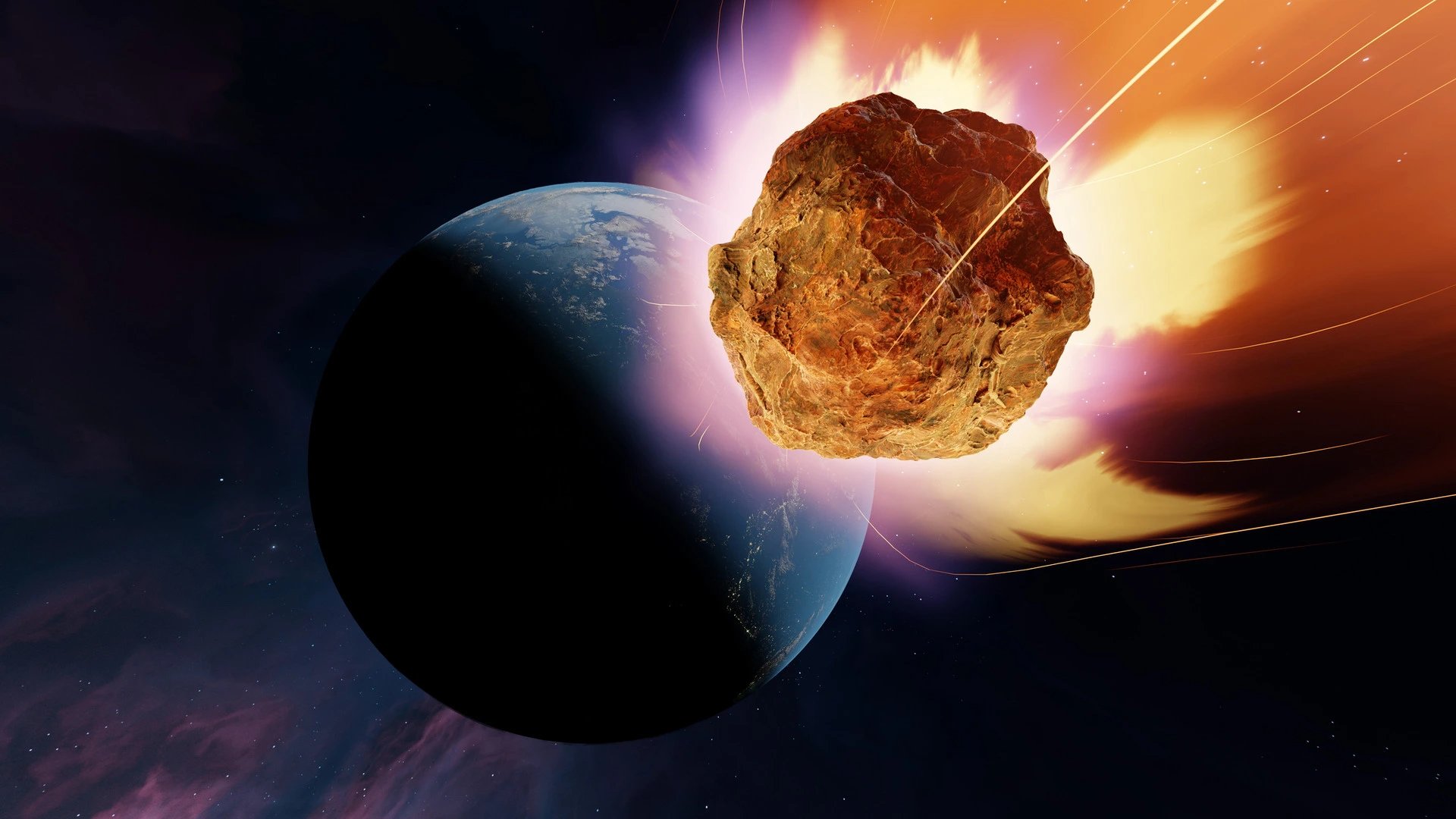
The asteroid that struck the Yucatan Peninsula 66 million years ago has been identified as a CO chondrite, a rare carbonaceous meteorite with low sulfur content, according to a study published July 18 in Science Advances. The finding, based on nickel isotope analysis of Cretaceous-Paleogene boundary sediments, challenges the long-held theory that sulfur from the impact caused the global winter that killed the dinosaurs.
The Discovery
Led by Georgy V. Makhatadze of the Institut de Physique du Globe de Paris, researchers measured nickel isotopes in clay from five European sites at the Cretaceous-Paleogene boundary. The isotopic signature matched CO chondrites of the Ornans type, a subgroup that is rare even among carbonaceous chondrites, which make up only 5 percent of recovered meteorites. The impactor was an asteroid 10 to 15 kilometers across, striking at 64,000 km/h.
The Sulfur Paradox
For decades, the leading hypothesis held that large amounts of sulfur injected into the atmosphere blocked sunlight and caused an extended impact winter. However, CO chondrites contain significantly less sulfur than the CM and CR chondrites previously suspected as the impactor. This mismatch forces scientists to reconsider whether sulfur was the primary kill mechanism, raising questions about other factors such as soot from wildfires or dust.
1 source
Time · lag behind first