
Tohoku Researchers Identify Molecules That Enhance Plant Drought Tolerance
This digest was compiled by AI from multiple sources — links to the originals are below.
An international team led by Tohoku University has identified small molecules NS5806 and UA49 that induce stomatal closure in plants, enhancing drought tolerance without inhibiting growth. The findings, published in Nature Communications, could lead to new biostimulants for crops facing water scarcity.
The Discovery
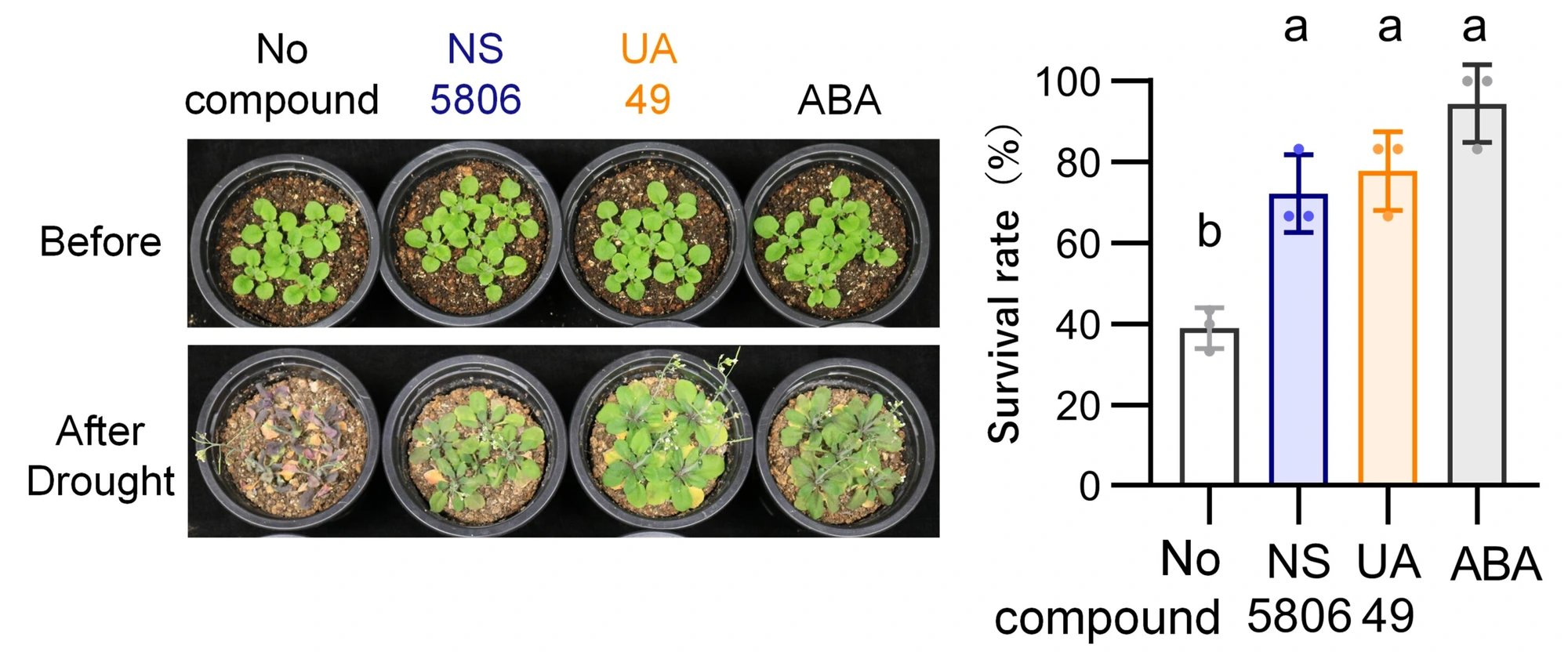
Researchers screened for inhibitors of the KAT1 potassium channel, which regulates stomatal opening, and identified the small molecule NS5806. A derivative, UA49, was synthesized by modifying its chemical structure. Both compounds successfully induced stomatal closure and inhibited opening in Arabidopsis thaliana leaf epidermal strips, and foliar application improved drought tolerance in whole plants.
Mechanism of Action
Unlike abscisic acid (ABA), the molecules triggered stomatal closure through a distinct calcium-linked pathway. In normal guard cells, NS5806/UA49 caused a sustained influx of Ca²⁺, a response absent in plants lacking KAT1 channels. This indicates that potassium channel activity is involved in modulating calcium signaling, suggesting a novel role for K⁺ channels as signaling mediators.
Agricultural Potential
The compounds avoided ABA’s unwanted side effects, such as delayed seed germination and inhibited root growth. Their ability to confer drought tolerance without growth penalties makes them promising candidates for biostimulant applications in agriculture, particularly for crops under heat and water stress.
1 source
Time · lag behind first