
Neanderthal gene variant adds 0.3 cm height and 0.25 kg muscle mass, study finds
This digest was compiled by AI from multiple sources — links to the originals are below.
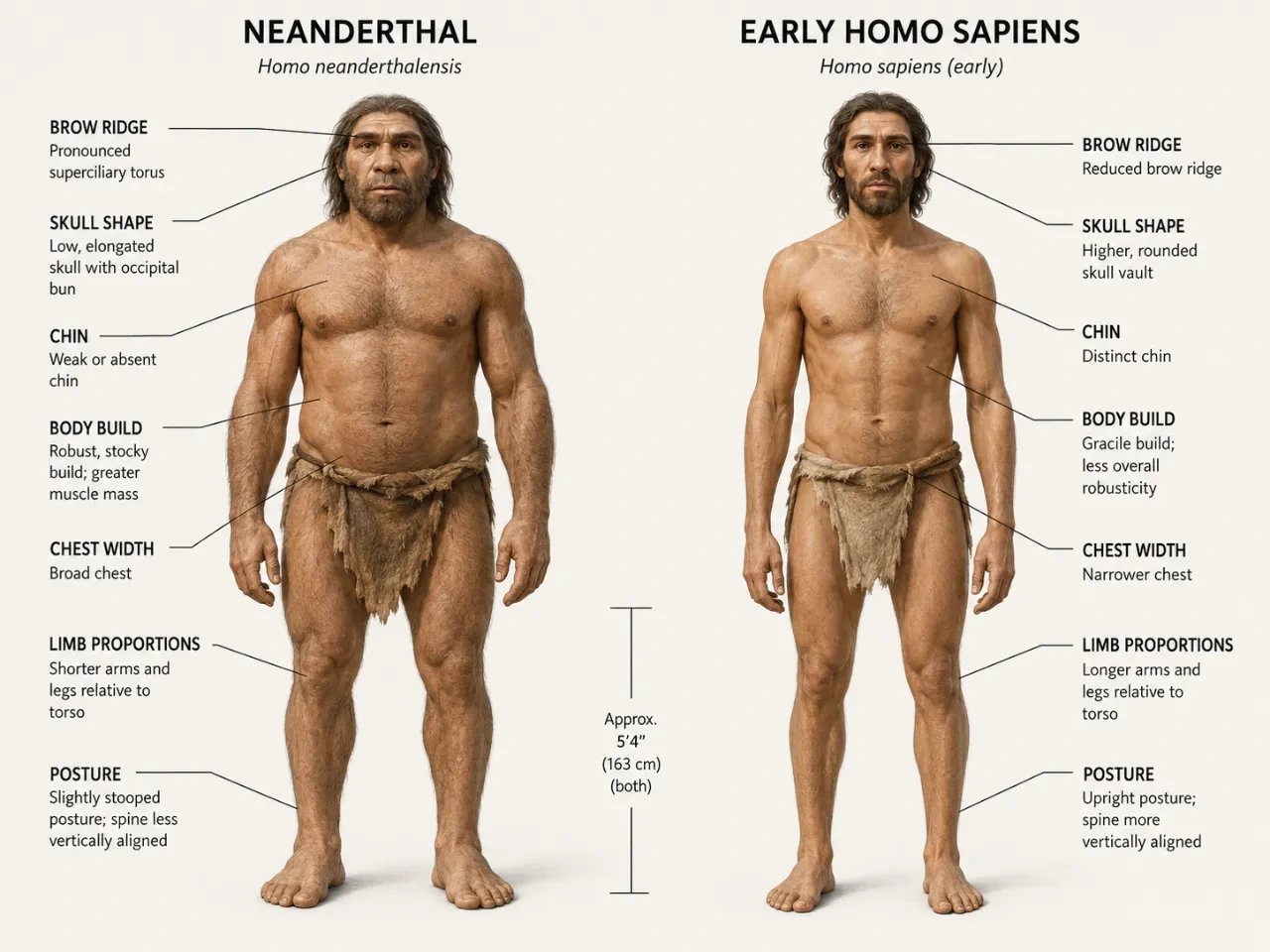
A Neanderthal gene variant increases height by 0.3 centimeters and muscle mass by 0.25 kilograms in modern humans, according to a study published August 5 in Current Biology. Carriers of the variant, which affects the growth hormone receptor, are on average taller and more muscular than non-carriers, an analysis of 1.1 million adults showed. The variant entered the human genome through interbreeding about 47,000 years ago and is now most prevalent in South and East Asian populations.
Ancient Receptor Variant
Researchers analyzed three high-coverage and two medium-coverage Neanderthal genomes to identify two amino-acid changes unique to the hominin growth hormone receptor. The receptor variant entered modern human populations through interbreeding roughly 47,000 years ago, according to genetic evidence. Bastien Llamas, a human geneticist at Adelaide University, said the findings provide a plausible molecular pathway for Neanderthals' robust traits known from fossils.
Global Carrier Rates
The variant is most common in South Asia, where about 20% of the population carries it, and in East Asia at 15%. In Europe, the rate drops to around 0.5%, and it is absent from sub-Saharan African populations. The distribution reflects ancient migration and interbreeding patterns between modern humans and Neanderthals in Eurasia.
Measured Physical Effects
Mouse cells engineered to produce the Neanderthal receptor proliferated about 39% more over five days than cells with the modern human version, indicating enhanced growth signaling. Biobank data from over 1.1 million adults showed carriers were on average 0.3 centimeters taller and had 0.25 kilograms more muscle mass. Philipp Kanis of the Max Planck Institute for Evolutionary Anthropology said the effect size is small but statistically significant.
2 sources
Time · lag behind first