
International team maps 2,110 centromeres, finds 6% have dual kinetochores
This digest was compiled by AI from multiple sources — links to the originals are below.
An international team has assembled and characterized centromere sequences from 2,110 individuals representing five continental groups, discovering previously hidden structural variation. The analysis, published in Nature, shows that around 6% of centromeres have di-kinetochores and reveals rapid mutation rates at kinetochore sites. The findings expand the limited genomic data available for these essential chromosomal regions.
The Centromere Dataset
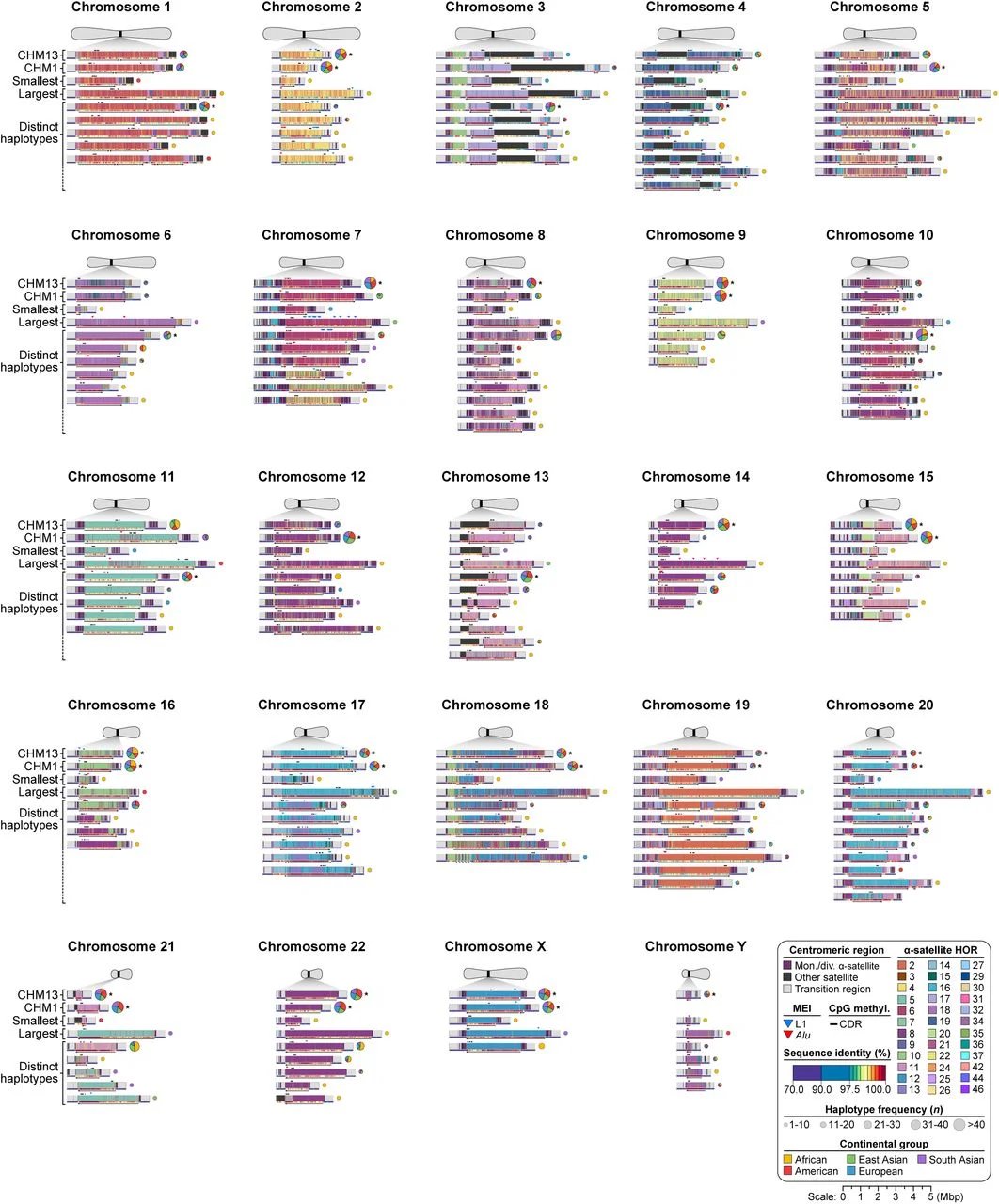
Researchers used long-read sequencing and tailored bioinformatics to assemble 2,110 centromeres from 28 population groups across five continents. The dataset covers 226 centromere haplotypes and 1,870 α-satellite higher-order repeat variants. These assemblies were compared to 5,747 centromeres from the Human Pangenome Reference Consortium to assess diversity.
Multiple Kinetochore Sites
The study found that while most centromeres have a single kinetochore, approximately 6% contain di-kinetochores and less than 1% possess tri-kinetochores, confirmed by long-read chromatin profiling and multigenerational inheritance analysis. Kinetochore position was found to be closely associated with the underlying DNA sequence and structural organization of the centromere. This discovery challenges the conventional understanding of centromere architecture.
Rapid Mutation and Evolution
Comparison with reference centromeres revealed a 20-fold variation in mutation rates, with the kinetochore site identified as the most rapidly mutating region. A subset of centromeres showed evidence of archaic hominin introgression. The mutation rates were validated in a four-generation family of 28 members. The researchers propose a model of an 'arms race' between centromeric sequences and proteins, driving rapid evolution.
1 source
Time · lag behind first