
Expanded codebook identifies DNA-binding motifs for 177 human transcription factors
This digest was compiled by AI from multiple sources — links to the originals are below.
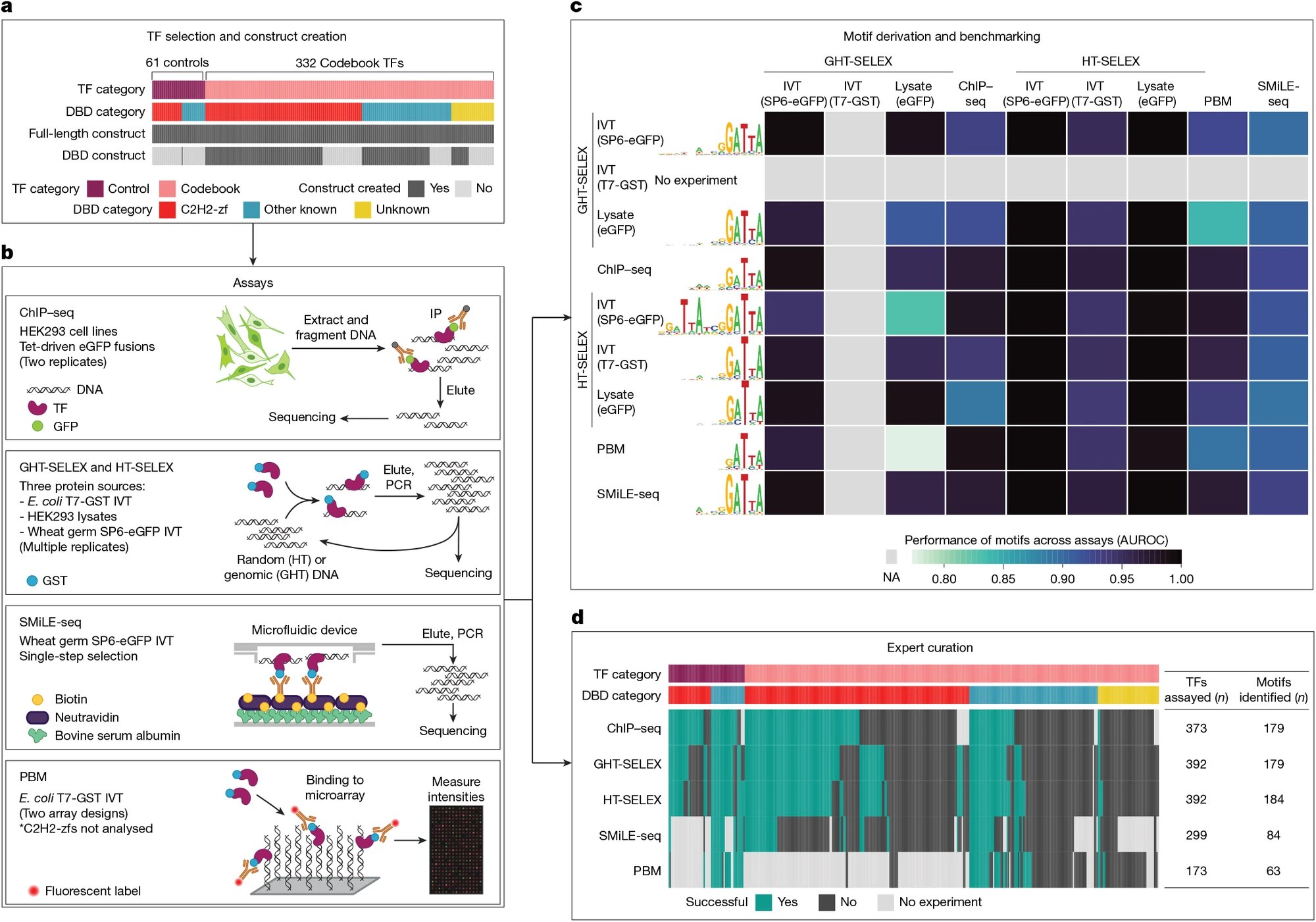
Researchers have determined the DNA-binding specificity for 177 human transcription factors, extending the known motif vocabulary by about 130 distinct sequences. The motifs, derived from more than 4,000 in vitro and in vivo assays, were strongly enriched at cellular binding sites and predicted gene expression from promoter regions. The expanded codebook reveals tens of thousands of previously unknown, conserved binding sites across the human genome, providing a major step toward decoding regulatory DNA.
The Motif Deficit
A 2018 survey estimated that over 25% of the approximately 1,600 known human transcription factors lacked established DNA-binding motifs. Most of these uncharacterized factors are not close relatives of well-studied TFs, making their binding preferences impossible to infer from sequence alone. The new Codebook project aimed to systematically determine the sequence specificity of 332 putative and poorly characterized human TFs using multiple complementary assays. The effort comprised more than 4,000 independent experiments across in vitro and in vivo techniques, including protein-binding microarrays and chromatin immunoprecipitation. The resulting dataset addresses a major gap in the understanding of how regulatory DNA is interpreted by the cell.
Motif Identification
The project successfully identified binding motifs for 177 of the 332 tested TFs, a success rate of 53%. Of these, the majority are associated with only a single protein, extending the vocabulary of human TF recognition by approximately 130 distinct motifs. The motifs were derived using position weight matrices, a common model that quantifies nucleotide preferences at each position. Critically, the in vitro motifs were shown to be strongly enriched at cellular binding sites, directly addressing the controversy over their physiological relevance. These findings provide a high-confidence set of sequences that can be used to scan the genome for potential regulatory elements.
Genome Regulatory Landscape
Using the expanded motif catalog, researchers uncovered tens of thousands of previously unknown, conserved TF-binding sites across the human genome. These sites are heavily concentrated in promoter regions near genes, and their presence is predictive of gene expression levels. The new codebook thus provides a powerful tool for interpreting noncoding DNA, which constitutes the vast majority of conserved human genomic sequence. The data will aid in understanding gene regulation, interpreting genetic variants, and deciphering the functional significance of regulatory mutations linked to disease.
1 source
Time · lag behind first