
NASA's Roman Space Telescope to launch in late August, with potential to detect killer asteroids
This digest was compiled by AI from multiple sources — links to the originals are below.
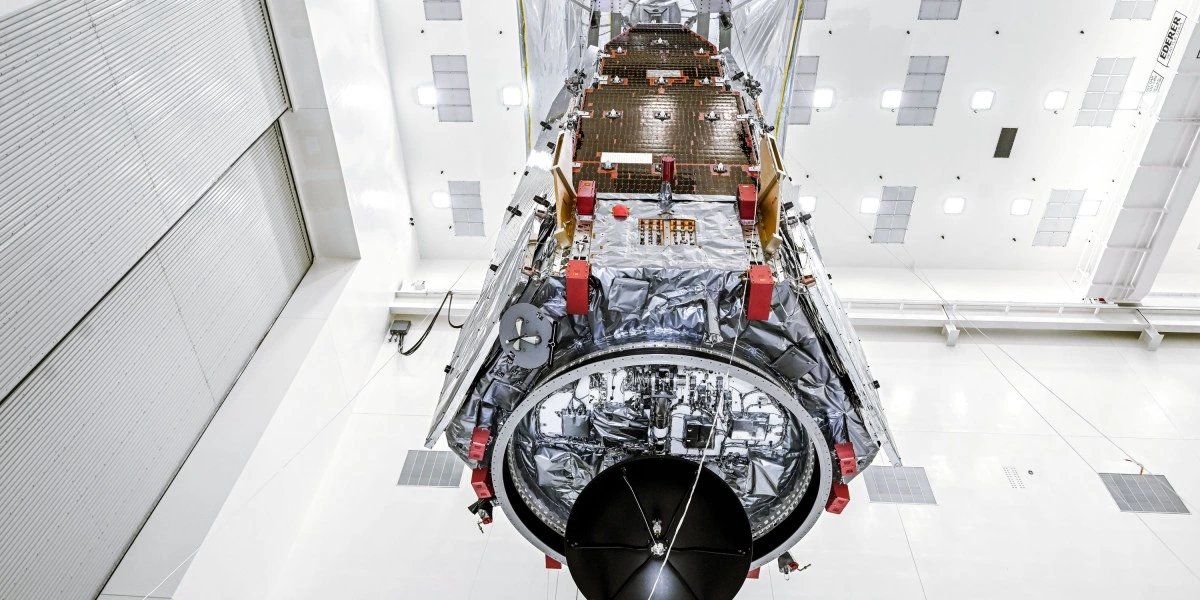
NASA is set to launch the Nancy Grace Roman Space Telescope in late August from Kennedy Space Center in Florida. Equipped with a 300-megapixel infrared camera, the observatory will survey over a billion galaxies and could also detect small asteroids up to 60 feet long.
Primary Mission and Instrument
NASA’s Roman Space Telescope is scheduled for launch at the end of August from Kennedy Space Center. Named after NASA’s first chief astronomer, it carries a 300-megapixel infrared camera with a field of view 100 times larger than Hubble’s. Its primary science goals include mapping dark matter, studying dark energy, discovering thousands of new exoplanets, and surveying over one billion galaxies. The telescope was threatened with funding cuts by the Trump administration last summer, prompting scientists to highlight its potential for planetary defense.
Asteroid Spotting Capabilities
A team led by Bryan Holler at the Space Telescope Science Institute will present a proposal at the Europlanet Science Congress in the Netherlands in September, showing Roman can spot small asteroids up to 60 feet (18 meters) long. This size is comparable to the Chelyabinsk asteroid that injured 1,500 people in 2013. Roman’s software currently discards streaks caused by asteroids, but astronomers could modify it to identify and track these objects. Andy Rivkin of Johns Hopkins Applied Physics Laboratory noted that the telescope’s wide field of view makes it uniquely suited to scan the solar system for threats.
Complementary Role with JWST
Roman will complement the James Webb Space Telescope, which also observes distant galaxies and could detect asteroids. While JWST has a narrow field of view, Roman’s wide-angle vision will enable broader surveys. Together, they could provide a more comprehensive picture of near-Earth objects, though Roman was not originally designed for planetary defense.
2 sources
Time · lag behind first