
Double Chooz collaboration measures antineutrinos from spent nuclear fuel for first time
This digest was compiled by AI from multiple sources — links to the originals are below.
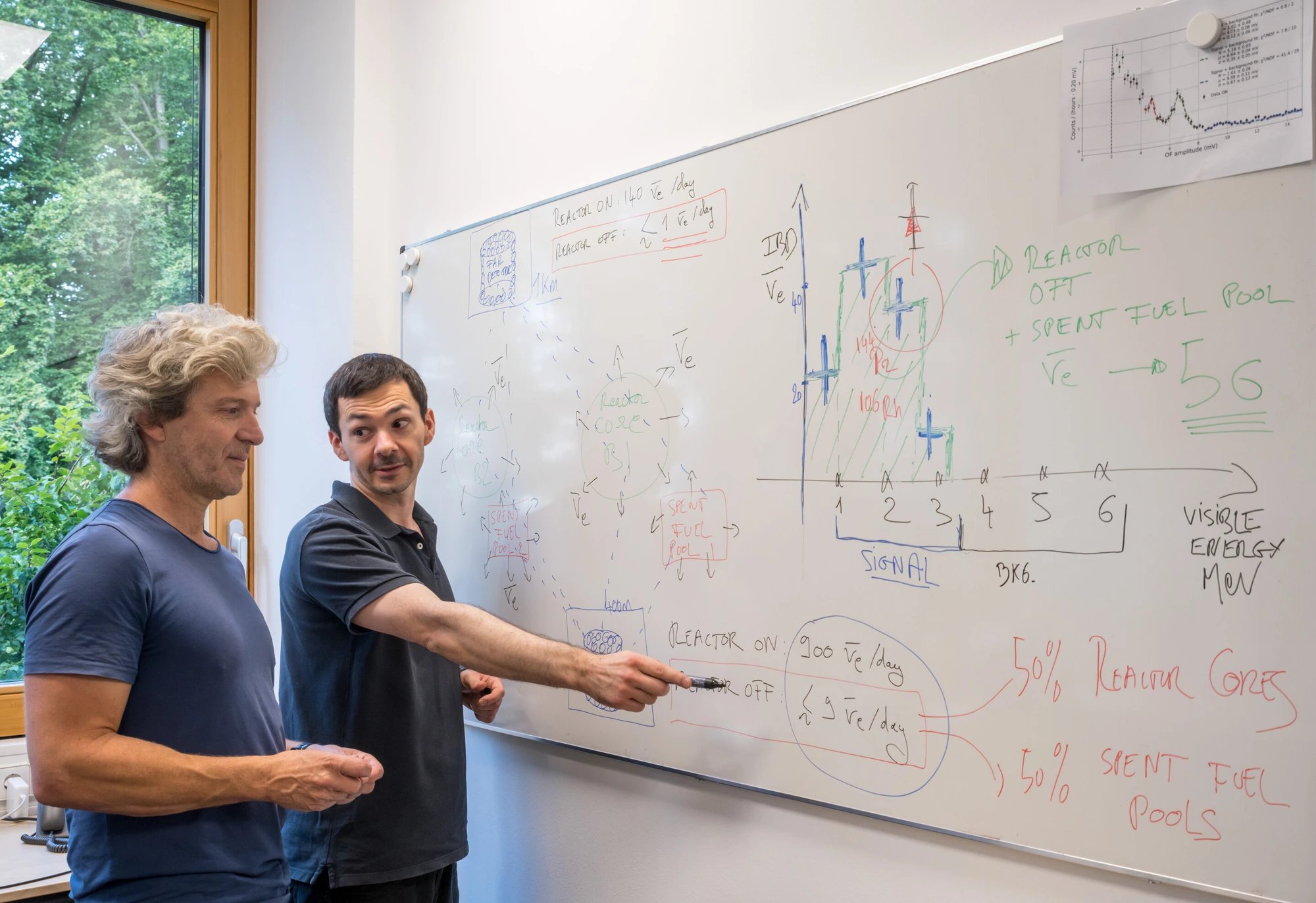
The Double Chooz collaboration has measured antineutrinos from spent nuclear fuel for the first time, observing around 100 candidate events over 17.2 days at the Chooz nuclear power plant in France. The findings, published in Physical Review Letters, confirm that antineutrino emissions persist after reactor shutdown and agree with simulations of long-lived fission product decay.
Detection at Chooz
The Double Chooz experiment operates an underground detector at the Chooz nuclear plant in France, 400 meters from two reactor cores. It contains over 30 cubic meters of liquid scintillator that emits light flashes upon antineutrino interactions. During 17.2 days with both reactors fully shut down, the detector identified about 100 antineutrino candidate events from residual radioactivity in the reactor cores and nearby spent fuel cooling pools. The measurement required exceptionally low backgrounds and careful analysis developed over years, according to collaboration members Anthony Onillon and Thierry Lasserre of the Max Planck Institute for Nuclear Physics in Heidelberg.
Agreement with Simulations
The observed antineutrino signal matched detailed simulations of the remaining nuclear fuel inventory and the decay of long-lived fission products. This constitutes the first direct experimental validation of predictions for antineutrino emission from shutdown reactors and spent fuel. Until now, reactor antineutrino studies focused almost exclusively on operating units with much higher fluxes. The finding, published in Physical Review Letters, confirms that even after shutdown, a faint antineutrino flux persists for months to years.
Implications for Monitoring
The results demonstrate that antineutrino detectors can probe nuclear reactors during shutdown periods, opening new avenues for reactor monitoring, nuclear safety and safeguards. The technique could verify compliance with reactor shutdown declarations and monitor spent fuel inventories remotely. Recent preliminary results from the JUNO-TAO experiment in China, presented at the Neutrino 2026 conference, show that this direction is already being pursued by other collaborations.
1 source
Time · lag behind first