
Ultrafast X-ray flashes partially reverse the damage they cause, enabling brighter imaging
This digest was compiled by AI from multiple sources — links to the originals are below.
An international team led by the University of Hamburg and SLAC National Accelerator Laboratory has demonstrated that attosecond X-ray pulses can partially reverse radiation damage via stimulated emission. This overturns the long-held assumption that electronic bleaching is irreversible during exposure, enabling brighter and more accurate imaging even at extreme doses. The findings were published in Nature Communications.
The Damage Barrier
X-ray imaging faces a fundamental trade-off between dose and image quality. At high-resolution, even X-ray free-electron laser pulses — lasting femtoseconds — strip electrons from atoms, turning a solid into a transparent ion cloud before a usable image forms. This electronic bleaching has been considered an unavoidable limit by radiologists and molecular physicists alike. The Neon nanoparticle experiments at the Linac Coherent Light Source targeted this very problem.
Attosecond Reversal
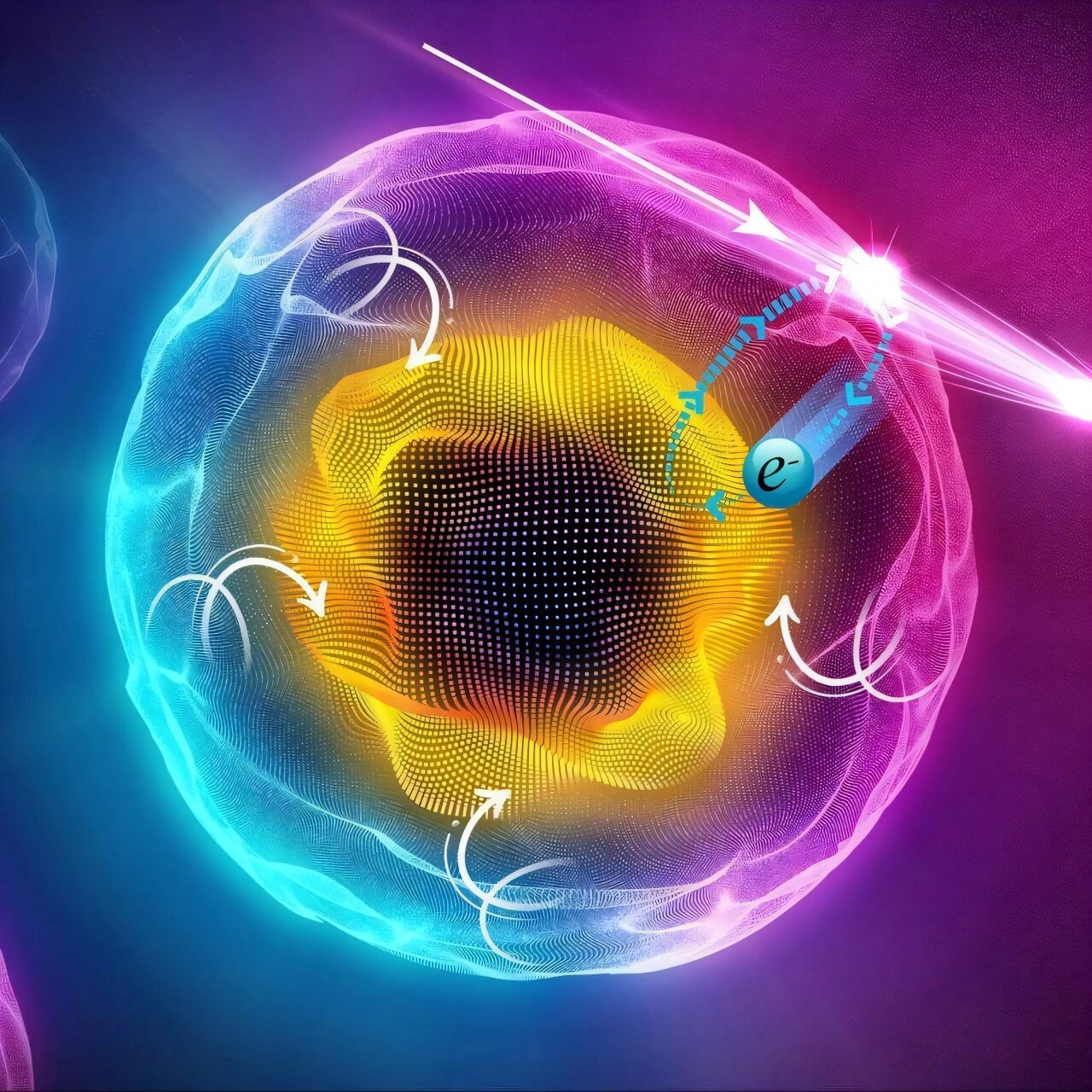
The team used X-ray pulses lasting only a few hundred attoseconds, roughly 100 to 1,000 times shorter than those in prior XFEL imaging. Tuned near the neon K-edge, these pulses not only outran the damage cascade but triggered stimulated emission — X-rays actively pushing electrons back toward their original state. First author Anatoli Ulmer noted that this 'breaks the cycle' of accepted damage dynamics. The effect partially restored the sample's opacity, preserving image contrast.
Brighter, Sharper Images
By reversing part of the damage while irradiation continues, the technique allows higher X-ray doses without the usual loss of detail. Researchers anticipate that this will enable imaging of chemical reactions in individual molecules and nanoparticles with unprecedented clarity. The study involved collaborators from the University of Hamburg, SLAC, and other institutions.
1 source
Time · lag behind first