
Titan's large coastal rivers form deltas only 1.3% of the time, new analysis shows
This digest was compiled by AI from multiple sources — links to the originals are below.
A Brown University-led study found that only about 1.3 percent of Saturn's moon Titan's large coastal rivers form deltas, compared to nearly all such rivers on Earth. The finding deepens the mystery of Titan's methane cycle, as the moon has rain, flowing liquids, and erodible surface material. The analysis, based on Cassini radar data, identified just two probable deltas among the mapped river systems.
The Missing Deltas
A 2025 paper led by Brown University planetary scientist Samuel Birch catalogued river termini on Titan and found only two probable deltas from all large coastal rivers mapped by Cassini. That gives a rate of roughly 1.3 percent, whereas rivers of comparable size on Earth almost always deposit a delta. Cassini’s radar coverage did not capture every channel at high resolution, so the count is limited to observable features, but the contrast remains stark. The work was published in the Journal of Geophysical Research: Planets.
A Methane-Based Water Cycle
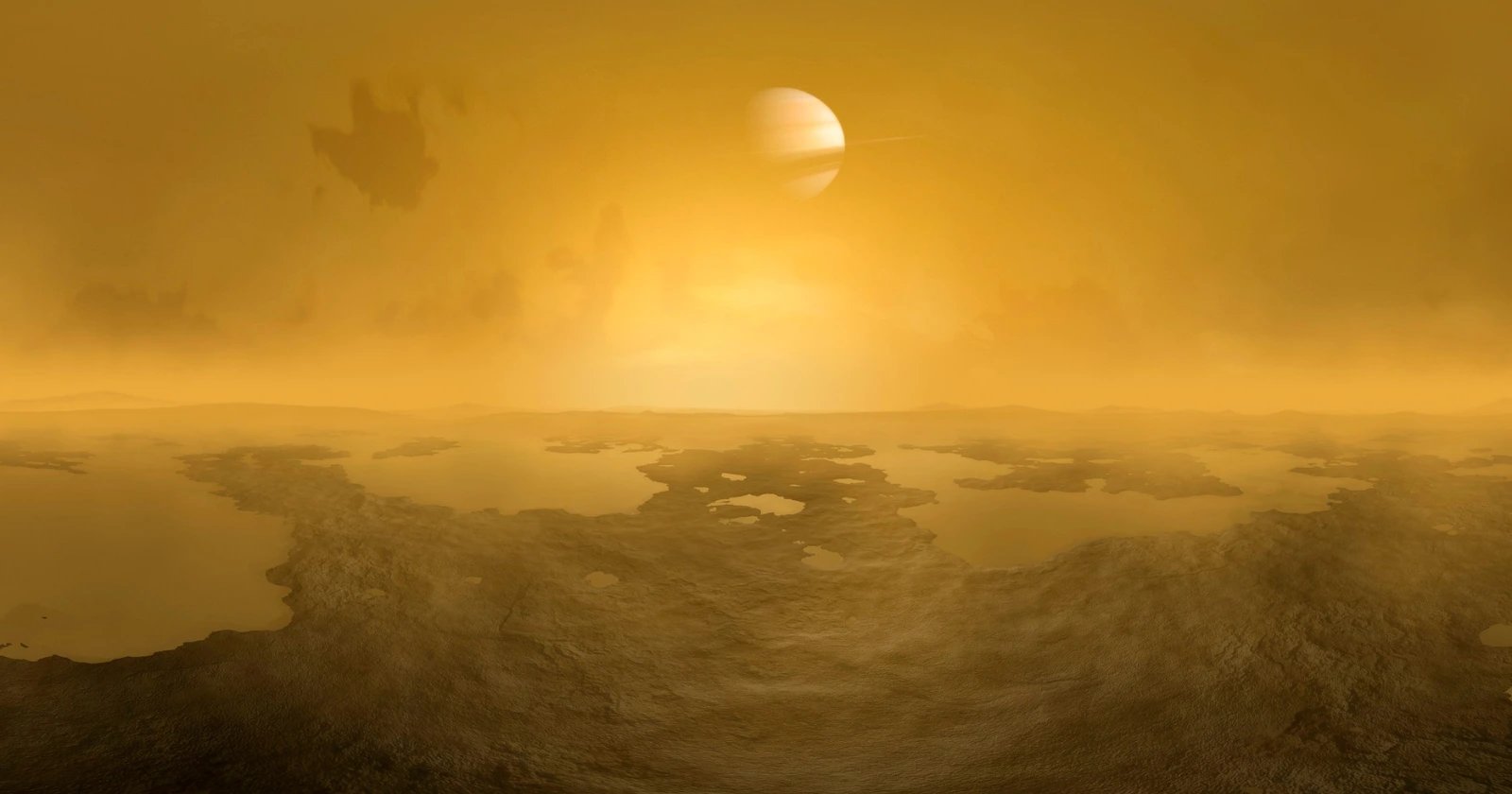
Titan’s surface temperature hovers around minus 179 degrees Celsius, making water ice as hard as rock and allowing methane and ethane to exist as liquids. The moon has a thick nitrogen atmosphere that supports clouds, rainfall, and river systems, including a 400-kilometer network near the north pole that drains into Ligeia Mare, a hydrocarbon sea larger than Lake Superior. Gravity on Titan is one-seventh of Earth’s, and its rivers carry a mix of liquid methane and ethane rather than water.
The Sediment Conundrum
Despite having rain, flowing liquid, and apparently erodible material, Titan’s rivers almost never build deltas. Sediment on Titan may consist of grains of water ice and complex organic compounds instead of silicate minerals, but scientists do not yet know why that would suppress delta formation. The puzzle is compounded by Titan’s long seasons, each lasting more than seven Earth years, and the possibility that sediment supply is insufficient or that other processes disperse material at the coast.
1 source
Time · lag behind first