
Nature study finds 90 bacterial STAND families, 14 of which detect phage proteins
This digest was compiled by AI from multiple sources — links to the originals are below.
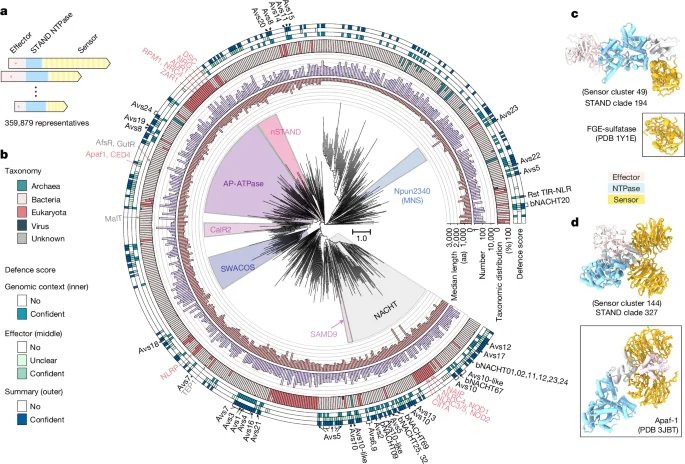
An international research team reports in Nature the discovery of at least 90 bacterial STAND NTPase families involved in antiviral defence. Cryo-electron microscopy structures of one sensor, Avs7, show it forms a butterfly-shaped tetramer incorporating host EF-Tu protein. Genetic screens of 687 phage genes revealed 13 additional families each sense a different core phage protein.
Sensor Diversity
A systematic phylogenetic analysis of prokaryotic STAND NTPases identified at least 90 structurally distinct families associated with antiviral defence. The study, published in Nature, expands known immune sensor diversity well beyond the few families previously characterized. These families include Avs1–Avs10 and newly described Avs11–Avs21, each defined by unique structural and functional features.
Avs7 Structural Insights
Cryo-EM structures of Salmonella enterica Avs7 reveal an asymmetric, butterfly-shaped tetramer that assembles stepwise upon binding the phage major capsid protein. The complex incorporates bacterial elongation factor Tu as a structural component, enhancing defence. This repurposing of a host-factor represents a novel mechanism in bacterial immunity.
Broad Pattern Recognition
Genetic screens against 687 phage genes showed that 13 additional STAND families recognize 13 conserved phage proteins. Targets include core structural components like portal, tail nozzle, and head–tail connector, as well as replicative proteins such as DNA polymerase and helicase. Together with Avs7 and other MCP sensors, this network covers the majority of the tailed-phage proteome.
1 source
Time · lag behind first