
NASA's New Horizons wakes from hibernation beyond Pluto
This digest was compiled by AI from multiple sources — links to the originals are below.
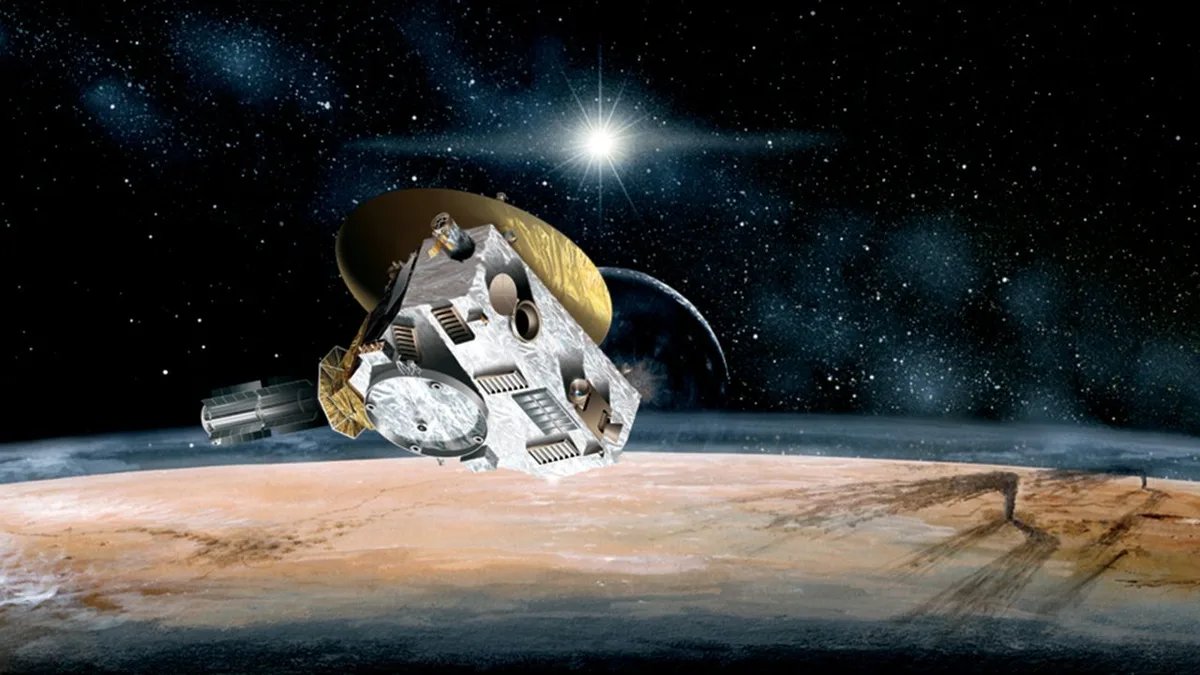
NASA's New Horizons spacecraft emerged from a 321-day hibernation on July 22, 2026, with all systems in good health. The probe, now 5.9 billion miles from Earth, resumed transmitting science data from the solar system's edge.
The Awakening
New Horizons exited hibernation on July 22 after 321 days of sleep, according to a NASA statement. Mission operations manager Alice Bowman at Johns Hopkins Applied Physics Laboratory reported all weekly status checks were 'green.' The spacecraft began transmitting data collected during its dormant period.
Mission Trajectory
Launched in 2006 at a record 36,400 mph, New Horizons flew by Jupiter in 2007 and Pluto in 2015. It now travels at 64 AU from Earth, making it the second-farthest working spacecraft after the Voyager twins. The probe is headed toward the heliopause, the boundary where solar wind meets interstellar space.
Scientific Goals
New Horizons will study hydrogen in the outer heliosphere and may examine Kuiper Belt objects like Arrokoth, which it flew by in 2019. Each transmission to Earth takes about 8 hours and 52 minutes, a delay that grows as the probe moves farther. The heliopause is estimated at 120 AU, nearly twice its current distance.
1 source
Time · lag behind first