
Nanoparticle and internal laser method advances cancer therapy
This digest was compiled by AI from multiple sources — links to the originals are below.
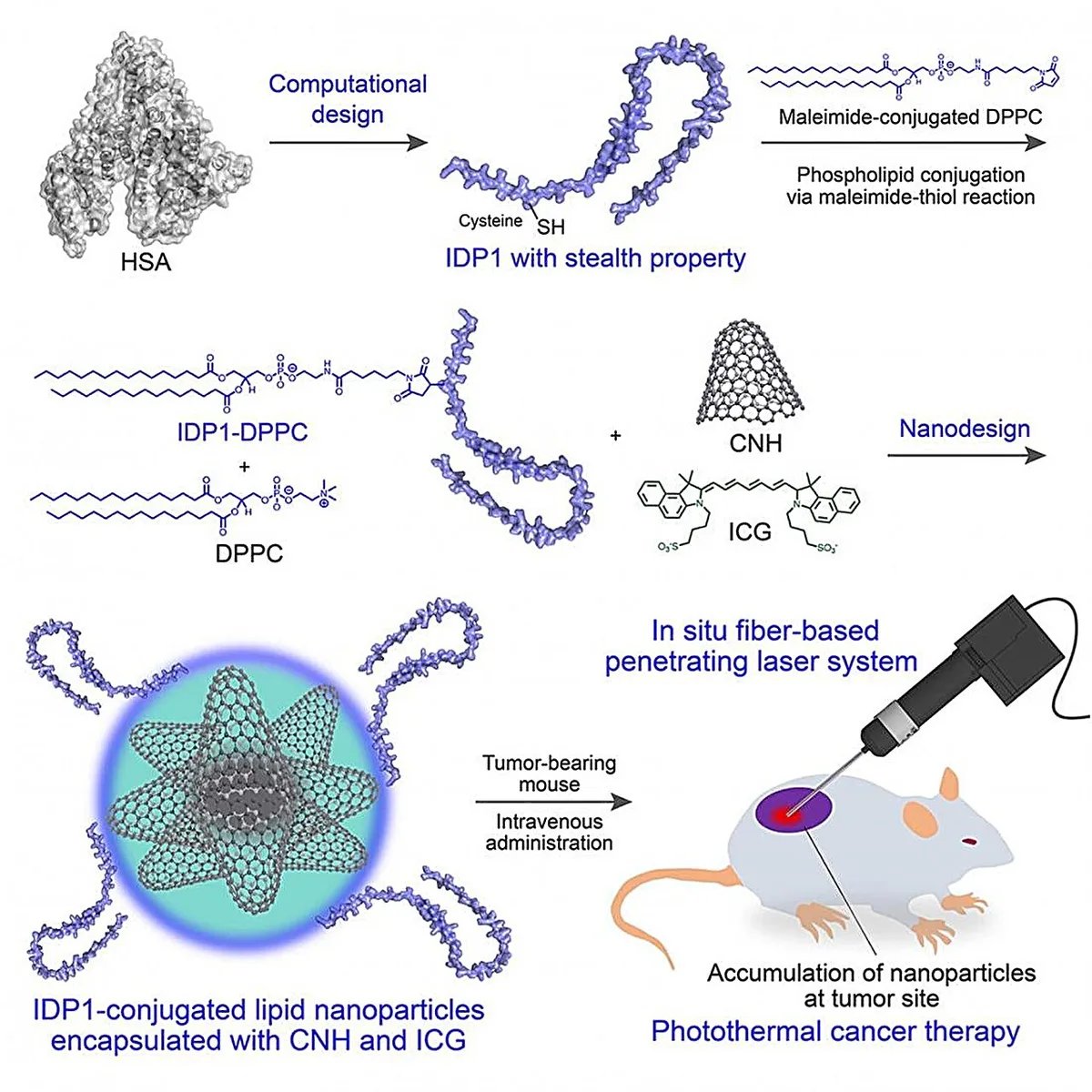
A research team led by Tohoku University has developed a combined nanoparticle and internal laser approach that overcomes two key barriers to photothermal cancer therapy. The method uses a redesigned protein coating to evade immune clearance and an ultra-thin endoscope to deliver laser light directly into tumors, reducing required power by 28%.
The Protein Coating
The team used AlphaFold to redesign human serum albumin into a new protein, IDP1, which is flexible and attracts water. In mice, nanoparticles coated with IDP1 remained in the bloodstream for 150.5 minutes, over four times longer than the 17.8 minutes achieved with polyethylene glycol (PEG). Loaded with carbon nanohorns and indocyanine green, the IDP1-coated nanoparticles accumulated efficiently in tumors with minimal distribution to healthy organs.
The Laser Delivery System
To address laser delivery, the team developed an ultra-thin rigid endoscope using graded-index plastic optical fiber (GI-POF) lens technology from Air Water Inc. The endoscope fits inside a standard 16-gauge needle and delivers laser light directly into the tumor, avoiding energy loss through overlying tissue. This approach heated tumors as effectively as conventional treatment while using 28% less laser power (500 mW vs. 700 mW).
1 source
Time · lag behind first