Neural implant restores touch, movement in paralyzed man
This digest was compiled by AI from multiple sources — links to the originals are below.
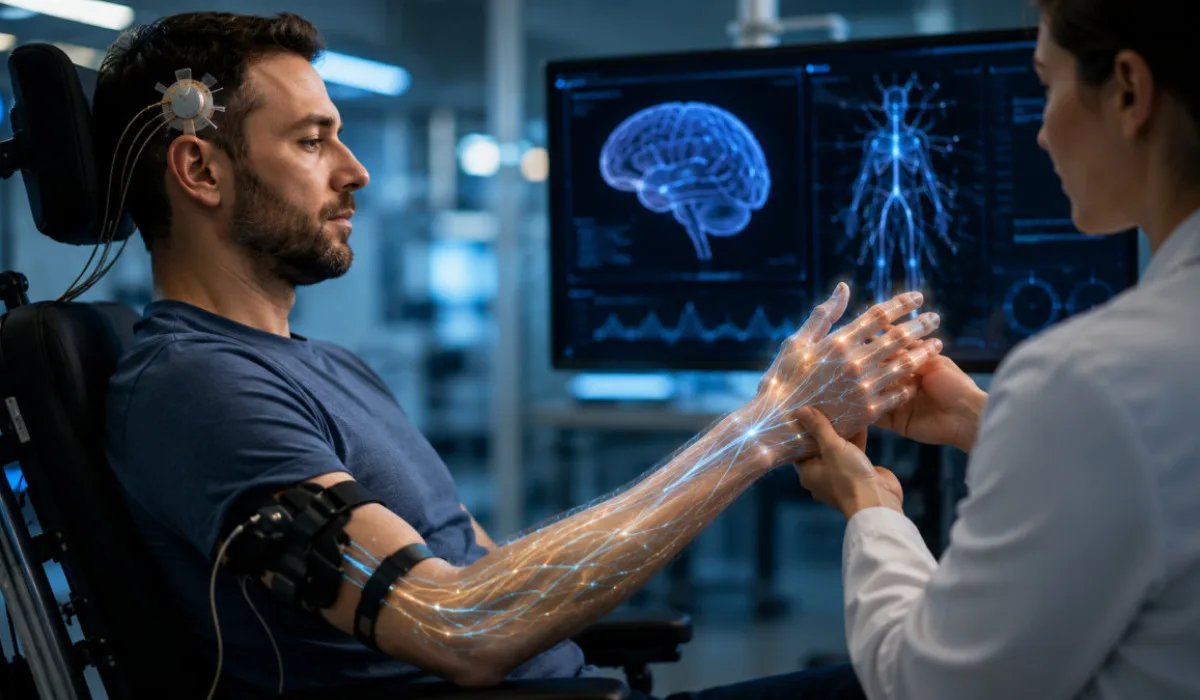
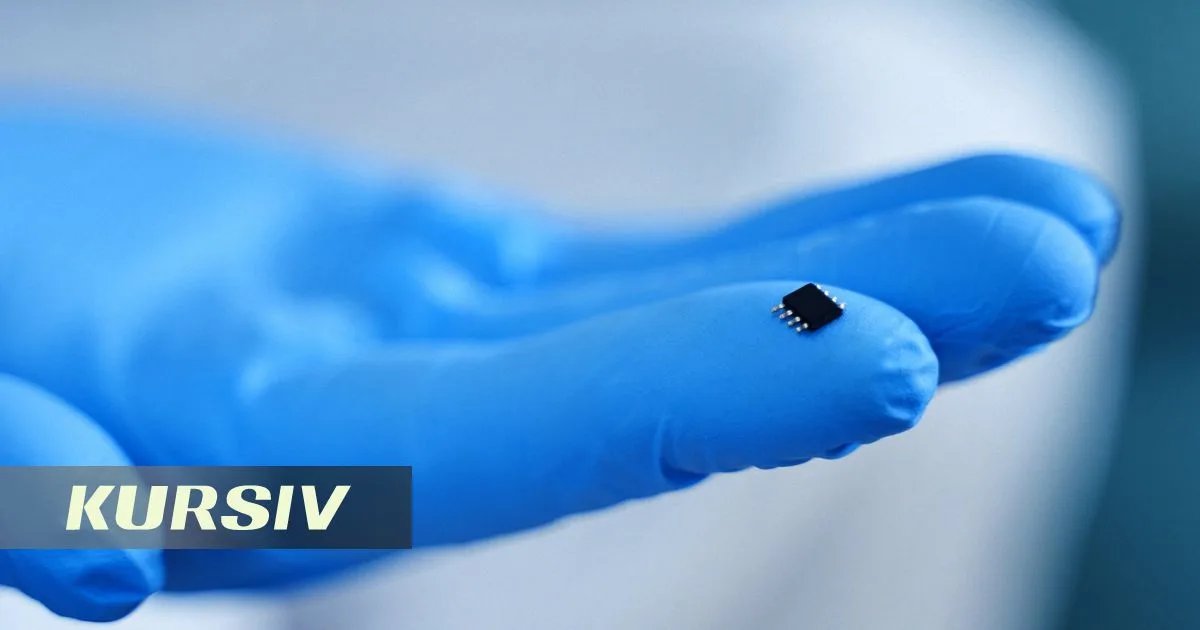
American researchers at the Feinstein Institutes for Medical Research have developed a neural implant that restored partial movement and sensation in a paralyzed man. Keith Thomas, paralyzed below the chest since a 2020 diving accident, can now eat, drink, and feel touch on his hand. The system uses a double neural bypass connecting brain to muscles and skin sensors.
The Technology
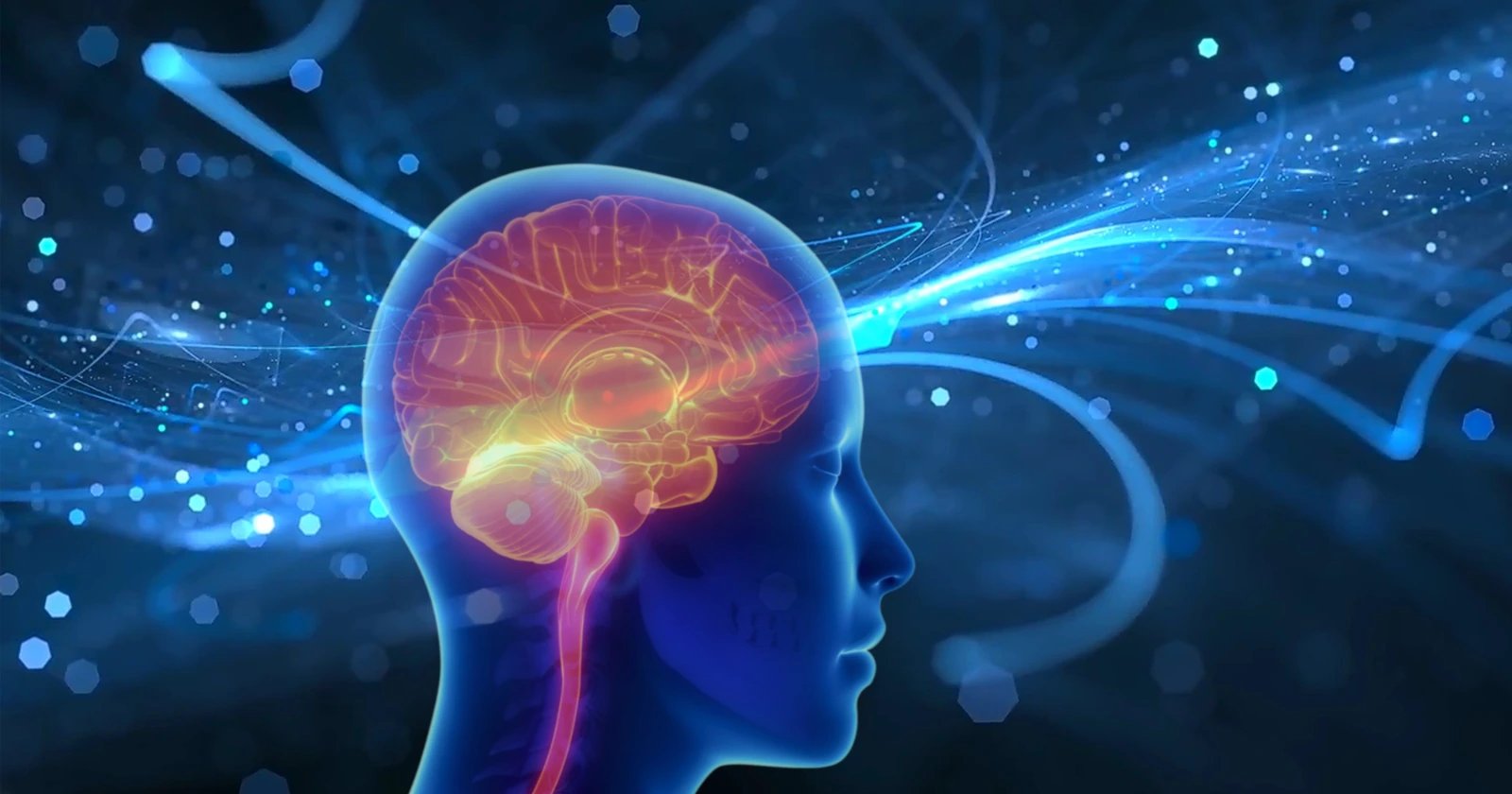
Professor Chad Bouton's team at the Feinstein Institutes created a system that directly links the brain to arm muscles. Electrodes implanted in the brain detect the patient's intention to move, and AI decodes the signals to bypass the damaged spinal cord. Pressure sensors on the fingers send tactile feedback back to the brain, enabling partial restoration of touch.
Training Results
After 35 weeks of training, Thomas's right arm strength improved by 86% and left arm by 62%. He regained the ability to feel his sister's touch and his dog's fur. Researchers noted that the nervous system gradually adapted, with some sensation persisting even when the system was turned off.
What's Next
The team plans to refine the implant for broader clinical use. It remains unclear how long the effects will last or whether the technology can be scaled to other patients with spinal cord injuries.
2 sources
Neural implant restores touch, movement in paralyzed man