
Study projects 500,000 more UK residents at coastal flood risk by 2100
This digest was compiled by AI from multiple sources — links to the originals are below.
A study led by the Met Office and the University of Bristol projects that at least 500,000 more people in the UK will face coastal flood risk by 2100, a 25% increase from current levels. Even if current emissions pledges are met, 1.4 million additional people could be affected by 2200. The findings underscore the long-term 'locked-in' nature of sea level rise, requiring both emissions cuts and adaptation.
Sea Level Rise Projections
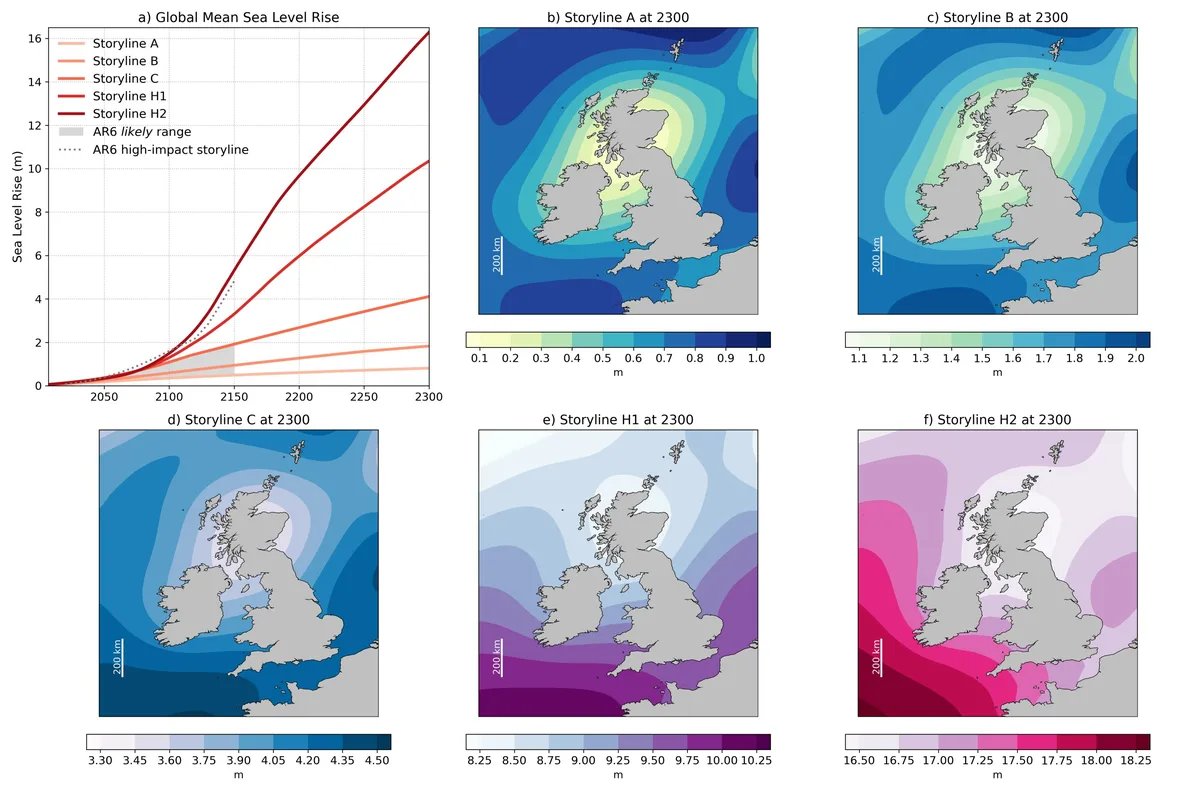
The study, published in Nature Communications, projects sea levels will rise 0.4–0.6 meters (1.3–2 feet) along UK coastlines by 2100, increasing coastal flood risk areas by 13%. By 2300, sea levels could triple to 1.2–1.8 meters (4–6 feet), expanding flood risk zones by 56%. Researchers combined IPCC sea level projections with a dynamic flood model from Fathom, a Bristol-based firm.
Regional Hotspots
Low-lying areas such as The Wash and the Humber Estuary are identified as 'hot spots' for future coastal flood risk across all scenarios, according to study co-author Dr. James Savage of Fathom. The research also examines a 'reasonable worst-case scenario' involving ice sheet instability, which could lead to over 15 meters (49 feet) of sea level rise by 2300.
Emissions and Adaptation
Lead author Professor Matt Palmer emphasized that sea level rise is 'locked in' for centuries due to slow ocean and ice responses to warming. He highlighted the importance of global emissions reductions under the Paris Agreement to mitigate the worst outcomes, while also calling for adaptation to unavoidable sea level rise in coming decades.
1 source
Time · lag behind first