
Cone snail venom peptide shows promise for non-opioid pain relief
This digest was compiled by AI from multiple sources — links to the originals are below.
An international team led by the Medical University of Vienna found that a peptide from cone snail venom, AoIA, reduced inflammation-induced pain in mice after subcutaneous injection. The effect took hold immediately, unlike earlier peptides requiring spinal administration. The study, published in Nature Structural & Molecular Biology, provides a basis for developing easier-to-administer non-opioid pain drugs.
The Peptide and Its Mechanism
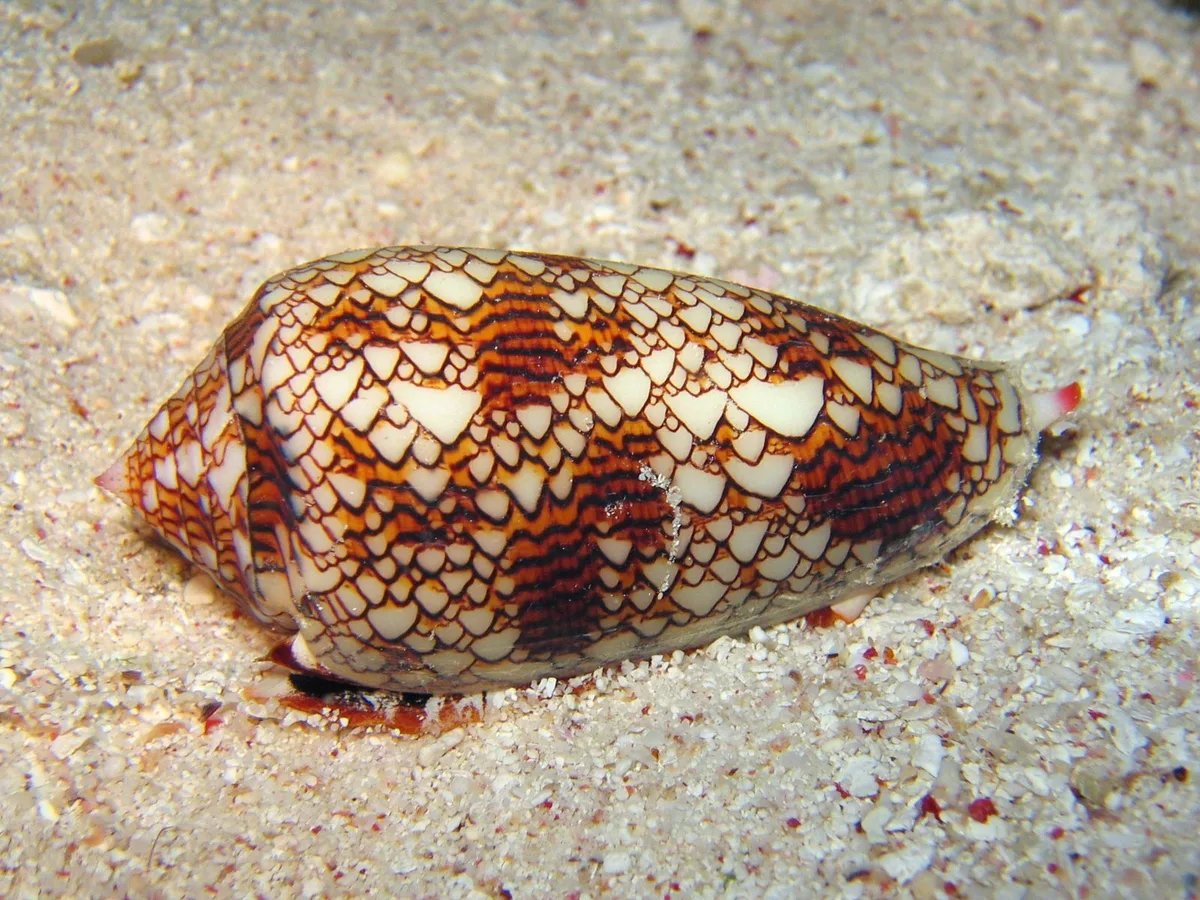
The peptide AoIA, derived from the venom of Conus araneosus, specifically inhibits the norepinephrine transporter, supporting the body's own pain-inhibiting mechanisms. Unlike MrIA, a related chi-conotoxin discovered 25 years ago that requires direct injection into the cerebrospinal fluid, AoIA works after peripheral subcutaneous administration. Cryo-electron microscopy revealed the three-dimensional structure of the human norepinephrine transporter bound to AoIA, explaining its high selectivity for norepinephrine over serotonin or dopamine transporters.
Study Results and Advantages
In a mouse model, subcutaneous AoIA significantly reduced pain during an inflammation-induced pain phase but showed no effect on acute pain stimuli. The peptide did not act on opioid receptors or other known pain targets, and there was no evidence of sedation or impaired motor coordination. The research team, including scientists from Austria, China, Australia, Turkey, and the Philippines, published their findings in Nature Structural & Molecular Biology.
1 source
Time · lag behind first