
Kazakhstan's oil route vulnerability persists despite alternative expansion
This digest was compiled by AI from multiple sources — links to the originals are below.
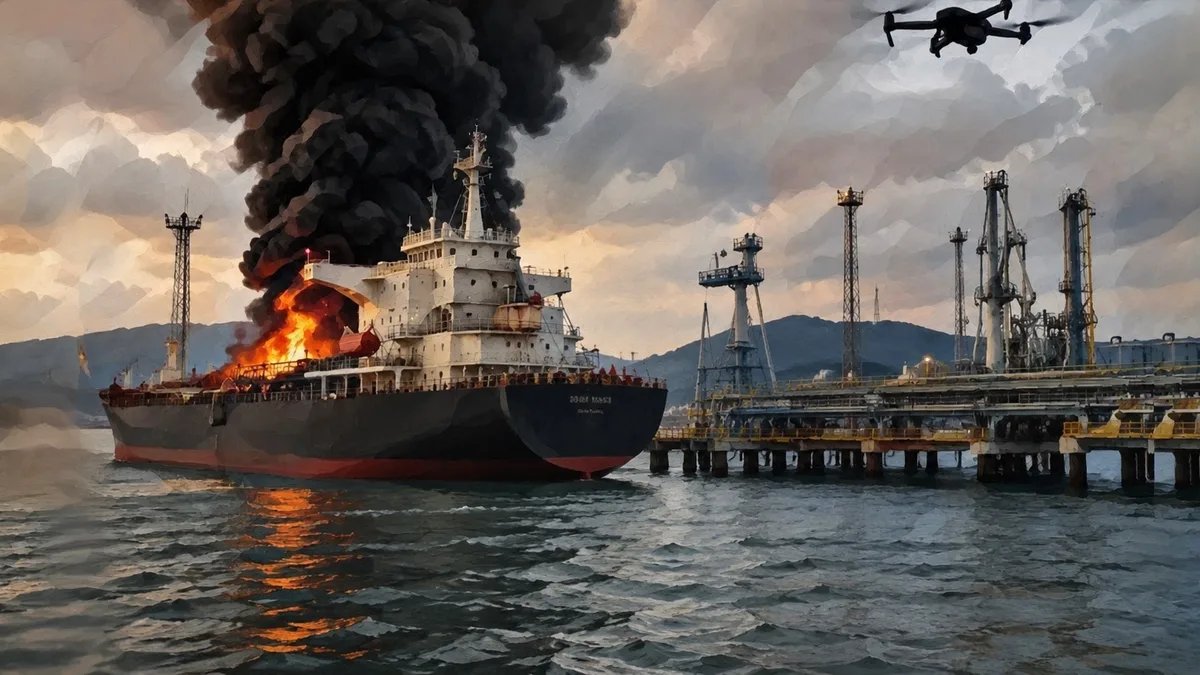
Kazakhstan's main oil export route via the Caspian Pipeline Consortium remains vulnerable after recent tanker attacks near the Black Sea terminal. The attacks, which hit three tankers loading Kazakh crude between July 17 and 20, forced repeated suspensions and exposed Astana's dependence on infrastructure crossing Russian territory.
The Attacks
Three tankers were struck near the CPC terminal on July 17 and 19, two while loading Kazakh oil. Loadings briefly resumed before a fourth tanker, NELSA, was hit on July 20, forcing another suspension. No casualties or oil spill were reported, but the attacks repeatedly interrupted Kazakhstan’s main export route, which carries about 80% of its crude exports.
Strategic Exposure
Kazakhstan treated the attacks as a direct threat to its economic interests. Its Foreign Ministry condemned the strikes, said an agreed information-sharing mechanism for civilian vessels had been disregarded, and demanded an immediate halt. Ukraine’s General Staff said it struck two tankers as part of its campaign against Russian oil logistics, but CPC stated the vessels were loading Kazakh crude. The episode exposed Kazakhstan’s dependence on infrastructure beyond its control, a vulnerability rooted in geography and inherited infrastructure.
Economic Context
Kazakhstan remains highly exposed to oil, though its share of GDP has declined. KAZENERGY’s 2023 report put the hydrocarbon sector at about 23% of GDP in 2019 and 20% in 2022; the Bureau of National Statistics reported 16.3% in 2024. UNCTAD notes oil exports still account for more than half of total exports and remain central to foreign exchange earnings and public finances.
1 source
Time · lag behind first