
Plant seeds can produce dairy protein, study finds
This digest was compiled by AI from multiple sources — links to the originals are below.
Researchers at the Hebrew University of Jerusalem have demonstrated that plant seeds can produce β-casein, a key milk protein, according to a study published in Frontiers in Plant Science. The protein accumulated in unexpected structures resembling natural casein micelles, revealing a new pathway for plant molecular farming. The discovery could enable more sustainable dairy ingredient production without cows.
The Research
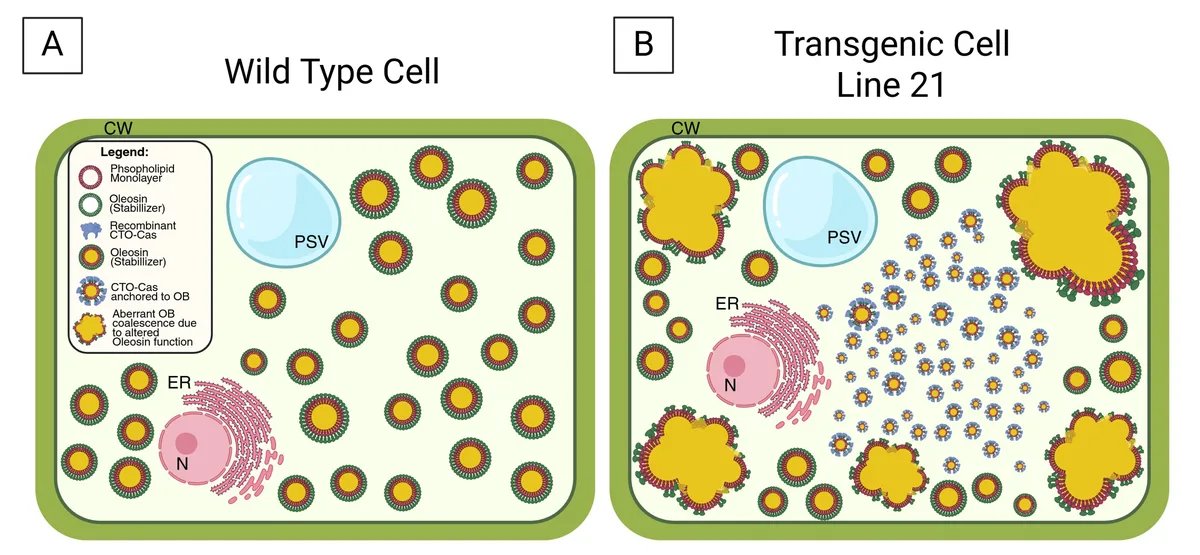
The study, led by Prof. Oded Shoseyov and first author Almog Ozeri, engineered Arabidopsis seeds to produce bovine β-casein fused to a portion of oleosin, a plant oil-body protein. The team tested several cellular compartments to find the most efficient accumulation site. Instead of vacuoles, the protein formed novel structures associated with oil bodies, as revealed by electron microscopy.
Implications for Dairy
Global dairy demand is rising while livestock farming faces scrutiny over emissions and land use. Plant molecular farming offers a sustainable alternative, but producing complex milk proteins in crops has been challenging. This unexpected storage route could streamline production of authentic dairy proteins without animals, potentially reducing environmental impact.
1 source
Time · lag behind first