
Greenland firn air reveals industrial-era methane source shift
This digest was compiled by AI from multiple sources — links to the originals are below.
An international team led by Utrecht University and the University of Maryland reconstructed clumped methane isotopes in Greenland firn air for the first time. The data show a fundamental shift in methane sources since 1850, with microbial emissions overtaking fossil-fuel sources. The findings were published in Science Advances.
The Isotope Reconstruction
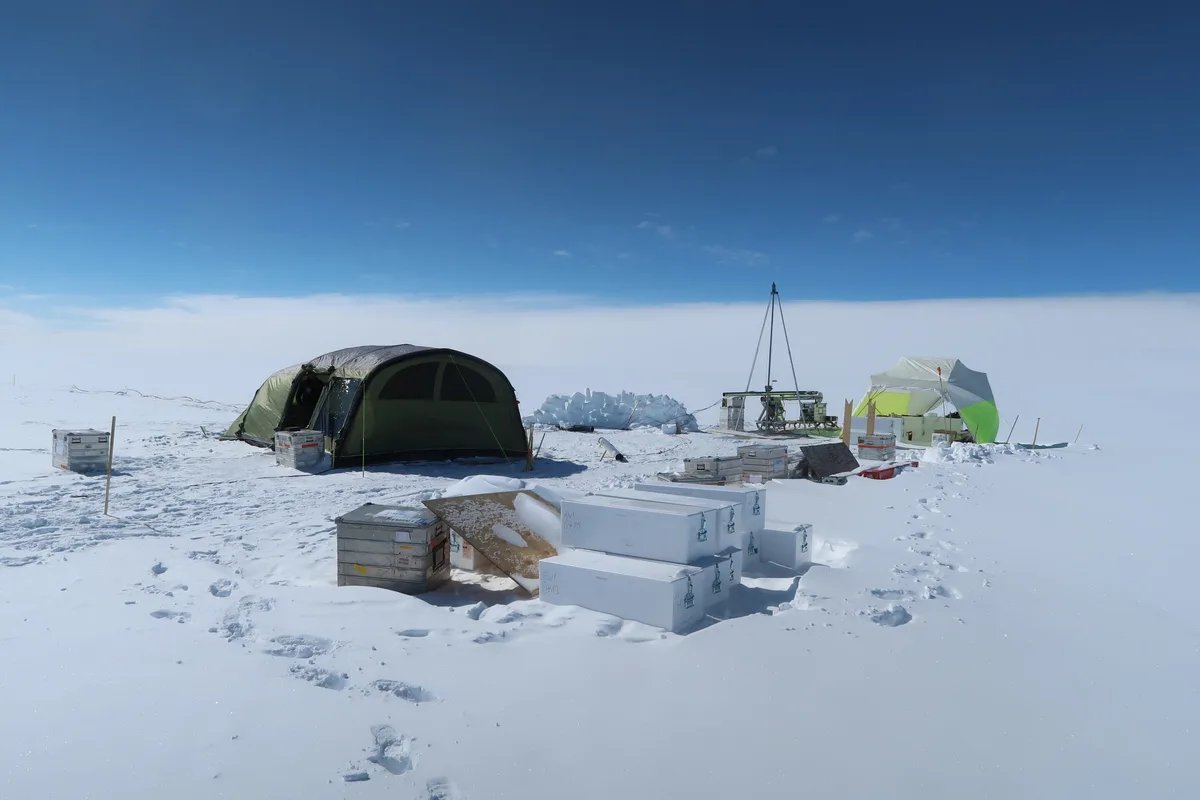
Researchers extracted roughly 40-year-old air from compacted snow (firn) in Greenland to measure clumped methane isotopes for the first time. This technique distinguishes between microbial, fossil-fuel, and biomass-burning methane sources. The analysis covers the period from the pre-industrial era to the present, providing a continuous record of source changes.
Industrial-Era Source Shift
The data reveal that microbial sources—such as wetlands, agriculture, and landfills—now dominate atmospheric methane, overtaking fossil-fuel emissions since 1850. This shift correlates with population growth and agricultural expansion. The study quantifies that microbial methane has increased by more than 50% since the industrial revolution.
Implications for Climate Policy
Understanding source contributions is critical for targeted methane reduction strategies. The findings suggest that curbing microbial emissions from agriculture and waste management could be as important as reducing fossil-fuel leaks. The research provides a baseline for verifying future emission reductions under global pledges like the Global Methane Pledge.
1 source
Time · lag behind first