Bacteria convert dissolved uranium into stable compound in 130 days
This digest was compiled by AI from multiple sources — links to the originals are below.
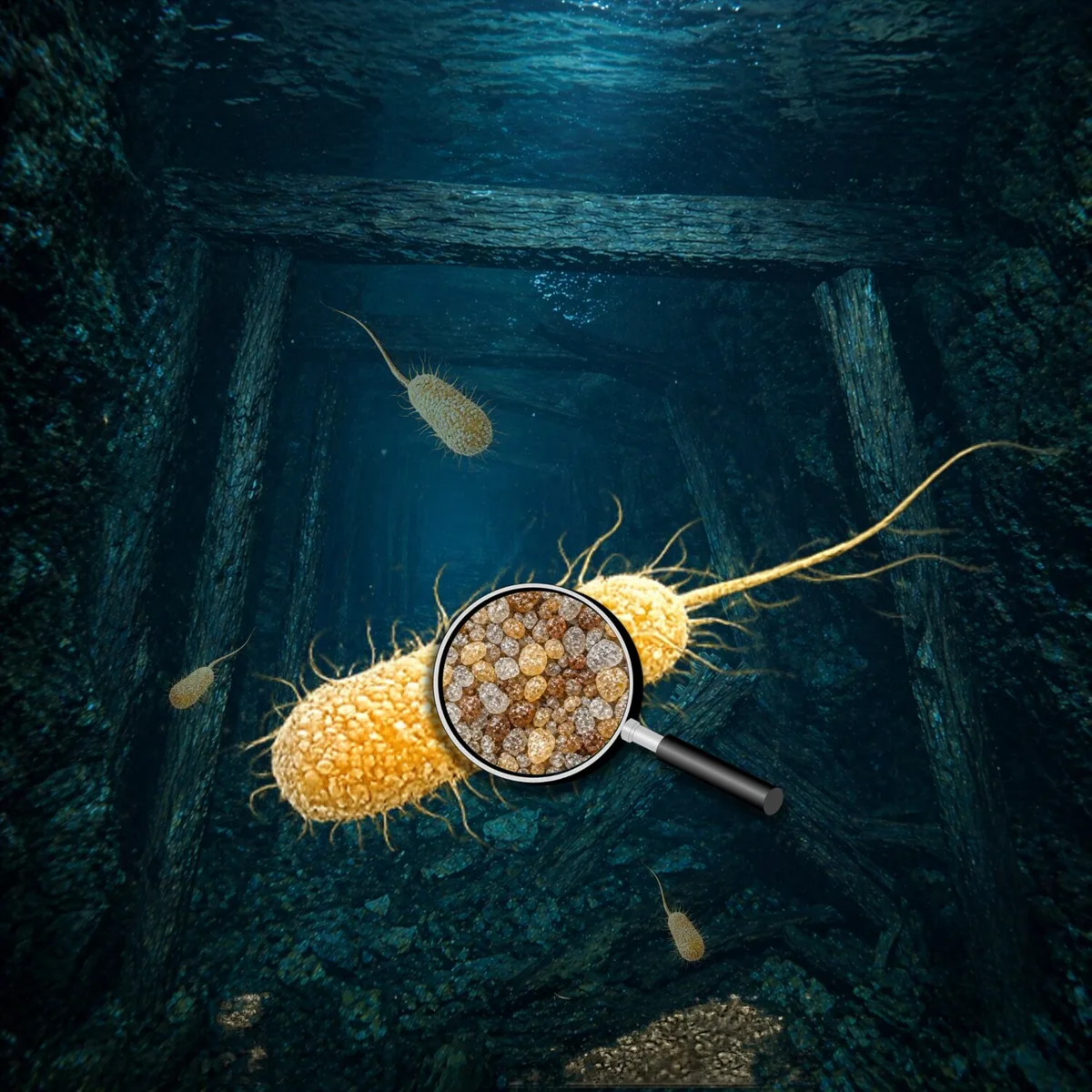
Researchers at Helmholtz-Zentrum Dresden-Rossendorf (HZDR), together with Wismut GmbH and the University of Granada, have shown that bacteria can convert dissolved uranium into a stable compound within 130 days using glycerol as a food source. The process immobilizes uranium, preventing it from spreading in groundwater. The finding offers a potential bioremediation strategy for uranium-contaminated sites.
The Experiment
The team used bacteria from the genus Desulfovibrio, which naturally reduce sulfate to sulfide. In the presence of glycerol, these bacteria converted dissolved uranium(VI) into uranium(IV) phosphate, a stable mineral. The reaction took 130 days to complete, with the uranium becoming immobilized in a solid form.
Mechanism and Stability
The bacteria reduce uranium(VI) to uranium(IV), which then precipitates as a phosphate mineral. This compound is resistant to re-oxidation, meaning it remains stable even if oxygen returns. The study, published in Science of the Total Environment, confirms the long-term stability of the product.
Application Potential
The method could be applied at former uranium mining sites, such as those in eastern Germany managed by Wismut GmbH. The process uses glycerol, a cheap and non-toxic carbon source, making it economically viable. However, field tests are needed to assess effectiveness in real groundwater conditions.
What's Next
The researchers plan to test the method in field conditions at contaminated sites. It remains unclear how the bacterial community will perform under varying groundwater chemistry and competing microbial processes.
1 source
Bacteria convert dissolved uranium into stable compound in 130 days