Potsdam Institute warns AMOC collapse could release ocean carbon, adding 0.2°C warming
The Potsdam Institute for Climate Impact Research reports that a collapse of the Atlantic Meridional Overturning Circulation (AMOC) could release significant ocean carbon, potentially increasing global warming by 0.2°C. This finding emerges from a new study simulating AMOC shutdown under stable climate conditions. The study underscores the AMOC's critical role in regulating global climate.
AMOC Collapse Simulation
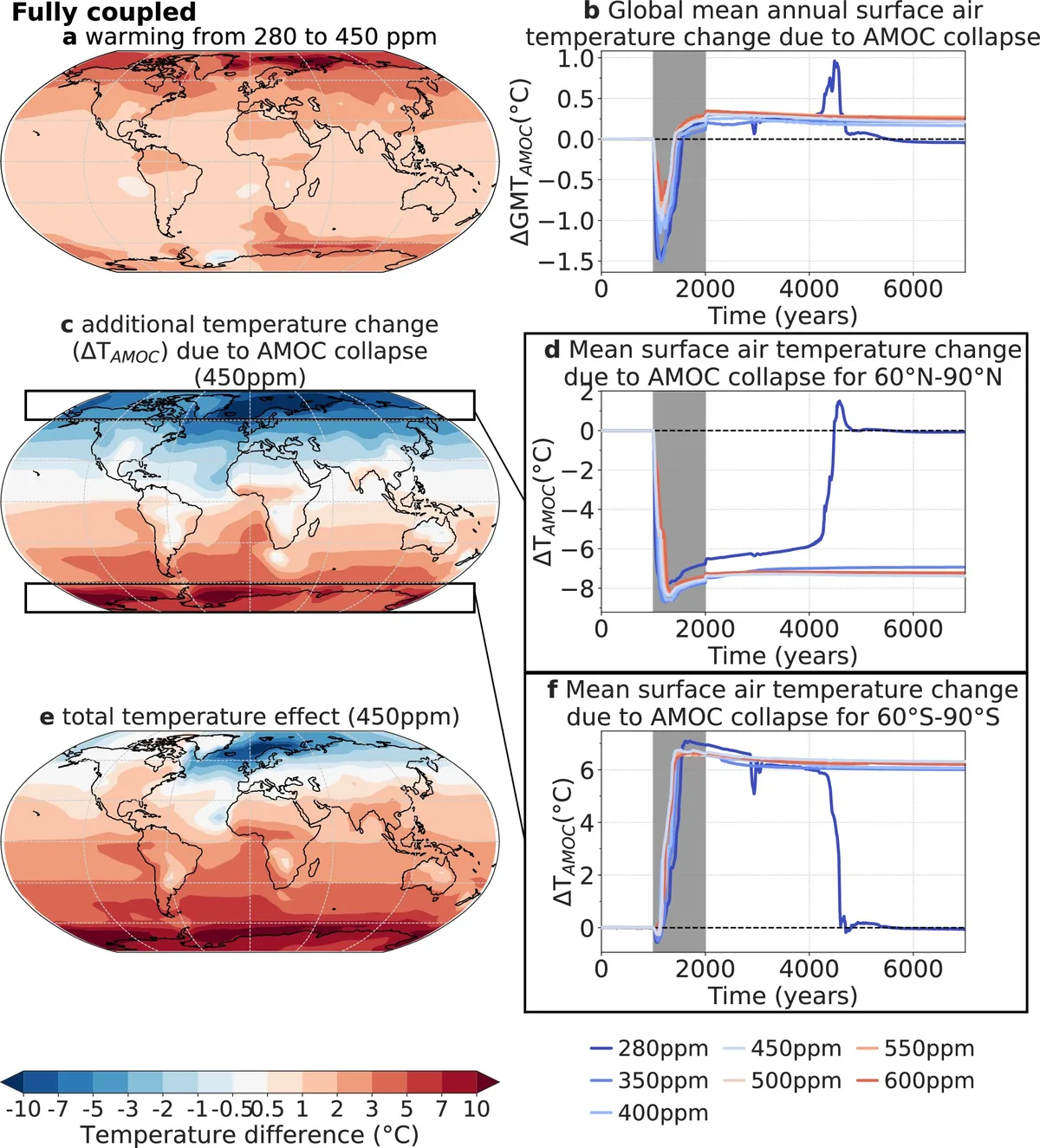
Researchers at the Potsdam Institute for Climate Impact Research conducted a simulation of the Atlantic Meridional Overturning Circulation (AMOC) collapse. The study, published in Communications Earth & Environment, indicates that such a collapse could lead to the release of stored ocean carbon. This process could add 0.2°C to global warming over several hundred years. The simulation was conducted under stable climate conditions to isolate the effects of AMOC shutdown.
Global Climate Regulation
The AMOC plays a crucial role in regulating the global climate by distributing heat and carbon across the oceans. A disruption in this circulation could have significant impacts on global weather patterns and climate stability. The study highlights the potential for increased atmospheric carbon levels if the AMOC were to collapse. This underscores the importance of monitoring and understanding oceanic and atmospheric interactions.
What's Next
The study's findings will likely prompt further research into the stability of the AMOC. It remains unclear how soon or under what conditions such a collapse might occur.
1 source
Potsdam Institute warns AMOC collapse could release ocean carbon, adding 0.2°C warming