Nature reveals nickelate superstructures enable superconductivity at ambient pressure
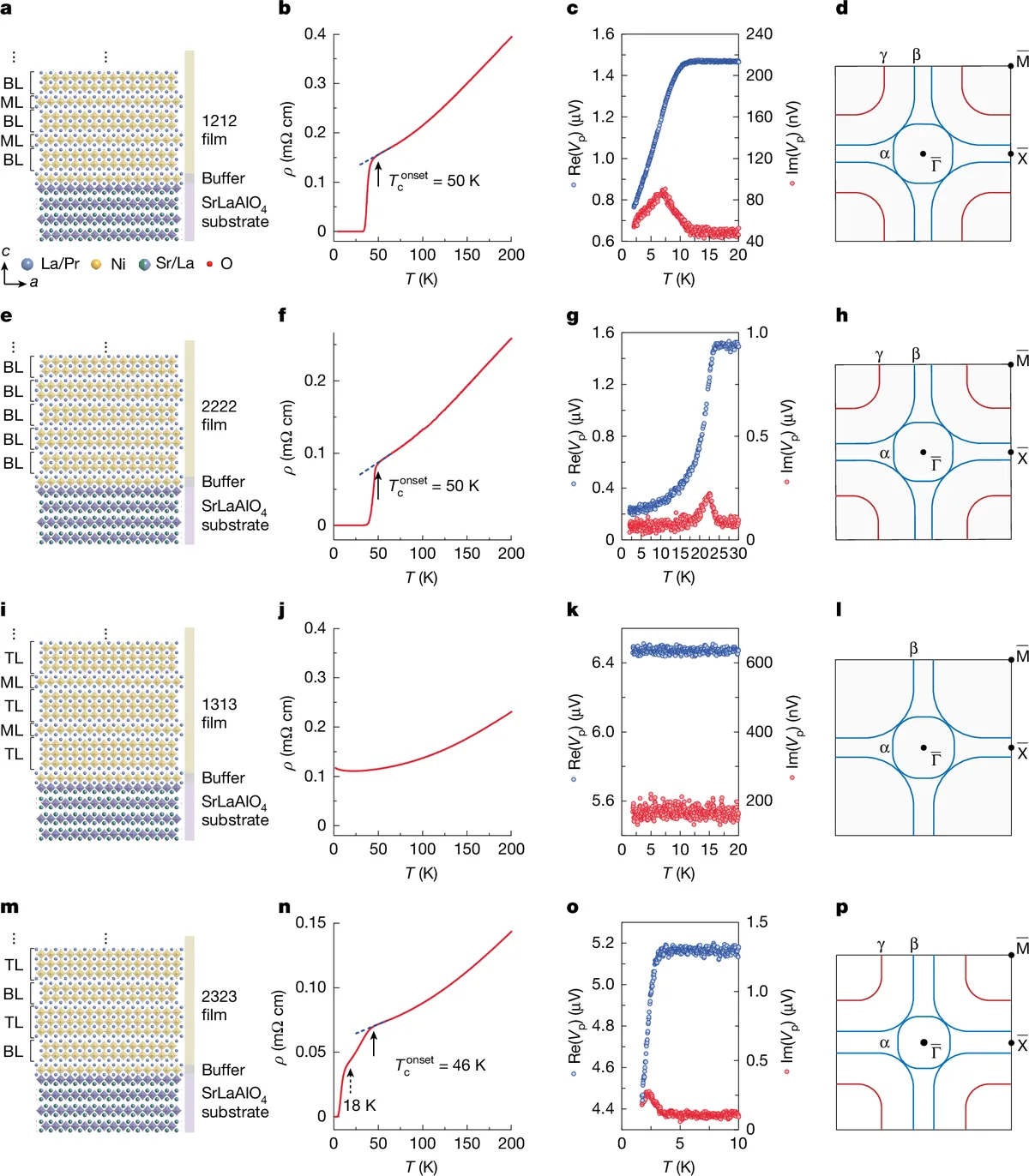
Nature reports that engineered Ruddlesden–Popper nickelate superstructures exhibit superconductivity at ambient pressure. This discovery links structural configuration with electronic behavior. The findings may impact future superconducting materials research.
Nickelate Superstructures
Engineered Ruddlesden–Popper nickelate superstructures have been shown to exhibit superconductivity at ambient pressure, according to a study published in Nature. The research highlights the role of specific Fermi surface features in enabling this phenomenon. The study was conducted by a team of scientists from multiple institutions, including the University of California and the Max Planck Institute.
Structural and Electronic Link
The study establishes a connection between structural configuration and electronic behavior in nickelate superstructures. Researchers identified that certain electronic structures are crucial for achieving superconductivity without the need for high-pressure environments. This discovery could pave the way for new developments in the field of superconducting materials, potentially impacting industries reliant on such technologies.
What's Next
The scientific community is expected to further investigate these findings to explore practical applications. It remains unclear how quickly these insights will translate into commercial technologies.
1 source
Nature reveals nickelate superstructures enable superconductivity at ambient pressure