Nature unveils quantum gates using qubit doublons in optical lattices
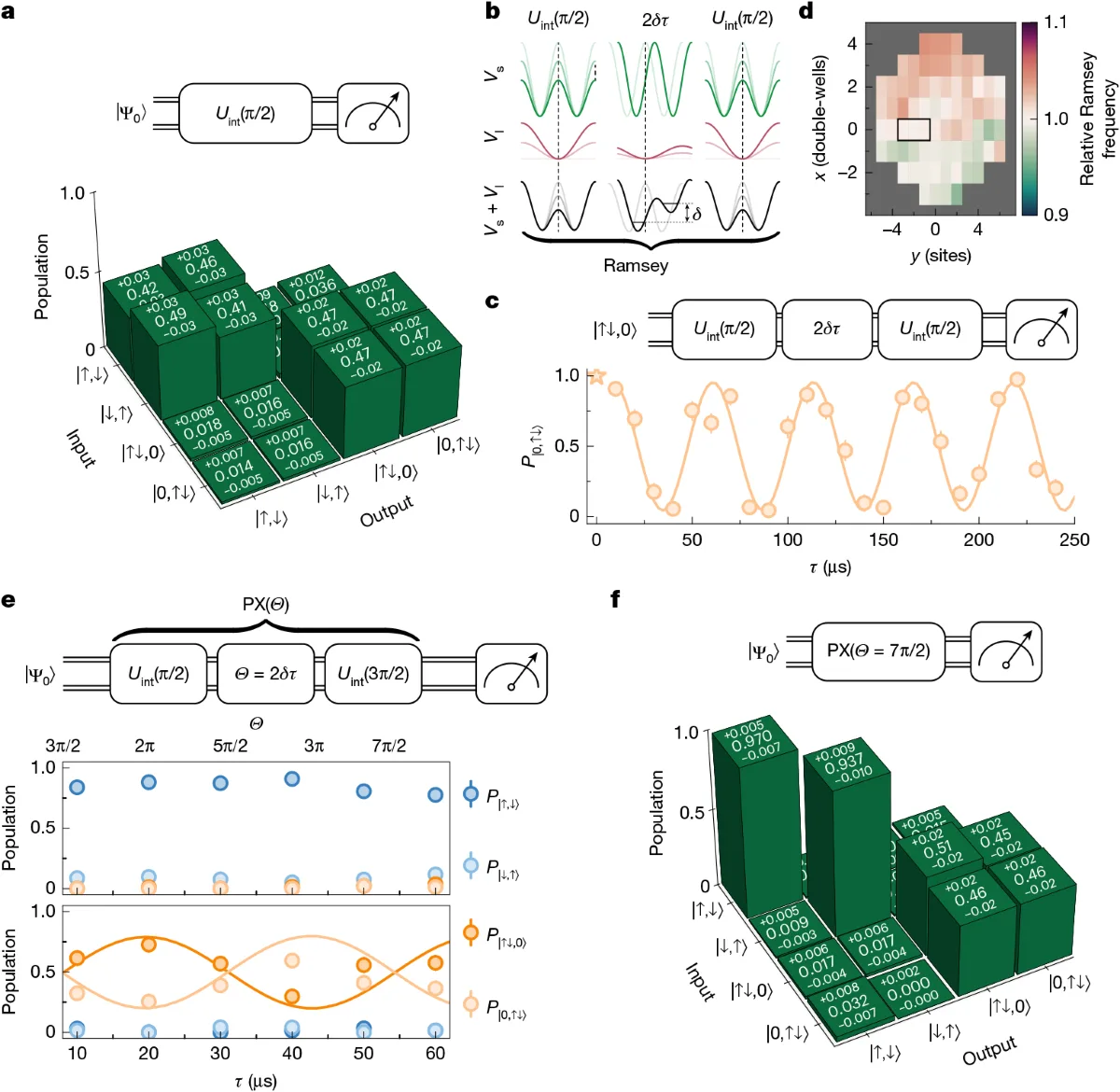
Nature reports the realization of a geometric two-qubit SWAP gate using qubit doublons in dynamic optical lattices. The development marks a significant advancement in quantum computing. This occurs as researchers seek more stable quantum systems.
Quantum Gate Development
Researchers have successfully created a purely geometric two-qubit SWAP gate by utilizing qubit doublon states. This was achieved with fermionic atoms in a dynamical optical lattice. The study, published in Nature, highlights the potential for more robust quantum computing systems. The use of doublon states is a novel approach that could enhance gate stability. The research team includes scientists from leading institutions in quantum physics.
Implications for Quantum Computing
The realization of this SWAP gate could lead to significant improvements in quantum computing technology. Current quantum systems face challenges with stability and error rates. By employing qubit doublons, researchers aim to address these issues. The study's findings could influence future designs of quantum processors. Institutions like MIT and the Max Planck Institute are closely monitoring these developments.
What's Next
Further experiments are expected to test the scalability of this approach. It remains unclear how soon these advancements will be integrated into commercial quantum systems.
1 source
Nature unveils quantum gates using qubit doublons in optical lattices