
UN and WHO: Winter Risks to Gaza's Healthcare Intensify
The UN and WHO warn that as winter approaches, Gaza's healthcare system will not withstand rising disease rates, and rains will flood contaminated water. WHO tests show a tripling of microbiological contamination of water and a near doubling of acute diarrhea cases, while the destruction of a desalination plant and inaccessible sanitation are deepening the crisis.
Sources
· 7ООН предупреждает: система здравоохранения Газы на грани коллапса с приближением зимы
1ВОЗ предупреждает: сезон дождей в Газе ухудшит загрязнение воды и диарею
2Удар Израиля уничтожил опреснительный завод в Газе, усугубив водный кризис
3Война в Газе вынуждает палестинцев пользоваться самодельными туалетами на фоне роста цен
4Перемещённые жители Газы лишены доступа к медицине на фоне коллапса системы
5Медиаофис правительства Газы сообщает о 2,15 млн перемещённых в условиях кризиса жилья
6Больница Яфа зафиксировала рост запущенных случаев рака груди на 40% на фоне израильской блокады
7Key points
- The UN warns that Gaza's healthcare system, already operating at its limit, will not withstand winter surges in disease.
- Microbiological contamination of water in Gaza rose from less than 6% in January to more than 18% in August, and the number of acute diarrhea cases from about 27,000 to more than 48,000.
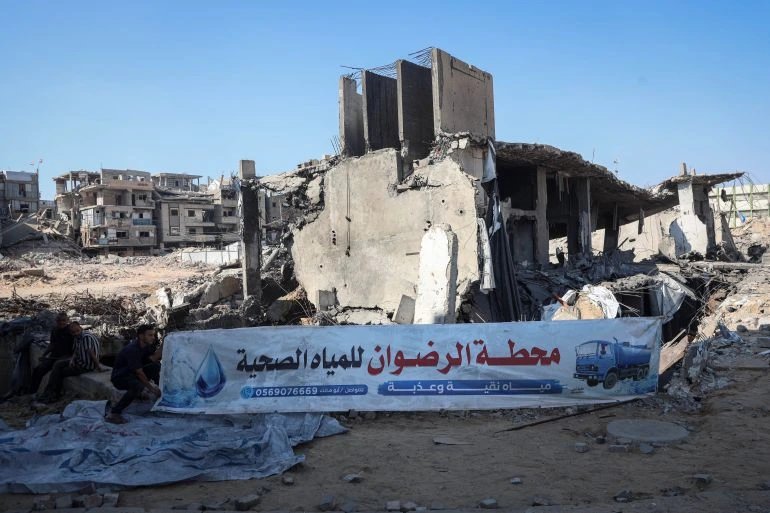
- Israel's strike on 24 August destroyed a desalination plant in Sheikh Radwan, depriving residents of access to clean water.
- Because of the blockade, a used toilet seat costs between 1,500 and 2,000 shekels ($503–$671), and families are building makeshift toilets.
What happened
UN spokesperson Stéphane Dujarric conveyed at a briefing the assessment that Gaza's healthcare system, already operating at its limits, will not withstand new surges in disease. WHO Director-General Tedros Adhanom Ghebreyesus called for expanded access to laboratory supplies, essential medicines, and rehabilitation equipment. The UN and its partners are continuing winter preparations but urgently need additional resources and access. WHO separately warned that winter rains will flood sewage and contaminated water in areas where people are living.
On 24 August, an Israeli strike destroyed a desalination plant in the Sheikh Radwan area of Gaza City, depriving residents of access to clean water. Displaced Palestinians are also building makeshift toilets from plastic chairs and sand, as the Israeli blockade makes sanitary supplies inaccessible. A used toilet seat now costs between 1,500 and 2,000 shekels ($503–$671), forcing families to improvise.
Earlier
- mimile.kz reported that displaced Gaza residents are deprived of access to medical care amid the system's collapse; a volunteer medical team saw at least 150 patients in one day at a camp in Gaza City.
- The Gaza government media office estimated the number of displaced people at more than 2.15 million, of whom 1,122,566 live in tents.
- Yafa Hospital in Deir al-Balah recorded an increase in advanced breast cancer cases of 40% or more since the start of the war.
Related original articles
- 7h agoООН предупреждает: система здравоохранения Газы на грани коллапса с приближением зимыTRT Haber
- 3d agoВОЗ предупреждает: сезон дождей в Газе ухудшит загрязнение воды и диареюAl Jazeera English
- 3d agoУдар Израиля уничтожил опреснительный завод в Газе, усугубив водный кризисAl Jazeera English
- Aug 23Война в Газе вынуждает палестинцев пользоваться самодельными туалетами на фоне роста ценAl Jazeera English