James Webb Telescope identifies enigmatic atmosphere on TOI-5205 b
This digest was compiled by AI from multiple sources — links to the originals are below.
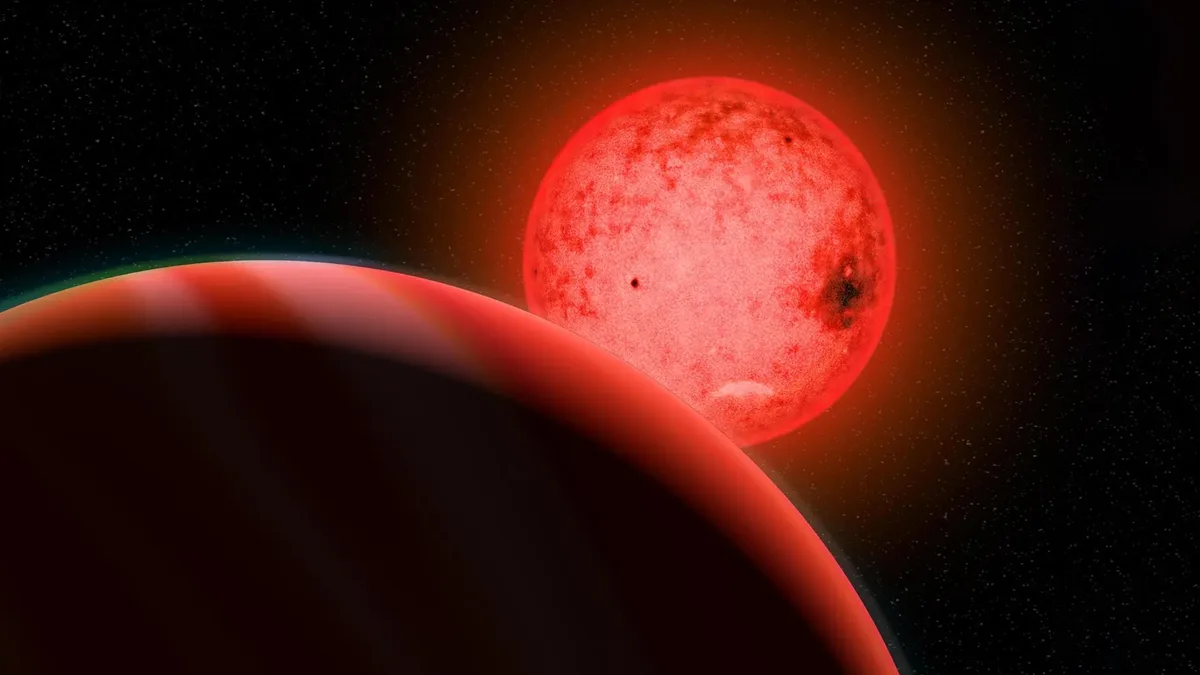
The James Webb Space Telescope has discovered a Jupiter-sized exoplanet, TOI-5205 b, with an unusual atmosphere. The planet's atmosphere is unexpectedly low in heavy elements, contradicting existing planetary formation theories. This finding challenges current scientific understanding even as researchers seek explanations.
Discovery of TOI-5205 b
The James Webb Space Telescope has identified TOI-5205 b, a Jupiter-sized exoplanet orbiting a small, cool star. This planet's atmosphere is notably deficient in heavy elements, a characteristic that defies current models of giant planet formation. The discovery was made during a survey of exoplanets, highlighting the telescope's capabilities in detecting atmospheric compositions.
Scientific Implications
The atmosphere of TOI-5205 b is less enriched in heavy elements than its host star, a phenomenon that challenges existing theories. Scientists from NASA and other institutions are now tasked with re-evaluating their understanding of planetary formation. The unexpected findings from TOI-5205 b could lead to new models and hypotheses in exoplanetary science.
Webb's Unique Orbit
Unlike the Hubble Space Telescope, which orbits Earth, the James Webb Space Telescope orbits the Sun at the second Lagrange point (L2), approximately 1.5 million kilometers from Earth. This position allows it to maintain a stable thermal environment and unobstructed view of the cosmos.
What's Next
Further observations of TOI-5205 b are planned to better understand its atmospheric composition. It remains uncertain how these findings will reshape current planetary formation theories.
2 sources
James Webb Telescope identifies enigmatic atmosphere on TOI-5205 b