HETDEX discovers 10,000 hydrogen halos in early universe
This digest was compiled by AI from multiple sources — links to the originals are below.
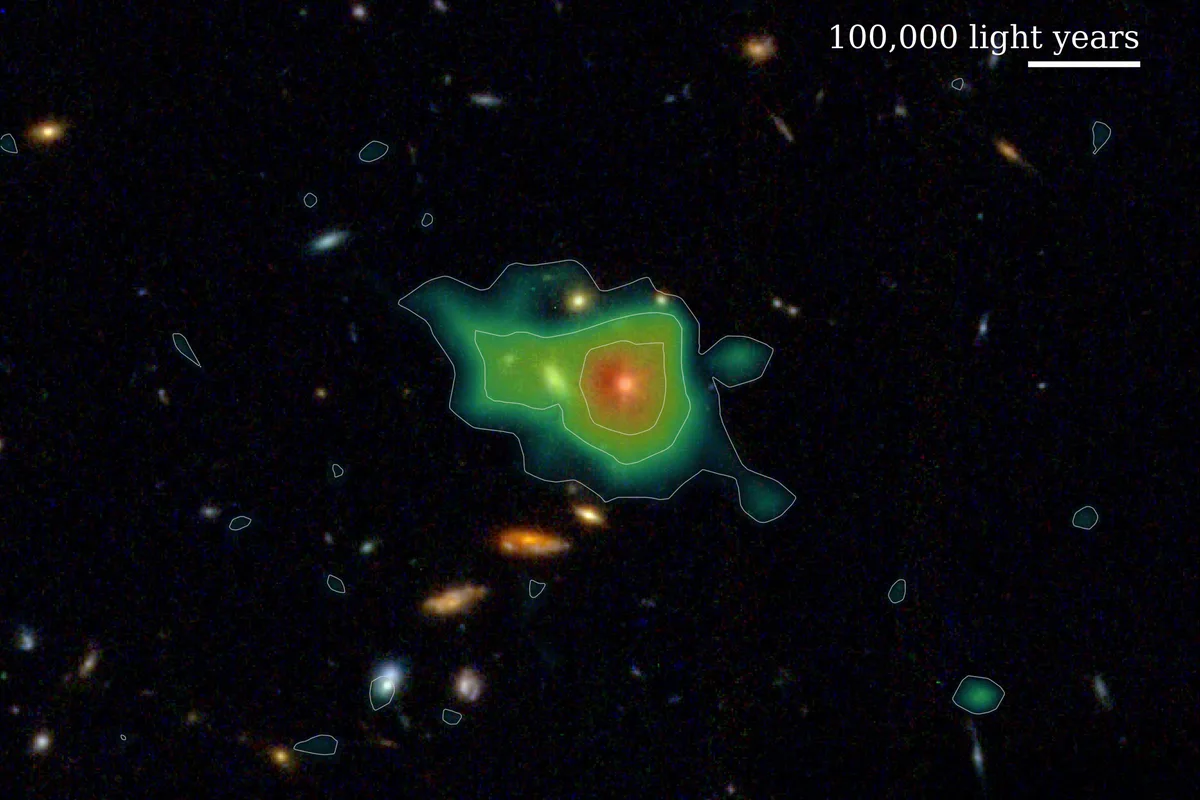
The Eberly Telescope Dark Energy Experiment (HETDEX) has identified tens of thousands of hydrogen gas halos, known as Lyman-alpha nebulae, around galaxies from 10 to 12 billion years ago. This discovery highlights the presence of vast hydrogen reservoirs during the Cosmic Noon epoch. The findings challenge previous assumptions about the scarcity of such structures.
Discovery of Hydrogen Halos
The Eberly Telescope Dark Energy Experiment (HETDEX) has successfully mapped tens of thousands of Lyman-alpha nebulae, which are massive hydrogen gas halos. These structures were found around galaxies dating back 10 to 12 billion years, a period known as Cosmic Noon. This epoch is characterized by rapid galaxy growth, requiring significant hydrogen reserves.
Implications for Cosmic Noon
The presence of these hydrogen halos suggests that galaxies during Cosmic Noon had access to vast amounts of hydrogen, essential for star formation. Previously, astronomers had only identified a few such structures, raising questions about galaxy growth mechanisms. The discovery by HETDEX provides new insights into the early universe's composition and dynamics.
33,000 Lyman-alpha Nebulae Mapped
The HETDEX survey has identified 33,000 Lyman-alpha nebulae, far exceeding the few previously known. This large sample confirms that hydrogen halos are common around galaxies during Cosmic Noon, providing the necessary fuel for rapid star formation.
What's Next
Future observations are planned to further explore these hydrogen halos. It remains uncertain how these findings will alter current models of galaxy formation.
2 sources
HETDEX discovers 10,000 hydrogen halos in early universe