University of Vienna achieves quantum ground state for nanorotor
This digest was compiled by AI from multiple sources — links to the originals are below.
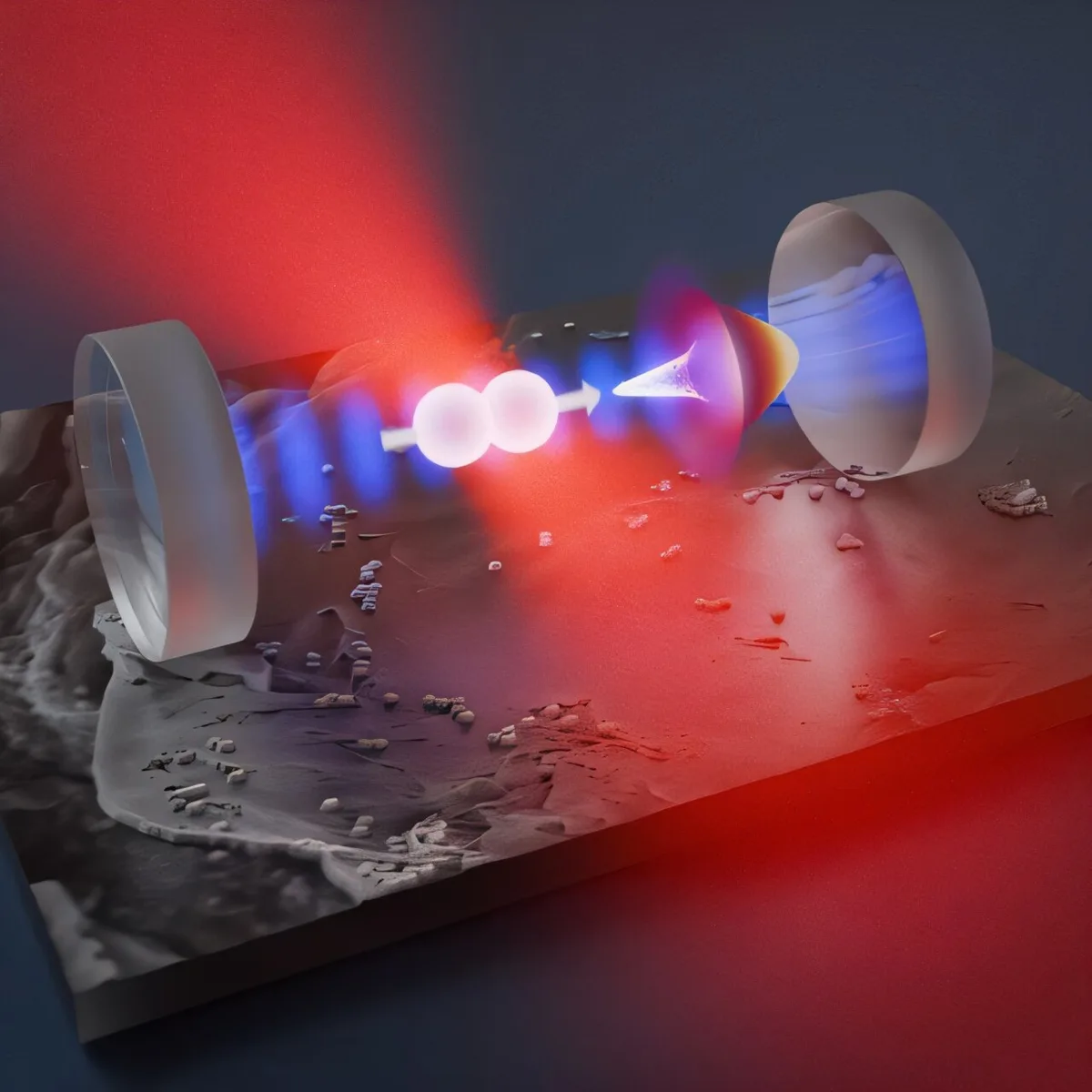
Researchers at the University of Vienna have cooled a silica nanorotor to its quantum ground state in two dimensions. This marks the first time such a state has been achieved for rotational motion. The breakthrough could advance quantum mechanics research even as challenges remain.
Quantum Ground State Achievement
The University of Vienna, in collaboration with TU Wien and Ulm University, has successfully cooled a levitated silica nanorotor to its quantum ground state. This achievement was made in two orientational degrees of freedom, a first in the field of quantum mechanics. The research team utilized advanced cooling techniques to reach this state, which could have significant implications for future quantum technologies.
Collaborative Research Efforts
The project involved researchers from three institutions: University of Vienna, TU Wien, and Ulm University. The collaborative effort focused on overcoming the challenges of cooling rotational motion to the quantum ground state. The experiment was conducted using a silica nanorotor, a critical component in achieving the desired quantum state. The success of this project highlights the importance of international collaboration in advancing scientific research.
European Quantum Flagship Launch
The video documents the kickoff of the European Quantum Flagship at the Hofburg in Vienna, featuring welcome remarks by the Austrian presidency and a festive launch by Roberto Viola, Director General of DG CNECT at the European Commission. A scientific keynote was delivered by Anton Zeilinger, President of the Austrian Academy of Sciences.
What's Next
The research team plans further experiments to explore additional quantum states. It remains unclear how soon these findings will translate into practical applications.
2 sources
University of Vienna achieves quantum ground state for nanorotor