
Trump's NATO pressure drives Europe to question US guarantees and seek arms alternatives
This digest was compiled by AI from multiple sources — links to the originals are below.
Donald Trump's pressure is reshaping Europe's defense plans and deepening doubts about the reliability of the United States as an ally. NATO countries are increasing military budgets while seeking alternatives to American weapons. Russia's war against Ukraine poses another question for the alliance: is it ready for combat in which cheap drones can quickly change the rules of war?
Key Facts
- In 2025, roughly half of the approximately 2,000 U.S. troops stationed in Romania left the country.
- In July 2026, nine American KC-135 refueling aircraft were deployed to Mihail Kogălniceanu Air Base in Romania to refuel U.S. aircraft and bombers during the war with Iran.
- The 32-member NATO alliance has not fallen apart, and Republicans and Democrats in Congress, along with U.S. defense companies with major European customers, have enough political influence to potentially prevent the United States from leaving NATO.
- European allies are increasing defense spending in response to Trump's demands.
Romanian Air Base
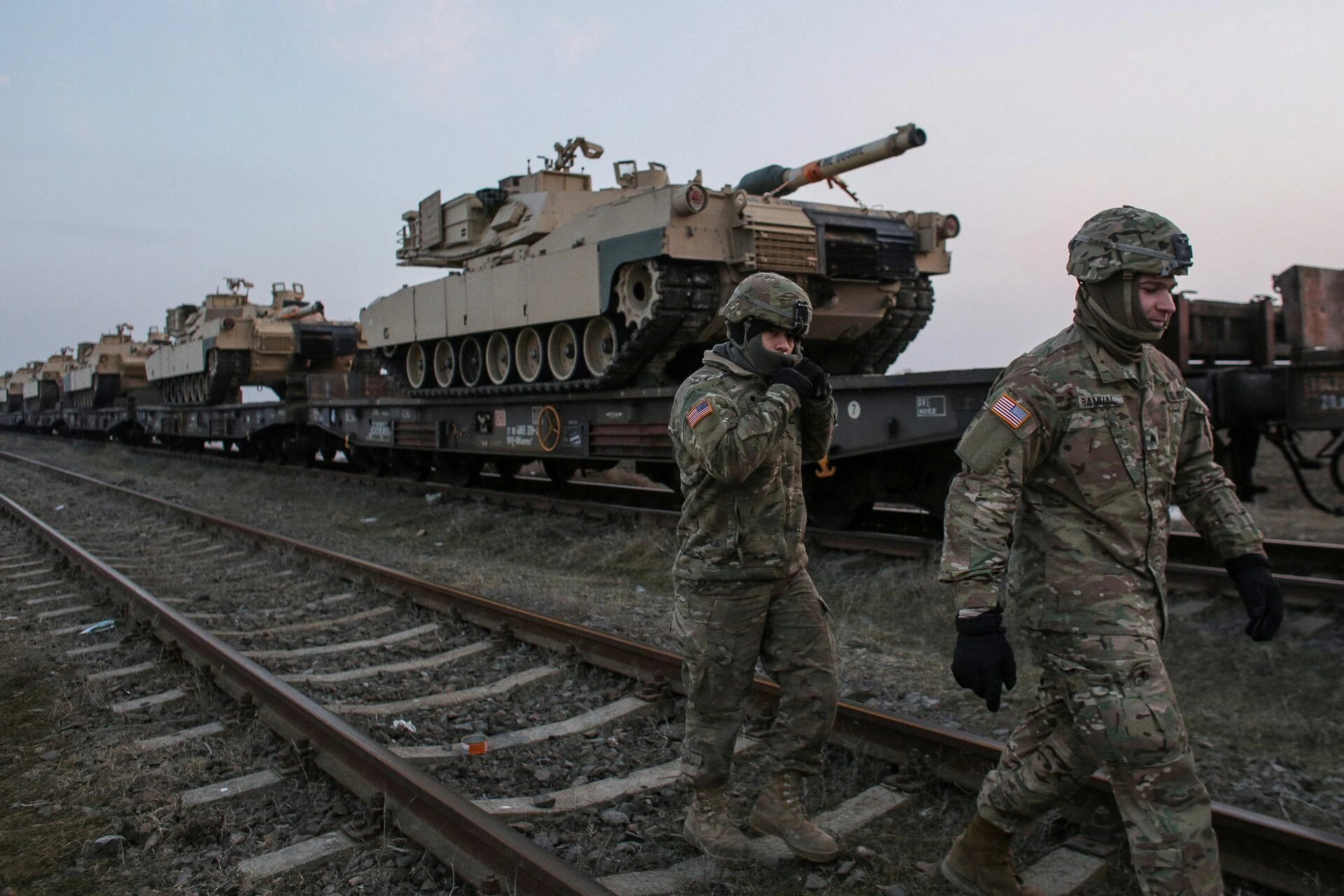
At Mihail Kogălniceanu Air Base in Romania, where streets are named after U.S. states and George Washington, American troops have been stationed since 1999. The base supported U.S. operations in Iraq and Afghanistan. In 2025, roughly half of the approximately 2,000 U.S. troops stationed in Romania left the country; most of them had been based there. The drawdown raised concerns in Romania, which borders Ukraine and lies on NATO's eastern flank. Russian drones have repeatedly violated the airspace of alliance countries.
Contradictory U.S. Policy
In July 2026, nine American KC-135 refueling aircraft were at the base, deployed to refuel U.S. aircraft and bombers during the war with Iran. Their crews and support personnel partly offset the earlier departure of troops, and the aircraft were still there two months later. This contrast reflects a broader contradiction in Washington's policy. Trump threatens to reduce the U.S. troop presence, criticizes allies for inadequate defense spending, and condemns European governments that did not unconditionally support the U.S.-Israeli war against Iran. At the same time, the United States continues to invest in key NATO military facilities in Europe and use them for operations in Europe, the Middle East, and beyond.
Erosion of Trust
The 32-member alliance has not fallen apart, and Republicans and Democrats in Congress, along with U.S. defense companies with major European customers, have enough political influence to potentially prevent the United States from leaving NATO. But Trump's rhetoric has already weakened trust among allies. European countries increasingly doubt the reliability of American guarantees, and that is affecting their defense budgets, weapons purchases, and long-term planning. Particular concern centers on Article 5 of the North Atlantic Treaty, under which an armed attack against one ally is considered an attack against them all. If Russia doubts that the United States would come to Europe's aid, deterrence could lose its force.
1 source
Time · lag behind first