
Bank of England's Bailey warns AI boom could trigger market shocks
This digest was compiled by AI from multiple sources — links to the originals are below.
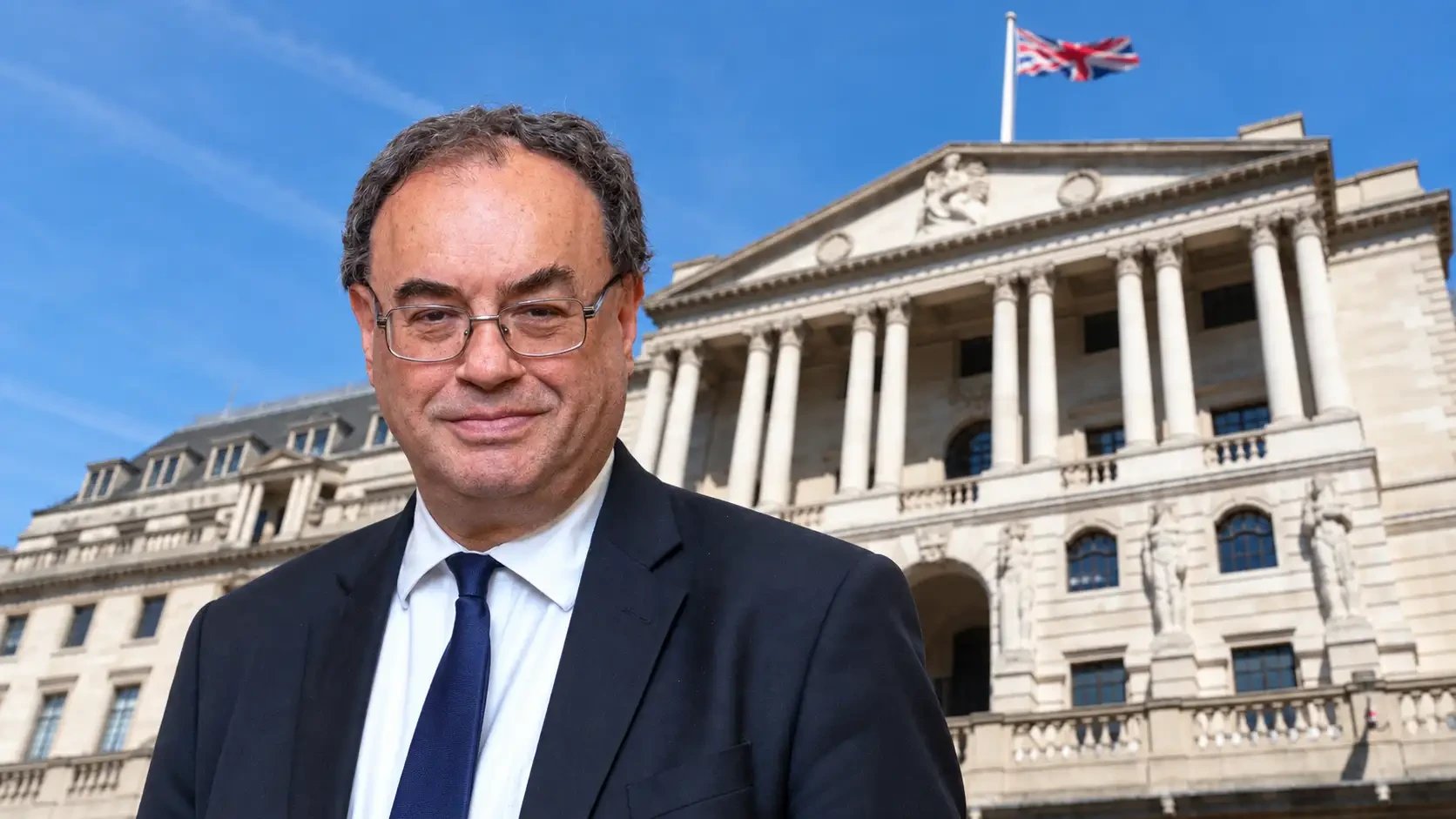
Bank of England Governor Andrew Bailey warned on Thursday that the AI boom could trigger financial market shocks and said the UK must be prepared. He told the BBC the central bank is watching money flowing into AI "very carefully" and that a correction of asset prices is possible. His comments follow an essay in which he called frontier AI risks "real and increasingly significant".
Key Facts
- Global AI-related debt issuance reached around $450bn by early September, more than double the total for all of 2025, according to a Morgan Stanley estimate cited by the Bank of England's Financial Policy Committee.
- AI hyperscalers accounted for 47% of sterling corporate bond issuance so far this year, according to the committee's record of its 25 September meeting.
- AI chipmaker Nvidia is currently the world's most valuable listed company, with a market valuation of $5.5tn (£4.14tn).
- In June, fake images of Bailey and Nigel Farage in a physical fight spread on X, and the Bank has struggled to trace where they came from.
Market Shock Warning
Bailey told the BBC on Thursday that AI could set off shocks in financial markets and the UK has to be ready for them. He said the Bank is watching the money flowing into AI "very carefully" and that "you could see some correction of asset prices at some point." Bailey said AI has "great potential to strengthen growth" but also brings "substantial risks", noting that everybody is "currently priced to be a winner" but "not everybody always wins". He cited the example of Netscape, the first market leader in internet search, which no longer exists, while Google later became dominant. The Bank expects "some shocks" to markets and has to make sure the financial system is resilient, Bailey said.
AI Risks and Regulation
Bailey said AI has created a "much more powerful way of uncovering vulnerabilities" in software and, in the wrong hands, is a "very powerful, potentially very powerful, weapon". He has also been a target of deepfakes, with fake images of him and Nigel Farage in a physical fight spreading on X in June. The Bank has struggled to trace where the deepfakes came from and needs help from the tech sector to do so, Bailey said. In an essay published Wednesday in the Bank's Insight series, Bailey called the risks of frontier AI models "real and increasingly significant" and said society should retain the ability to intervene and set boundaries for these systems. He proposed rigorous testing of new models first, with regulators later turning test results into standards for the financial system, rather than starting with regulation.
Financial Policy Committee Findings
The Bank's Financial Policy Committee published the record of its 25 September meeting on Wednesday, chaired by Bailey, who has been governor since March 2020. Global AI-related debt issuance reached around $450bn by early September, more than double the total for all of 2025, according to a Morgan Stanley estimate cited by the committee. AI hyperscalers accounted for 47% of sterling corporate bond issuance so far this year, the record says. AI-related and semiconductor stocks fell sharply in July, and the risk of a sharper correction persists, according to the committee. The committee warned that "circular arrangements" in some AI financing could amplify losses if expectations disappoint.
3 sources
Time · lag behind first