
Pentagon personnel system breach exposes data of 3 million people
This digest was compiled by AI from multiple sources — links to the originals are below.
Hackers accessed personal data of more than 3 million people registered in the Pentagon's Defense Manpower Data Center. The breach stemmed from a vulnerability in DMDC systems that has since been fixed. Unauthorized access lasted from October 2025 to July 2026, but no evidence of misuse has been found.
Key Facts
- The breach affected nearly 2.8 million living individuals and 294,000 deceased persons.
- DMDC stored names, contacts, Social Security numbers, dates of birth, and military specialty information in unencrypted form.
- Unauthorized access occurred from October 2025 to July 2026.
- DMDC holds personal information on more than 60 million people, including service members, veterans, civilian employees, contractors, and military family members.
- The vulnerability has been fixed, and no signs of compromised data misuse have been detected.
Breach Details
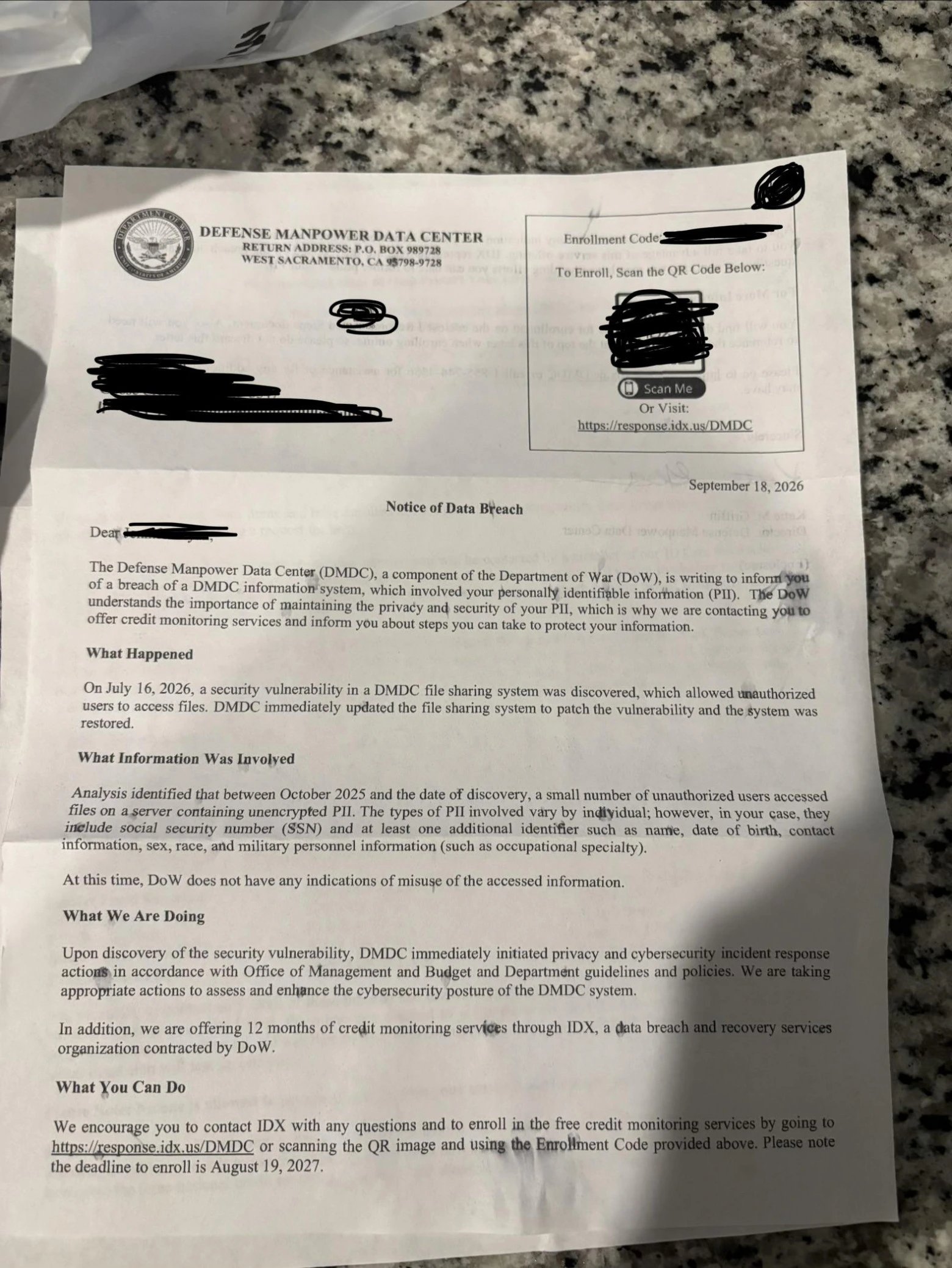
Attackers gained access to data of more than 3 million people registered in the Pentagon's Defense Manpower Data Center. The cause was a vulnerability in DMDC systems, which has since been eliminated. The center stored unencrypted names, contacts, Social Security numbers, dates of birth, military specialty details, and other data for nearly 2.8 million living people and 294,000 deceased individuals. According to Pentagon representatives, outsiders had access to this information from October 2025 to July 2026. No signs of misuse of the compromised data have been found.
DMDC Role and Scale
DMDC is responsible for identity verification of all US Department of Defense ID card holders. The center stores personal information on more than 60 million people, including active-duty service members, veterans, current and former civilian employees, contractors, and military family members. The breach notification for one DMDC user was reported by Federal News Network.
Pentagon AI Platform Context
The Pentagon previously launched versions of OpenAI's ChatGPT and xAI's Grok on the GenAI.mil portal, developed under the OpenAI for Government program for US Department of Defense employees. GenAI.mil was launched last year and initially offered access only to Google Gemini. Services on the platform differ from commercial versions by not collecting data, and more than 1.7 million of the department's 3 million employees have connected to GenAI.mil.
1 source
Time · lag behind first