
ByteDance rents a fifth of China's data center capacity, SemiAnalysis finds
This digest was compiled by AI from multiple sources — links to the originals are below.
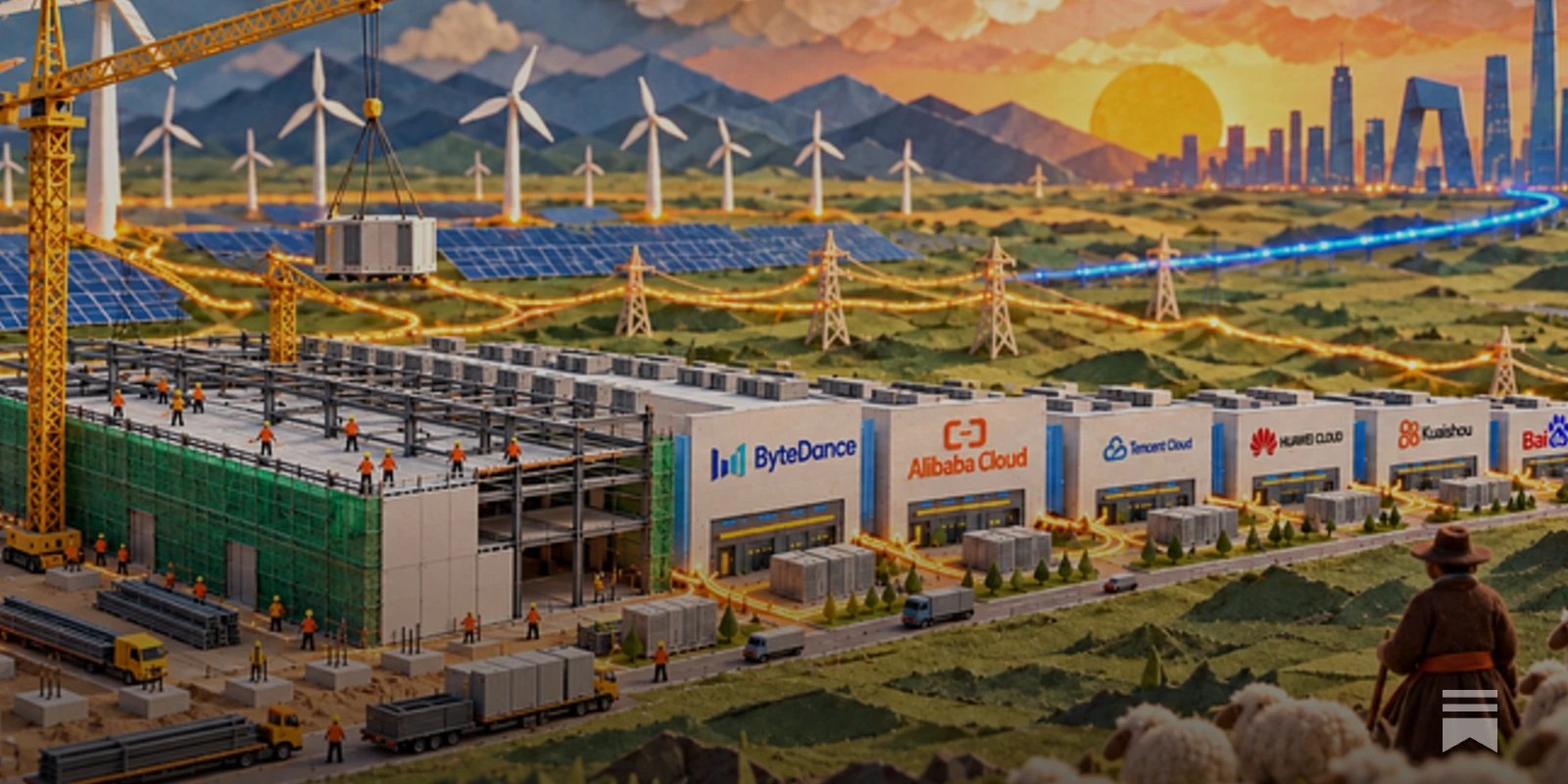
ByteDance, the owner of TikTok, accounts for about one-fifth of China's operating data center capacity, according to research firm SemiAnalysis. China's total operating data center capacity exceeds 24 GW, with another 20 GW under construction. The company is the country's largest data center tenant and a key driver of AI infrastructure growth.
Key Facts
- China's operating data center capacity exceeds 24 GW, with another 20 GW under construction, according to SemiAnalysis.
- ByteDance rents about one-fifth of China's operating data center capacity, making it the country's largest tenant.
- Alibaba, Tencent, and Baidu reported combined capital expenditures of $20 billion in Q2, double the year-earlier figure.
- China added 595 exaflops of AI computing capacity in the first half of 2026, down from 802 exaflops in the second half of 2025, according to Goldman Sachs.
- China's total AI computing capacity reached 2,185 exaflops by end-June, up 177% year-on-year, the Ministry of Industry and Information Technology said.
ByteDance's Data Center Footprint
ByteDance rents almost all of the data center space it uses in China, according to SemiAnalysis. The company's AI products include the Doubao assistant, which has several hundred million users, and the Seedance video generator. SemiAnalysis based its estimate on monitoring more than 1,000 facilities in China operated by over 60 companies.
China's Data Center Market
SemiAnalysis's model also includes about 20 GW of projects under construction and another 30 GW of announced projects. By end-2026, U.S. data center capacity is forecast to reach 56 GW, compared with 15 GW in the Asia-Pacific region excluding China and 14 GW in Europe, Africa, and the Middle East. One-third of China's national data center capacity still belongs to three state-owned telecom operators, and many of those legacy facilities are not suited for high-power AI servers. New facilities leased by cloud operators and capable of supporting AI are filling up faster, SemiAnalysis said.
Chip Shortage Constraint
In the first half of 2026, the pace of filling new data center space in China was below expectations due to a shortage of both domestic and imported chips. China added 595 exaflops of AI computing capacity in the first half of 2026, down from 802 exaflops in the second half of 2025, according to Goldman Sachs. China's Ministry of Industry and Information Technology reported that total AI computing capacity reached 2,185 exaflops by end-June, up 177% year-on-year.
1 source
Time · lag behind first