
Tokayev announces Kazakhstan to raise research spending to 1% of GDP
This digest was compiled by AI from multiple sources — links to the originals are below.
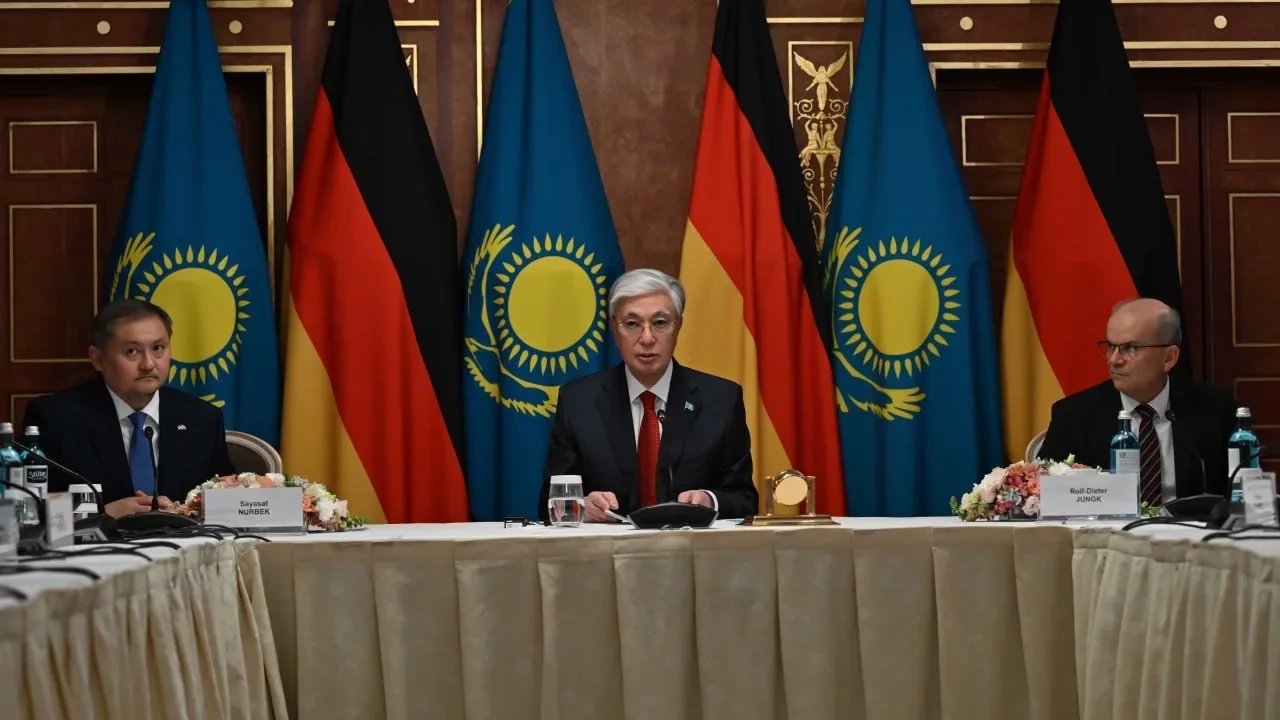
Kazakh President Kassym-Jomart Tokayev announced plans to increase research spending to 1% of GDP during a meeting with German university rectors and research institute heads. He also outlined cooperation priorities including joint research, technology transfer, and AI development. The announcement came as Kazakhstan seeks closer integration with European research programs.
Key Facts
- Kazakhstan plans to increase research spending to 1% of GDP, President Tokayev announced on September 30, 2026.
- Kazakhstan has begun negotiations to join the Horizon Europe program as an associated participant.
- The TiBeRIUM project, launched in 2026 with €7.5 million from Horizon Europe, aims to develop low-carbon production chains for titanium and beryllium.
- Over 700,000 students have acquired certified AI skills under the AI-Sana program.
- 45 Kazakh universities cooperate with about 100 German partners, and around 2,000 Kazakh students study in Germany.
Research Funding Increase
President Tokayev announced that Kazakhstan will increase spending on scientific research to 1% of GDP. The announcement was made during a meeting with rectors of leading German universities and heads of research institutes. Tokayev said the country is simultaneously creating incentives for companies to invest in university research. He invited German entrepreneurs to open engineering laboratories and technology transfer centers at joint institutions, offering co-financing support.
European Research Integration
Kazakhstan has begun negotiations to join the Horizon Europe program as an associated participant. The country is already a full participant in the European Raw Materials Partnership with a total budget exceeding €300 million. The TiBeRIUM project, launched in 2026 with €7.5 million in Horizon Europe funding, is coordinated by the Freiberg Mining Academy. The project unites East Kazakhstan Technical University and Ulba Metallurgical Plant to develop low-carbon production chains for titanium and beryllium.
AI and Educational Cooperation
Over 700,000 students have acquired certified AI skills under the AI-Sana program, Tokayev said. Kazakhstan has deployed the alem.cloud supercomputer cluster and opened a specialized AI research university. The country adopted one of the region's first AI laws, according to the president. 45 Kazakh universities cooperate with about 100 German partners, and around 2,000 Kazakh students study in Germany. More than 30 branches and partner representative offices of foreign universities operate in Kazakhstan.
2 sources
Time · lag behind first