
Ukrainian drone strikes halt up to 22 Russian refineries, fuel market tightens
This digest was compiled by AI from multiple sources — links to the originals are below.
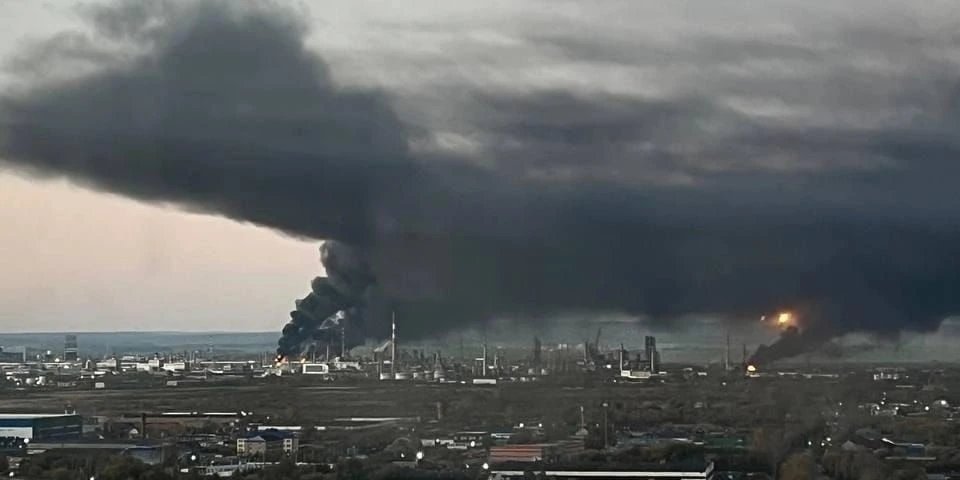
Ukrainian drone attacks have halted or restricted operations at up to 22 Russian refineries, including Novoshakhtinsk, Perm, Ilsky and Afipsky. Repairs to damaged secondary units could take six to eight months, while Western sanctions limit access to equipment. President Vladimir Putin signed a decree on September 28 further restricting disclosure of oil and energy sector information.
Key Facts
- About 10–12 Russian refineries are fully or nearly fully halted, and another 8–10 operate with significant restrictions, according to industry estimates.
- Repairs to seriously damaged secondary units can take 6–8 months, while primary unit damage is usually fixed in 1–2 weeks.
- On September 28, Vladimir Putin signed a decree further restricting disclosure of information about the oil and energy sector, including damage and operational data.
- In June 2026, Russian refining volume fell 30% to a historic low of 3.8 million barrels per day, according to the IEA.
Refinery Damage
Ukrainian drone attacks continue to hit Russian oil facilities, and the consequences of previous strikes have not been fully resolved. After new damage in late September, several more refineries came under restrictions, including Novoshakhtinsk, Perm, Ilsky and Afipsky. Industry estimates indicate about 10–12 Russian refineries are fully or nearly fully halted, with another 8–10 operating under significant restrictions. Reuters previously assessed that the attacks had already caused major production cuts or shutdowns at large plants, including refineries that account for a significant share of Russian diesel output.
Repair Timelines
New strikes target not only primary processing units but also more complex secondary units that produce gasoline, diesel and other fuels. Damage to primary units is usually repaired in 1–2 weeks, but seriously damaged secondary units can take 6–8 months to fix. Western sanctions further complicate Russia's access to the necessary equipment for repairs.
Market Impact
For the Russian market, the situation raises the risk of gasoline and diesel shortages, higher wholesale prices and further restrictions on oil product exports. According to the IEA, Russian refining volume fell 30% in June 2026 to a historic low of 3.8 million barrels per day. On September 28, Vladimir Putin signed a decree further restricting disclosure of information about the oil and energy sector, including data on damage and plant operations.
2 sources
Time · lag behind first