
Islamabad Memorandum regains high-level backing at UNGA, but talks stall
This digest was compiled by AI from multiple sources — links to the originals are below.
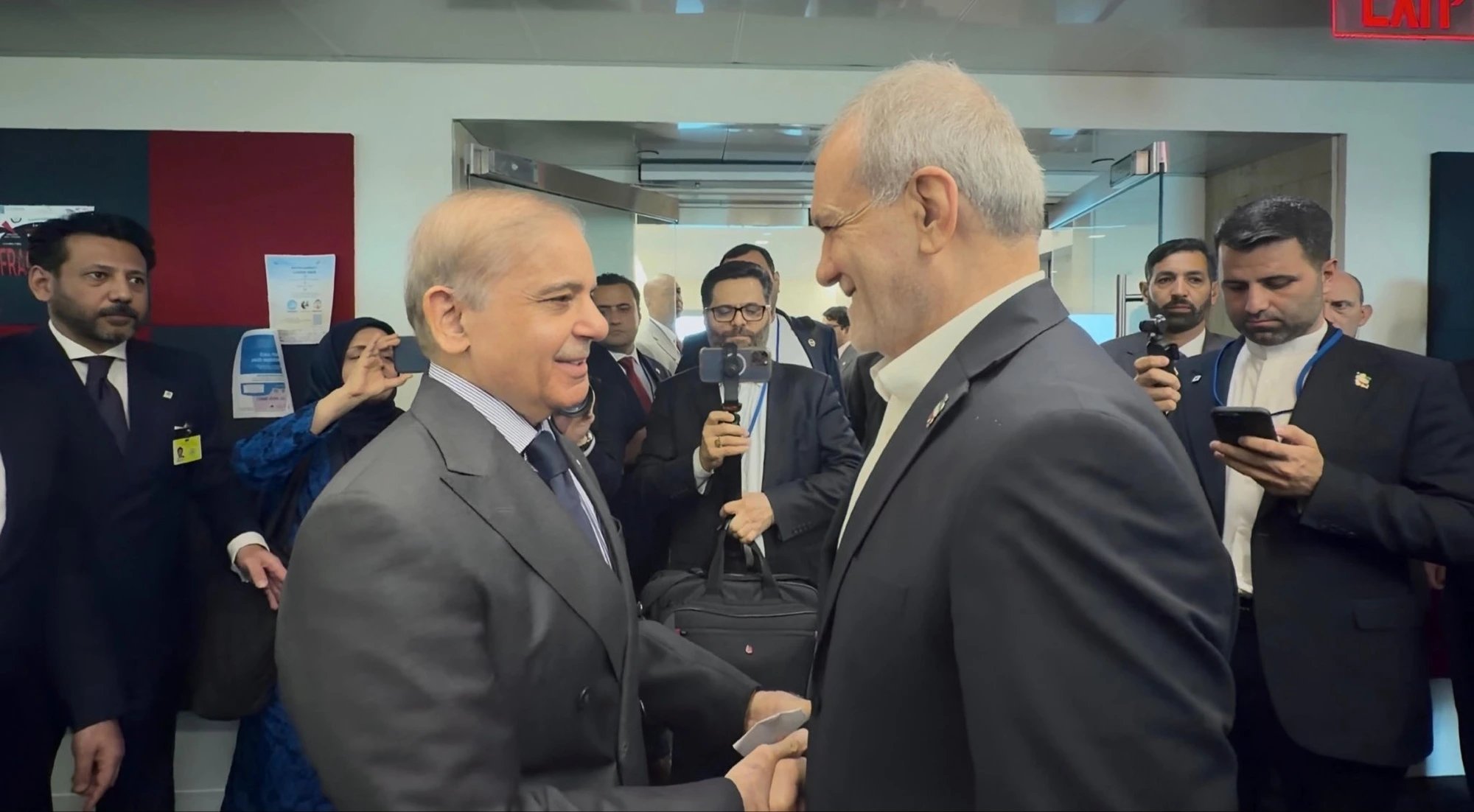
The Islamabad Memorandum, the Pakistan-mediated June deal between Iran and the U.S., returned to high-level discussions during the UN General Assembly in New York. Pakistani Prime Minister Shehbaz Sharif and Iranian President Masoud Pezeshkian reaffirmed their commitment to the 14-point interim understanding, while Chinese President Xi Jinping endorsed it during his White House talks with U.S. President Donald Trump. The renewed endorsements come even as Iranian officials held their first talks with U.S. Special Envoy Steve Witkoff since Vice President J.D. Vance's visit, signaling that negotiations have not yet gained momentum.
Key Facts
- The Islamabad Memorandum is a 14-point interim understanding endorsed by Washington and Tehran in June, aimed at halting hostilities, reopening the Strait of Hormuz, and creating space for broader talks on nuclear and other issues.
- Pakistani Prime Minister Shehbaz Sharif said after talks with Iranian President Masoud Pezeshkian that Pakistan's leadership remained united in expediting the peace efforts outlined in the memorandum.
- Chinese President Xi Jinping expressed support for the U.S. and Iran returning to the June deal during his state visit to the United States last week.
- Iranian officials held three hours of talks with U.S. Special Envoy Steve Witkoff on the sidelines of UNGA, the first such contact since U.S. Vice President J.D. Vance's visit.
High-Level Endorsements
Pakistani Prime Minister Shehbaz Sharif, speaking after discussions with Iranian President Masoud Pezeshkian, stated that the entire Pakistani leadership remained united in its resolve to expedite the peace efforts outlined in the Islamabad MoU. Pezeshkian reaffirmed that the memorandum remained 'totally acceptable' to Iran and that Tehran was ready to take it forward. Chinese President Xi Jinping added further weight to the MoU during his state visit to the United States last week, expressing support for the U.S. and Iran returning to the June deal in talks with U.S. President Donald Trump at the White House. Xi also said that both parties should resolve differences through dialogue and negotiation and reach a comprehensive agreement that included the nuclear issue.
Negotiation Stagnation
Iranian officials held three hours of talks with U.S. Special Envoy Steve Witkoff on the sidelines of UNGA, the first such contact since U.S. Vice President J.D. Vance's visit. Despite the high-level statements, developments on the ground indicate that negotiations have not gathered significant momentum.
Economic Linkage
President Xi's intervention carried particular significance because it came amid broader discussions on global economic stability. The Chinese leader noted that new economic and trade arrangements between Beijing and Washington represented positive news for the economies and peoples of both countries and for the world economy at large. By linking regional de-escalation to the condition of the global economy, Xi underscored that the prolonged crisis in West Asia carries costs that go far beyond the immediate theater of conflict.
1 source
Time · lag behind first