
World Bank projects Trans-Caspian route could lift Kazakhstan GDP 2.2%
This digest was compiled by AI from multiple sources — links to the originals are below.
The World Bank estimates Kazakhstan needs about $11.5 billion in investment to develop the Trans-Caspian International Transport Route, according to a report published September 28. Developing the corridor could raise Kazakhstan's GDP by 2.2% and employment by 3.2% in the long term, provided additional investments and reforms are implemented.
Key Facts
- The World Bank estimates Kazakhstan needs about $11.5 billion for Trans-Caspian route development, roughly 21% of the over $55 billion required for the entire corridor.
- Developing the corridor could raise Kazakhstan's GDP by 2.2% and employment by 3.2% in the long term.
- For all corridor countries, the World Bank projects GDP could be 3.3% above baseline and jobs could increase by 2 million, or 2.9%.
- Realizing the corridor's potential through 2040 requires over $25 billion in infrastructure investment and about $30 billion in related logistics and digital systems.
- Kazakhstan's priority projects include the Moyynty–Kyzylzhar and Bakhty–Ayagoz rail lines, Aktau port expansion, and the Altynkol–Zhetygen line, all already under implementation.
Investment Needs
The World Bank's report, published September 28, estimates Kazakhstan's investment need for the Trans-Caspian International Transport Route at about $11.5 billion. This represents roughly 21% of the more than $55 billion required for the corridor as a whole. Through 2040, over $25 billion is needed directly for infrastructure such as railways, seaports, and access roads. An additional $30 billion is required for logistics centers, terminals, rolling stock, transshipment equipment, and digital systems.
Priority Projects
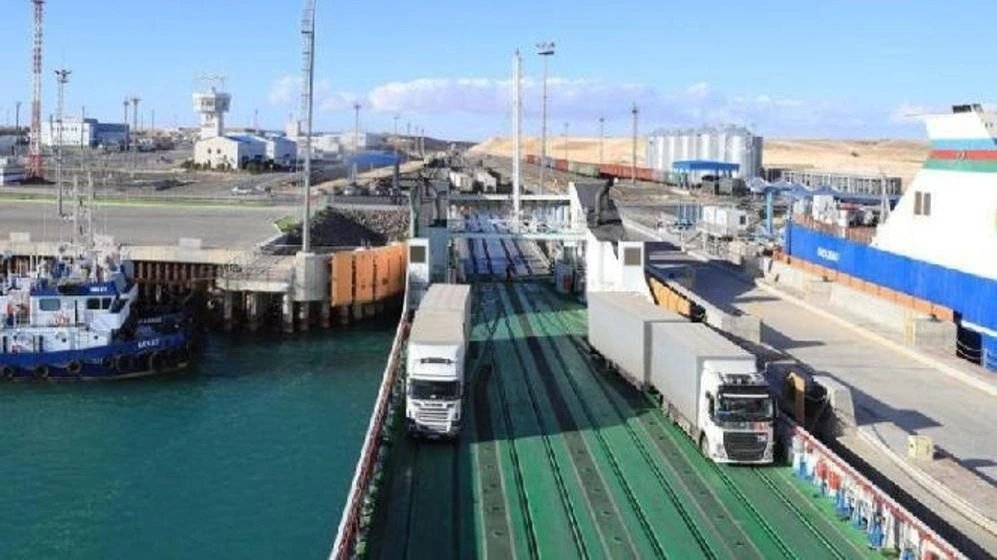
In Kazakhstan, the World Bank identifies the Moyynty–Kyzylzhar and Bakhty–Ayagoz rail lines, the Darbaza–Maktaaral line, the Almaty bypass railway, Aktau port expansion, and the Altynkol–Zhetygen line as top priorities. All of these projects are already in the implementation stage. The bank notes that existing bottlenecks on Kazakhstan's section are concentrated in the east of the railway network, with constraints also in central and western parts. The World Bank separately points to the need to expand the ports of Aktau and Kuryk. Over the next 10–15 years, the bank forecasts freight load will shift increasingly westward, making the Beineu–Aktau railway a possible priority project.
Corridor Competitiveness
The Middle Corridor is currently most competitive for bulk cargo such as grain, fertilizers, construction materials, and raw materials, the World Bank told Forbes Kazakhstan. The main problem remains container shipping, where increasing capacity alone is insufficient; costs, delivery times, and reliability must improve compared with alternative routes. The World Bank uses the volume of cargo directly crossing the Caspian Sea as its baseline indicator. In 2023, that volume was about 8.8 million tons, of which roughly 3.5 million tons were non-oil cargo. About 67% of the total volume passed through Kazakhstan's Caspian ports.
6 sources
Time · lag behind first