
Scientists find 1,700 hidden proteins in 'junk DNA' and build cancer vaccine
This digest was compiled by AI from multiple sources — links to the originals are below.
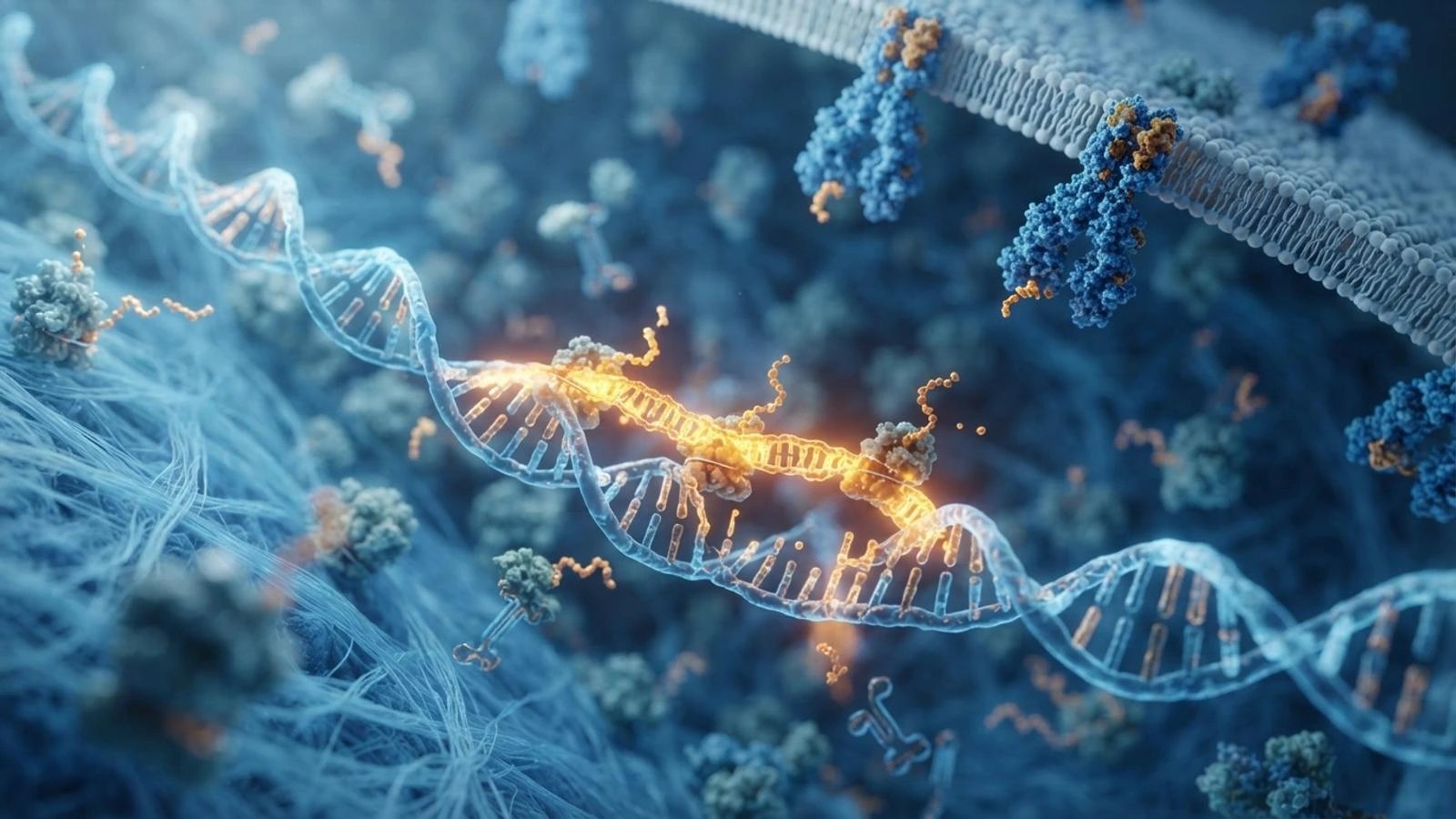
An international consortium of over 60 researchers identified about 1,700 previously unknown proteins encoded in regions of the genome once dismissed as 'junk DNA'. The discovery has already led to a vaccine against Ewing sarcoma, a rare bone cancer, now in clinical trials. The findings also challenge assumptions about how proteins evolve across species.
Key Facts
- The TransCODE consortium analyzed more than 7,000 genomic regions previously classified as non-coding 'junk DNA'.
- About 1,700 of these regions produce short proteins called 'peptidins', typically only a few dozen amino acids long.
- A vaccine built from peptidin fragments is being tested in up to 45 patients with Ewing sarcoma at Institut Curie in Paris and Heidelberg University.
- Ewing sarcoma is diagnosed in about 600 young people in Europe each year.
- Blocking peptidin-producing regions stops growth of breast, prostate, bowel, and brain cancer cells.
Hidden Protein Layer
Ribosome profiling revealed that ribosomes actively read thousands of unannotated genomic regions. The first documented peptidin was humanin, a 24-amino-acid peptide discovered in 2001 that protects cells from stress. Peptidin genes are often nested inside larger genes, so a single DNA sequence can yield two entirely different products. Unlike classical proteins with hundreds or thousands of amino acids, peptidins consist of only a few dozen residues.
Cancer Vaccine Development
Cancer cells display many peptidins absent from healthy tissue and depend on them for growth. Peptidin fragments are presented on cell surfaces by HLA proteins, making them accessible targets for the immune system. Sebastiaan van Heesch of the Princess Máxima Center for Pediatric Oncology in Utrecht combined several peptidin fragments characteristic of Ewing sarcoma cells into a single vaccine. The trial is funded by the Fight Kids Cancer program and involves up to 45 patients.
Evolutionary Implications
Most human proteins have close analogs in other species, but van Heesch found a completely different peptidin landscape when comparing heart tissue from humans, rats, and mice. This suggests molecular evolution is more dynamic than previously thought. Peptidins may be transient evolutionary experiments that do not become fixed in offspring, or they may be precursors to future full-length proteins.
1 source
Time · lag behind first